Record approval rate announced
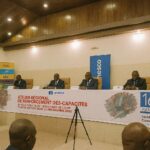
Brazzaville’s ninth ordinary session of the Commission for the Accreditation of Private Higher-Education Institutions closed with encouraging numbers for the sector. Out of 33 applications reviewed, 29 received a favourable opinion, representing an 87.87 percent success rate that surprised even seasoned observers.
The figures were released in the final communiqué adopted by the panel of academics, ministry officials and professional bodies after three intense days of file-by-file scrutiny.
What the approvals cover
Favourable opinions do not all carry the same weight; they open different doors for the institutions concerned.
Seventeen files relate to the creation of entirely new campuses, an early but decisive step that lets promoters start recruiting staff and students once the formal decree is signed.
Six additional projects obtained what the ministry calls “opening accreditation”, allowing classrooms to welcome learners immediately, while two long-standing schools finally secured definitive status, a label that reassures parents about durability and compliance.

New programmes gain momentum
Beyond the institutional licences, the commission validated every request for new bachelor programmes, a relief for private providers eager to diversify beyond traditional business administration tracks.
Four proposals to extend existing sites were also endorsed, meaning students in emerging neighbourhoods could soon follow courses closer to home instead of crossing the sometimes congested capital each morning.
Only the short-cycle higher technician certificates, better known locally as BTS, hit a snag: none of the eight dossiers studied convinced evaluators this time.
Experts cited gaps in laboratory equipment, internship partnerships and staff ratios, issues the promoters pledged to address before submitting revised proposals in a future round.
Minister’s message of encouragement
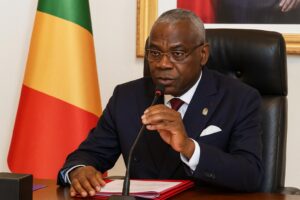
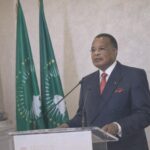
Closing the session, Minister of Higher Education Professor Edith Delphine Emmanuel praised what she called “meticulous, patriotic work” by the commission, noting that quality assurance is key to the nation’s human-capital ambitions laid out in the National Development Plan.
“Private initiatives complement public universities and keep our youth in the country,” she said, before reminding promoters whose files were rejected that tailored feedback would reach them within days.
According to ministry officials on site, the notifications will spell out the exact paragraphs of the May 1996 and May 2008 decrees requiring corrections, from library surface to governance structures.
Call for clearer terminology
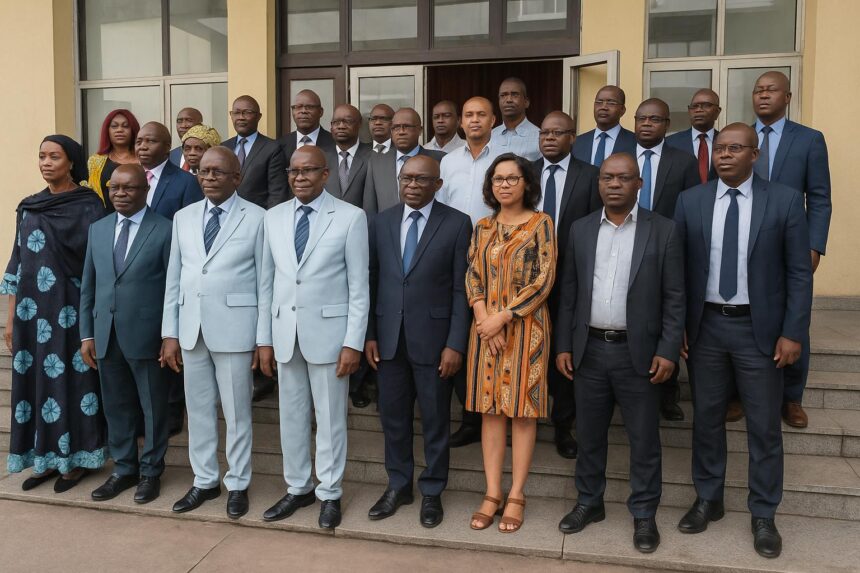
Participants, including rectors and student unions, adopted one recommendation: harmonise vocabulary between “authorisation”, “opening”, “extension” and “definitive” to align strictly with existing decrees, making procedures more transparent for families comparing schools.
The suggestion will be transmitted to the government, which in previous sessions has shown openness to administrative simplification that reduces paperwork while safeguarding academic standards.

What’s at stake for students
Private higher education hosts roughly one in three Congolese undergraduates, according to ministry estimates, so every new licence granted potentially eases pressure on public amphitheatres already operating above capacity.
Mélanie, a second-year economics student met outside Marien-Ngouabi University, welcomed the news: “If more accredited schools open, competition will push fees down and give us more choice,” she said with a hopeful smile.
Employers, too, keep a close eye on the list published after each commission meeting, explained Serge Mavoungou, HR manager for a local logistics firm, because “it signals which diplomas we can confidently recognise during recruitment”.
Families will now wait for the official decree in the Journal Officiel, usually a matter of weeks, before finalising enrolment decisions for the upcoming academic year.
Meanwhile, institutions whose BTS proposals were turned down are expected to seek partnerships with vocational high schools and industry clusters to strengthen their laboratories, a move that could secure approval at the next sitting and further widen the training offer.
Inside the evaluation process
Before any vote, each file is distributed to multidisciplinary sub-committees that verify land titles, inspect laboratories and match staff résumés with the intended courses, said Dr. Kossivi Ngatsé, rapporteur of the session.
The groups then present their findings in plenary, where representatives from the National Quality Assurance Agency and the employers’ confederation can raise objections or request clarifications.
Timeline toward opening day
Once the presidential decree is published, new schools have up to twelve months to complete construction and comply with remaining specifications, otherwise their licence lapses automatically, a clause that observers say keeps speculative projects in check.
Institutions already operating under provisional status must submit annual reports on graduation rates, employability and research output; recurring non-compliance can trigger sanctions ranging from intake freezes to withdrawal of the definitive label.
Choosing wisely
The ministry advises applicants to consult the official accreditation list, updated on its website and pinned on campus notice boards, before paying any registration fee, a simple check that could avoid costly disappointments.
Consumer-rights associations also encourage families to compare programme curricula, laboratory facilities and internship agreements rather than base decisions solely on tuition price or campus aesthetics.
With 29 new approvals, Congo-Brazzaville’s higher-education map widens, sparking optimism among learners.