Rain-soaked start, bright purpose
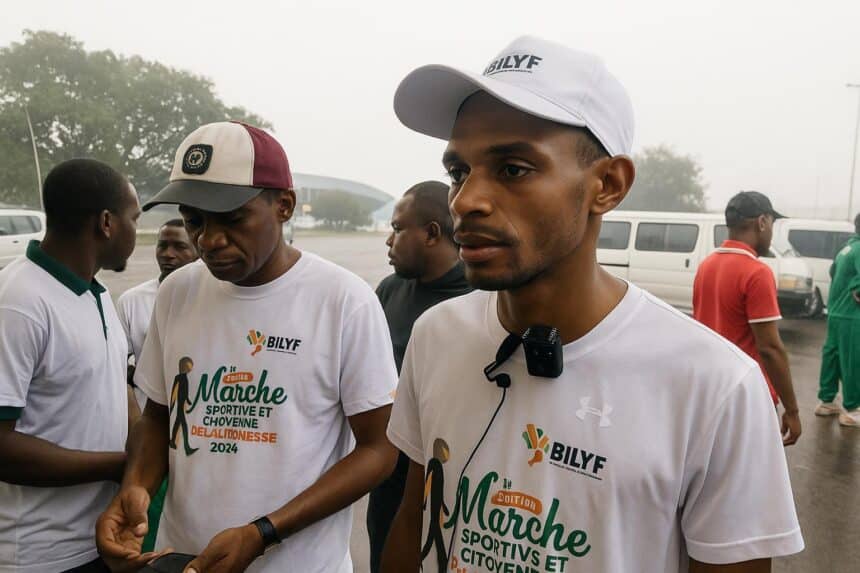
Brazzaville woke up to a heavy Sunday rain, yet more than three thousand teenagers and young adults gathered at the CFCO station. Their mission, led by Brazzaville International Leadership Youth Forum, was simple: walk, sweat and leave cleaner streets behind.
The second annual Youth Sports and Environment March set off at 7:00 a.m., weaving through the iconic Poto-Poto roundabout, Avenue de la Paix and the bustling Moungali crossroads. The route mirrored daily commuter paths, a reminder that environmental care starts where people actually live and move.
On hand to encourage the crowd, Yvon Kaba, Director General of Sanitation, applauded the umbrellas, ponchos and wide smiles that defied the weather. “Rain cleanses the city, but we must help it,” he told participants before the first steps echoed on slick asphalt.
Five-kilometre route, thousands of hands
Covering 5.3 kilometres, the procession snaked over the Centenary Bridge and down Boulevard Alfred Raoul until the esplanade of Alphonse-Massamba-Débat stadium. Each junction served as an impromptu collection point where sacks filled quickly with plastic bottles, food wrappers and the ubiquitous black sachets that choke city drains yearly.
Volunteers wore green armbands reading “Mo Poto, Mo Ntu” – “My Place, My Responsibility”. The slogan, popularised by BILYF coordinator Précieux Massouemé, summed up the day’s ethos: personal pride translated into public action, not by decree but by sneakers squelching through puddles under a still-steady tropical drizzle.

Traffic police escorted the march, keeping cars at bay and offering high-fives to youngsters holding bulging garbage bags. Drivers honked support, market women waved, and apartment balconies sprouted phone cameras, transforming a routine clean-up into a rolling civic carnival that many hoped would become monthly tradition.
Aerobics, beats and community spirit
At the stadium finish line, portable speakers burst into coupé-décalé and rumba hits. Fitness instructors led ninety minutes of high-energy aerobics, merging jumps, kicks and dance moves that kept hearts pumping and mud-streaked trainers moving in near-perfect unison despite dripping jerseys and fogged-up glasses.
“Sports give us the discipline to protect our environment,” coach Grâce Dia told the crowd between sets, inviting participants to hold planks while chanting “Brazzaville ya kitoko!” – “Brazzaville the beautiful!”. The call-and-response echoed under gray skies, blending sweat with a contagious sense of ownership for streets and rivers.

Health professionals from the municipal clinic offered free blood-pressure checks nearby. Results were projected on a screen, sparking informal chats about balanced diets, hydration and the carbon footprint of single-use plastics. The mixture of medical advice and environmental tips underscored how personal wellness links to urban ecology.
Voices of commitment from organisers
Taking the microphone, Précieux Massouemé thanked participants “for turning rain into opportunity”. He described the turnout as “a strong signal that the nation can rely on its youth,” adding that every bag collected would be weighed and documented to guide future sanitation policies in Brazzaville.
He reminded the crowd that BILYF began only two years earlier as an online discussion board. Since then, the platform has organised tree-planting days, recycling workshops and mentoring sessions, always positioning environmental stewardship as an entry point to broader leadership skills for young Congolese.
Sanitation director Yvon Kaba pledged that his teams would support similar youth-led efforts across the city’s arrondissements. “Government programmes succeed when citizens take the first step,” he noted, pointing to the bulging trucks parked outside the stadium, ready to ferry trash to licensed depots later today.
Next stop: Pointe-Noire on the horizon
BILYF’s roadmap now turns toward Pointe-Noire, where coastal winds and tourist beaches make litter a constant battle. Massouemé confirmed that planning committees are already liaising with local authorities to map a seafront course and secure thousands of biodegradable gloves for participants, eager to match Brazzaville’s record-setting energy levels.
Youth leader Christelle Ngatsé, 19, said she hopes to join both cities’ events next year. “We are one generation,” she insisted, noting that transport companies had offered discounted fares for students travelling to the prospective coastal march, a gesture she called “investment in civic pride” for all.

Local economists argue that cleaner streets boost tourism and cut flood-related repair bills. While no formal study accompanied Sunday’s march, organisers plan to publish waste-collection data online, hoping transparency will attract sponsors and encourage neighbourhood associations to replicate the model on smaller scales soon.
For now, Massouemé’s team is reviewing feedback forms collected by QR code at registration. Early replies ask for more recycling points, earlier start times and a live music stage, proof that civic appetite grows once people taste collective success.