Brazzaville talks on Congo-China media partnership
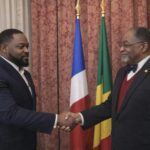
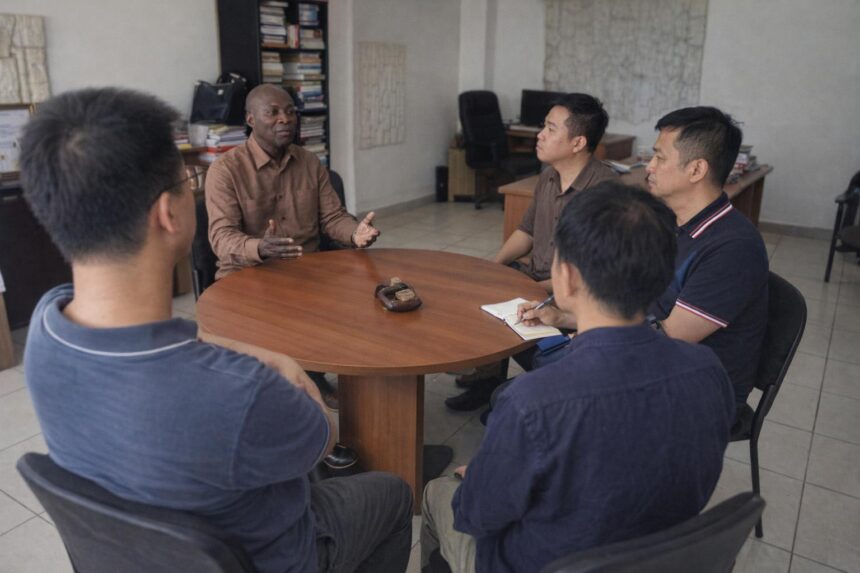
Adiac and China’s Xinhua met in Brazzaville on January 15 with a shared message: keep working together and aim higher. The discussion brought together Adiac’s newsroom director Emile Gankama and Xinhua regional deputy bureau director Li Wenfei, according to the account of the meeting.
- Brazzaville talks on Congo-China media partnership
- Xinhua delegation highlights Adiac’s international visibility
- Content exchange and training: the core of the plan
- FOCAC coverage and major events on the joint agenda
- A broader cooperation frame: economy, culture, society
- Adiac TV: audiovisual cooperation proposed
- Cultural stops: Les Manguiers bookstore and the museum-gallery
- Basin of Congo museum-gallery and Congolese cultural heritage
Both sides framed the partnership as practical and people-to-people. The priorities mentioned during the exchange were clear: sharing editorial content, strengthening professional skills through training, and keeping regular contact between teams so cooperation stays active, not symbolic.
Xinhua delegation highlights Adiac’s international visibility
Li Wenfei was in Brazzaville on a working visit and came with colleagues Han Wanning, Zhou Nan and Zheng Yangzi. The group used the meeting to acknowledge the visibility achieved by Adiac, including Les Dépêches de Brazzaville, which they praised for its international reach.
For Adiac, that recognition matters because partnerships between newsrooms often depend on credibility and distribution. The conversation, as described, positioned Adiac as a local reference with an audience beyond Congo, and Xinhua as a global agency seeking stronger regional connections.
Content exchange and training: the core of the plan
The central promise of the renewed cooperation is the exchange of information and images, alongside training opportunities. Both agencies signaled that skills-sharing is not limited to formal classrooms, but also comes through newsroom routines, reporting methods and editorial experience.
They also discussed press trips, either to China or to Xinhua’s regional bureau, as a way to learn on the ground. In media cooperation, these exchanges can shape how journalists prepare stories, handle visuals, and build a deeper understanding of partners’ working standards.
FOCAC coverage and major events on the joint agenda
One concrete point was the desire to coordinate coverage of major events. The meeting mentioned FOCAC specifically, noting that Congo holds the co-presidency. In that context, both sides said they want to ensure reporting on large gatherings that matter for diplomacy and development.
The logic is simple: big events generate demand for fast, accurate reporting and strong visuals. A coordinated approach can help provide broader angles, from official moments to the practical impacts that citizens usually look for, such as new projects and cultural initiatives linked to cooperation.

A broader cooperation frame: economy, culture, society
The discussion placed the media partnership within the wider context of Sino-Congolese cooperation. Adiac and Xinhua expressed an intention to work together on reports and reflections that accompany actions carried out by China and Congo in economic, cultural and social fields.
In public-facing journalism, this often means moving beyond announcements and making stories accessible. The stated goal suggests a preference for formats that explain projects, highlight local experiences, and connect national cooperation to everyday life, without losing the bigger picture.
Adiac TV: audiovisual cooperation proposed
Speaking for Adiac, Emile Gankama raised a specific wish: expanding the partnership into audiovisual content. Adiac operates an online television platform, Adiac TV, and the agency signaled interest in building stronger collaboration in that area.
Li Wenfei responded by saying he was ready to submit the proposal to his hierarchy in Beijing. The exchange did not present a final decision, but it showed that both sides see video as increasingly central, especially for mobile audiences who consume news through short clips.
Cultural stops: Les Manguiers bookstore and the museum-gallery
After the meeting, the Xinhua delegation visited the Librairie Les Manguiers and the Musée-Galerie of Les Dépêches de Brazzaville. These venues were described as cultural spaces that draw visitors as well as intellectuals, making them part of the city’s public cultural life.
For a media delegation, such visits also serve a professional purpose. They connect journalism to archives, books and public memory, and they create opportunities to identify stories and images that can travel beyond borders while still reflecting local identity.
Basin of Congo museum-gallery and Congolese cultural heritage
At the Musée-Galerie du Bassin du Congo, the delegation expressed admiration for Congo’s cultural richness. The works presented were described as tracing Congolese civilization and telling parts of the story of Congolese rumba through relics and paintings.
The visit underscored how culture can complement news cooperation. When partnerships include attention to heritage, music and visual arts, they can help widen the range of stories shared internationally, from political events to creative life and the cultural references that shape society.