World AIDS Day at AGL Congo: 600 staff reached
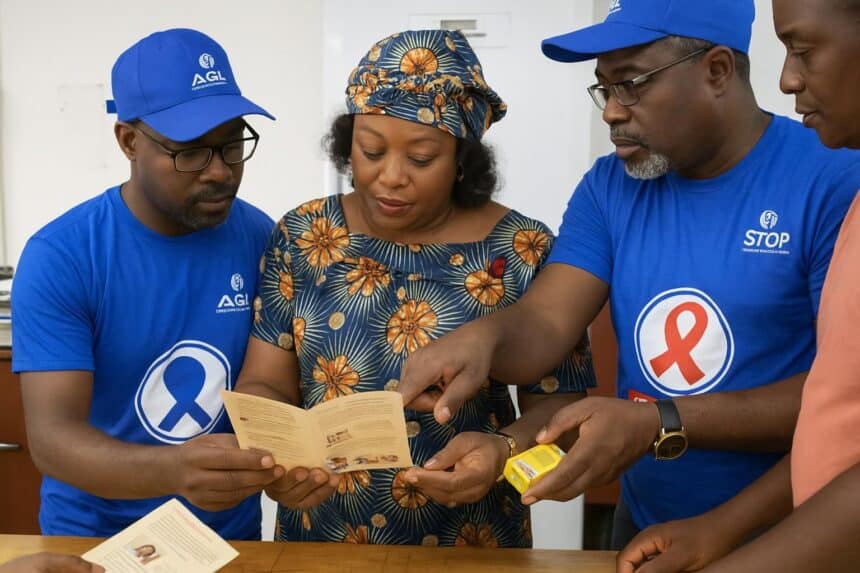
On 1 December 2025, AGL Congo’s terminals in Brazzaville and Pointe-Noire filled with red ribbons and mobile test tents as the logistics group launched its World AIDS Day campaign. Six hundred employees signed in before the morning shift whistle sounded.
- World AIDS Day at AGL Congo: 600 staff reached
- Peer educators break silence on workplace health
- Doctor Massamba: treating stigma as seriously as virus
- HR view: healthy teams, resilient business
- Beyond the gates: teens offered discreet testing
- UNAIDS numbers show steady progress
- What employees say about new habits
- Next steps: training, tech, and trust
- A shared responsibility on and off the port
Twenty-four volunteer peer educators, trained by local NGOs and company doctors, walked the docks, warehouses and offices, explaining why a simple finger-prick test still saves lives. Their target was clear: talk to every colleague, no matter the badge colour or contract length.
Peer educators break silence on workplace health
Inside the container depot, safety vest over lab coat, senior technician Mireille Bounda demonstrated condom use with humor that dissolved awkwardness. “When advice comes from a co-worker, you listen differently,” she smiled, noting that silence around HIV often starts in break-room jokes and spreads faster than any virus.
The peer network was created in 2019 after internal surveys showed that many dockers avoided medical visits for fear of gossip. Annual refreshers now give educators new statistics, counseling skills and quick-test protocols approved by the Health Ministry, reinforcing the company’s zero-discrimination policy.
Doctor Massamba: treating stigma as seriously as virus
Company medical adviser Dr Eléazar Céleste Massamba reminds staff that stigma still delays care. National clinics now provide free antiretrovirals, and early treatment keeps viral load undetectable, letting people work, marry and raise families without fear.

He added that the workplace offers a strategic entry point. “Most adults spend half their waking hours on the job. If prevention fails here, our wider public health targets suffer,” he warned, citing UNAIDS data indicating that 2.4 percent of Congolese adults live with HIV.
HR view: healthy teams, resilient business
For Paris Bidjang, AGL Congo’s Human Resources Director, the campaign is as much about productivity as solidarity. “Healthy teams mean fewer absences and safer handling of heavy machinery. Prevention costs a fraction of last-minute therapies,” he argued while handing reflective stickers that paired the company logo with the red ribbon.
The firm plans quarterly health talks covering malaria, hypertension and mental wellbeing, yet HIV remains the flagship because it combines medical, social and economic stakes. “We move Africa’s goods; we must also move mind-sets,” Bidjang emphasized, announcing that mobile testing vans will return every three months.

Beyond the gates: teens offered discreet testing
AGL Congo’s commitment now extends outside its fences. In partnership with the NGO Jeunes Actifs Santé, peer educators visit public colleges in Makélékélé and Tié-Tié, guiding students through anonymized saliva tests and myth-busting games about first love and peer pressure. The initiative has reached 4 000 pupils since 2023.
School headmaster Samuel Kiyindou applauds the approach. “The vans park after classes, so parents can accompany their children. Confidential results, counselling and referral to clinics build a bridge many households cannot afford,” he said, noting that rural families still face transport challenges to access regular screening.
UNAIDS numbers show steady progress
According to the latest UNAIDS report, new HIV infections in the Republic of Congo dropped by 18 percent between 2015 and 2024, while treatment coverage rose to 79 percent. Health officials attribute part of the momentum to private-sector engagement that supplements government outreach in busy industrial corridors.
Health officials say such corporate drives can speed the national 95-95-95 targets for 2030, where most citizens know their status, access therapy and keep viral load undetectable. Peer networks are viewed as valuable catalysts.
What employees say about new habits
Forklift operator Jean-Claude Mabiala admits he was skeptical. “I thought the clinic would store my result,” he confessed. After a brief confidential session, he returned to his shift relieved. “Now I push my friends to test. Knowledge changes your posture—you wear gloves, you talk, you plan,” he reflected.
Young accountant Grâce Nganga values the gender balance among educators. “Seeing women lead the conversation helps female staff ask about reproductive health without shame,” she said. She now volunteers to join the next intake of peers, convinced that “education between equals turns statistics into stories people remember.”

Next steps: training, tech, and trust
Peer educators will receive tablets loaded with interactive quizzes in Lingala, Kituba and French to adapt to multilingual teams. Doctor Massamba believes the upgrade will double engagement. “Information must travel as fast as our cargo,” he quipped, watching a container crane lift soy flour bound for inland markets.
A shared responsibility on and off the port
As the sun set over the Congo River, educators packed away banners but conversations lingered around cafeteria tables. The yearly ritual has grown into a culture thread linking dockers, clerks, managers and visiting truckers. Their common message: HIV is preventable, treatable and, above all, everyone’s business.
By turning colleagues into health ambassadors, AGL Congo demonstrates how an employer can complement national efforts without preaching or prying. If other workplaces replicate the model, the red ribbon may soon symbolize not only remembrance but also a future where zero new infections is within sight.