Inside Congo’s largest logistics workshop
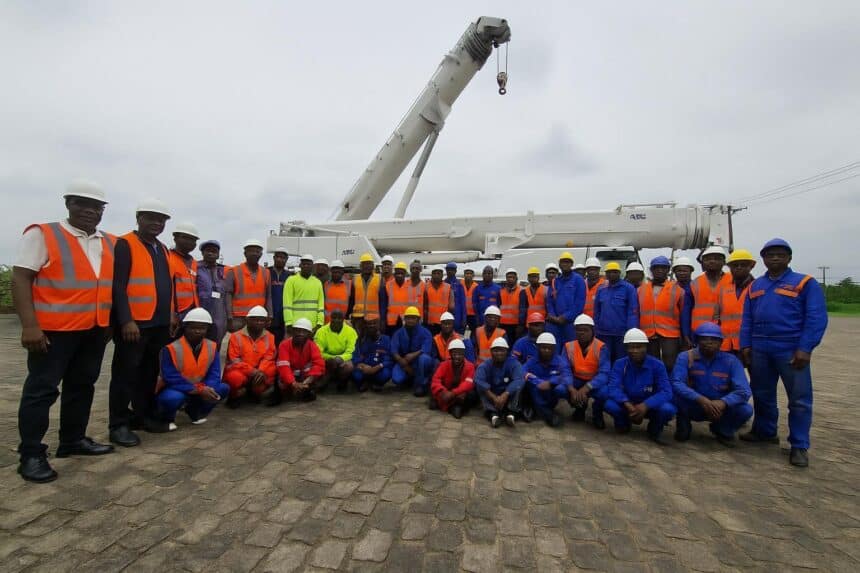
At 8 a.m. on 22 November, the massive gates of Africa Global Logistics’ technical workshop in the industrial zone of Pointe-Noire slid open to an unusual crowd: 54 teenagers from nine lycée and professional schools, clipboards in hand, ready for a first dive into heavy-duty mechanics.
The open-day event, organised by AGL Congo’s technical and equipment department, aimed to shorten the distance between the classroom and the job site, giving future technicians a full view of the machines that keep port logistics, mining convoys and city construction running.
Inside the hangar, eight-meter-high shelves of spare parts flanked lines of cranes, reach-stackers and diesel locomotives undergoing preventive and curative maintenance, a daily ballet that the students usually encounter only in textbooks or online videos.
Guided tour sparks curiosity
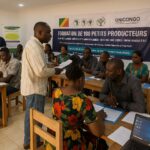
After a brisk hygiene, safety and environment induction, the visitors split into four groups of thirteen, each entrusted to a technician who acted both as guide and mentor, translating complex procedures into plain French and occasionally into vernacular languages so everyone could follow.
Stations were marked with yellow tape: electrical diagnostics, hydraulic assembly, welding, and digital stock management. At each stop, pupils manipulated calibrated tools, scanned QR codes on parts and tried augmented-reality glasses that overlay maintenance steps onto an engine block.
A surprise demonstration involved a remote-controlled inspection robot that slides under container trucks, sending live video to a tablet. The gadget, recently procured from a Congolese start-up, illustrated how local innovation now feeds directly into AGL’s maintenance chain.
“I thought mechanics was just grease and noise,” confessed final-year student Ben Azebiyo, wiping carbon dust from his palms. “Now I see coding, sensors, even 3D printing. It pushes me to revise harder for the baccalauréat technique.”
Safety culture in the spotlight
Nothing moved without a siren or a checklist. AGL insists that newcomers absorb its ‘Zero Incident’ doctrine before they approach equipment. Helmets, goggles and high-visibility vests were mandatory, and tutors frequently paused demonstrations to quiz students on lock-out procedures.

“Safety is not a chapter at the end of a book; it is page one of our culture,” reminded Technical Director Yann Picard, pointing at the large scoreboard displaying 250 accident-free days. His message landed: phones went silent and questions turned practical.
In the fluid-power zone, for example, a misaligned jack was intentionally left on a bench. A student flagged it immediately, earning applause and underscoring how vigilance begins with a simple glance.
For the HSE team, the event doubled as a drill. Observers noted reaction times, signage clarity and the behaviour of first-time visitors. Findings will feed a continuous-improvement loop shared with the Port Authority, reinforcing public-private cooperation on workplace safety across the Pointe-Noire industrial basin.
Teachers and students voice enthusiasm
Accompanying teachers, among them Bertin Constant Bouya of Don Bosco school, welcomed the chance to validate their syllabi against industry standards. “Seeing the same diagnostic software in class and on a real terminal reassures us we’re not teaching obsolete material,” Bouya said.
Students carried home brochures on internship placements and scholarship schemes already active within AGL’s network. Several asked whether the company would sponsor their end-of-year projects, hinting at an immediate ripple effect on motivation back in the classroom.
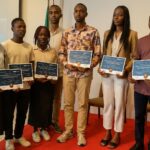
Earlier alumni now employed by AGL joined the tour in their blue overalls, a living bridge between the benches and the factory floor. Their informal chats on salaries, career progression and lifelong training drew some of the day’s loudest applause.
AGL’s long-term commitment to talent
Beyond the one-off visit, AGL Congo coordinates a rolling calendar of mentorships, vocational contests and community classes, initiatives aligned with the government’s ambition to raise technical skills and local content in key industries.
Company records show that fifty apprentices, including six women, have already completed year-long contracts at the workshop since 2022, with an 80 percent retention rate in full-time positions either at AGL or partner firms operating in Pointe-Noire’s port corridor.
AGL also supports the national curriculum reform by providing case studies on logistics automation and green fuels. A memorandum of understanding with the Ministry of Technical Education, signed earlier this year, plans to equip two pilot classrooms with refurbished engines and simulation software.
Next on the agenda is a girls-only workshop slated for March, timed with International Women’s Day, aiming to counter stubborn stereotypes that keep female enrolment in technical streams below 15 percent nationwide.
“Each talented youngster we mentor strengthens Congo’s economic sovereignty,” argued Picard. “When maintenance is handled locally, turnaround times shrink and costs drop, which benefits the entire value chain, from importers to households.”
As buses rolled out at dusk, the teens packed safety helmets alongside new ambitions. The workshop’s clatter faded behind them, yet many promised on social media to return—as interns, technicians or engineers—signalling that AGL’s open doors may have opened new futures as well.