Students meet living heritage
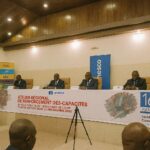
Brazzaville’s Marien Ngouabi University auditorium turned into a temporary gallery on 16 December as the National Museum rolled in boxes of copper, clay and raffia. The second campus-based workshop, titled “The National Museum meets its university public”, aimed to reconnect students with the Republic of Congo’s ancestral creativity.
Organisers chose a projection format rather than a classic display. Close-ups of masks, tools and ceremonial currency filled the giant screen, letting economics or IT majors lean forward in surprise, whispering questions usually reserved for history class.
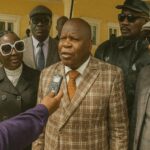
“We completed four major collection trips between 2012 and 2014, then had to pause for lack of funds,” museum director Marcel Ipari reminded the hall. “Recently we picked up the trail again in Itoumbi and Mbomo,” he added, punctuating the sentence with a hopeful smile.
Ancestral artefacts in focus
The afternoon programme blended lecture, storytelling and anecdote. Elder curators explained how a simple wooden ladle once served both kitchen chores and dowry negotiations, while younger researchers highlighted the engineering hidden in a double-chambered terracotta soup tureen.
Against the backdrop of exam season, the event doubled as a reminder that knowledge is not confined to textbooks. “These objects are our past speaking,” Ipari said. “You must know where you come from before deciding where to go.” The audience responded with steady applause.
Images of a curved throwing knife, a copper bracelet polished by generations, and the famously sonorous gongoulette drew murmurs. Pottery pieces, some still bearing fingerprints of long-gone artisans, stood beside raffia cloth that once travelled village to village as money and message.
Students of the École Africaine de Développement leaned closer when a mute video demonstrated a traditional forge. Leather bellows puffed gently, revealing early metallurgical skills that pre-date many European techniques cited in their coursework.
For an hour the room slipped between past and present, copper sparks flashing on screen while mobile phones filmed every minute. Later, recordings flooded WhatsApp groups, widening the reach beyond the four hundred seats.

Voices from the museum
Ipari delivered a gentle challenge: “Use the curiosity you show today to drive research tomorrow.” He extended an open invitation to join upcoming field trips, stressing that artefacts gain value when layered with oral testimony from village elders.
Curator Aimée Nkouka added a practical note, explaining conservation hurdles. “Wood absorbs humidity quickly in our climate. A cracked mask is not only aesthetic loss; we lose encoded information about clan identity,” she said, urging more science students to consider heritage chemistry.
A classroom without walls
Representing the Ministry of Cultural, Tourist, Artistic and Leisure Industries, chief of staff Lis Pascal Moussodji Nziengui framed the workshop as the first step of a “fertile collaboration” with the university. Joint research projects, updated curricula and museum internships are on the ministry’s roadmap.
He told students to treat the repository as a living laboratory. “Turn these collections into essays, business plans or fashion lines,” he suggested, hinting that creative economy graduates could translate heritage into jobs without exporting objects themselves.
Faculty members nodded. Some, like anthropologist Dr. Paule Kibangou, see immediate gains. “Our tutorials lack tangible artefacts. Partnering with the museum lets us ground theory in material culture,” she said, promising to accompany classes to future field sessions.
Digital future for traditional art
A pilot digitisation project also surfaced. According to Nziengui, scanned models and 360-degree photographs of the newest collections will be uploaded to a publicly accessible platform, allowing diaspora scholars and rural pupils alike to zoom in on tool marks or weave patterns.
The museum already catalogues more than 15,000 objects, yet only a fraction is visible at its downtown premises. Digitisation, staff argue, can flatten space, reduce handling and create backup records in case of fire or flood, recurring risks along the Congo River.
Follow-up sessions are already pencilled in for early 2026, this time focusing on intangible heritage such as lullabies, proverbs and initiation songs. Recordings will blend with the 3D models, creating interdisciplinary archives that merge sound, image and text in one searchable portal.
Looking ahead to a new home
Government plans include building a modern wing for the National Museum in Mpila, a fast-growing district east of the capital. While timelines remain to be finalised, officials envision climate-controlled galleries, research labs and a theatre capable of hosting multimedia storytelling nights.
Until the bricks rise, touring workshops will keep objects in motion rather than locked behind glass. The approach echoes community outreach programmes championed by President Denis Sassou Nguesso, who frequently emphasises culture as a pillar of national cohesion and youth opportunity.
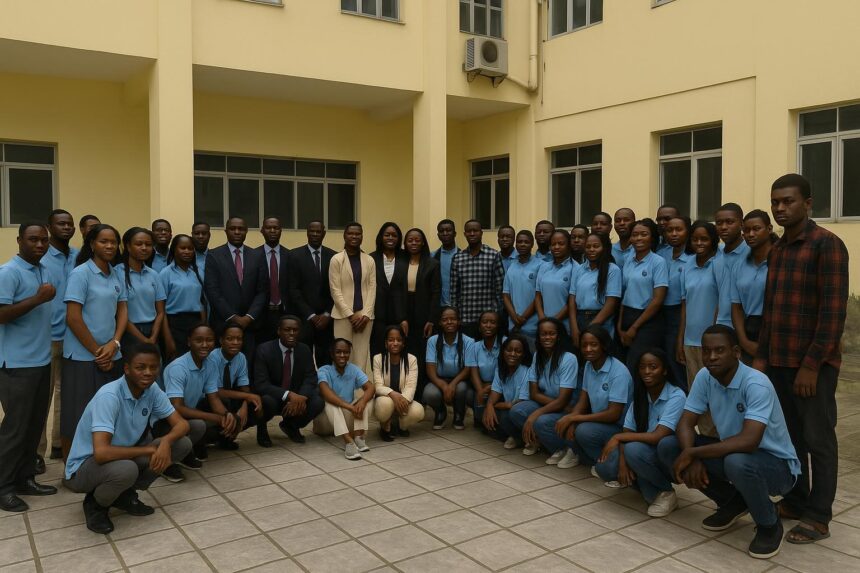
As dusk settled over the campus, students lingered at the stage, posing for selfies with the curators, notebooks packed with potential dissertation topics. A simple projection had expanded their academic map, proving that heritage, when shared, can be as forward-looking as any innovation hub.