High-profile Brazzaville launch
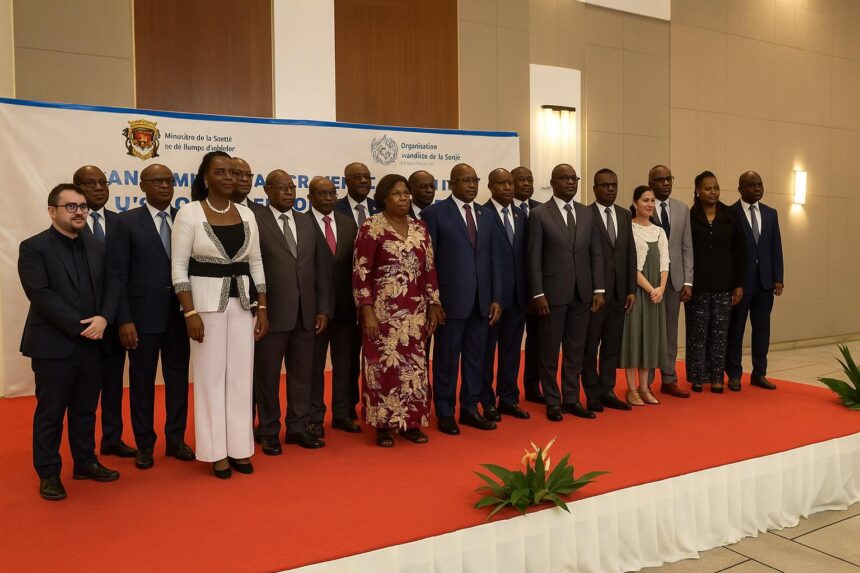
Flashbulbs popped inside Brazzaville’s Grand Hotel de Kintélé as officials, diplomats and civil-society leaders unveiled the Country Cooperation Strategy 2025-2028 linking the World Health Organization and the Congolese government. The 5 December launch signalled a fresh push toward the national vision of “health for all.”
Health and Population Minister Professor Jean-Rosaire Ibara presided over the ceremony, joined by Defence Minister Charles Richard Mondjo, WHO Resident Representative Dr Vincent Dossou Sodjinou and United Nations partners. Three tightly choreographed moments – opening remarks, technical presentation, and a signature of commitment – framed the two-hour event.
Shared vision of health for all
Dr Sodjinou reminded participants that President Denis Sassou Nguesso’s pledge of universal coverage is “not a mere wish but a concrete roadmap.” He stressed WHO’s readiness to back primary care upgrades, modern diagnostic hubs and stronger emergency preparedness, especially as climate shocks and epidemics grow more frequent.
Ibara, who recently toured hospitals in Brazzaville and Oyo, described the strategy as both “political compass and operational toolbox.” He praised the rapid response to cholera, Mpox and measles, wider vaccine reach and the opening of the National Institute of Biology and Health Surveillance in Pointe-Noire.
Five strategic axes 2025-2028
Behind the speeches lies a year-long drafting process that convened ministries, bilateral donors, private businesses, non-governmental organisations and local health workers. Five priority axes emerged, each aligned with the national health development plan, WHO’s 14th Global Programme of Work and the Sustainable Development Goals.

The first axis targets robust primary health care. The plan calls for refurbishing rural clinics, equipping community nurses with digital tools and ensuring essential medicines are within an hour’s walk, a concept officials call “kilometre zero.”
The second centres on epidemic intelligence. Laboratories in Brazzaville and Pointe-Noire will be networked so that suspected pathogens can be confirmed within 48 hours, trimming the window for alerts and containment.
The third axis bolsters maternal, neonatal and adolescent health. Expanded antenatal visits, adolescent-friendly spaces and a renewed push against malaria through 6 million insecticide-treated bed nets are flagged as quick wins.
The fourth focuses on health financing. A national health solidarity fund, fed by innovative taxes on tobacco and sugary drinks, aims to lighten household spending, which still covers roughly 35 percent of total health costs according to the Ministry of Finance.
Finally, axis five promotes climate-resilient infrastructure. Flood-proof clinics, solar cold-chain rooms and greener waste management are designed to protect services during extreme weather events increasingly felt along the Congo River basin.
Whole-of-society engagement
Panellists kept stressing that health depends on more than hospitals. “Education, clean water, decent roads and stable jobs vaccinate a community as surely as a syringe,” said economist Denise Mabiala from the Chamber of Commerce.
Local industry echoed that view. Sébastien Nkouka, who runs a cement factory near Dolisie, pledged reduced emissions and apprenticeships for biomedical technicians. “Our profits rise with a healthy workforce,” he told the audience.
Community voices had their turn too. Mama Thérèse, a market vendor from Makélékélé invited to the panel, urged planners to keep listening. “We need nurses who speak our languages and clinics that open before dawn, because mothers queue at five,” she said, drawing nods across the hall.
What citizens will notice first
What will citizens feel first? Health officials promise shorter queues for child immunisation, stock-secure pharmacies and quicker outbreak alerts delivered via SMS. For many families, the greatest relief could be financial: fewer trips to private pharmacies and clearer fee schedules in public facilities.

To track progress, dashboards will publish quarterly data on outpatient visits, drug availability and budget execution. The Resident Coordinator’s office will host joint reviews each December, ensuring transparency and allowing early course corrections, a demand repeatedly raised by civil-society monitors.
From pledge to everyday reality
Dr Sodjinou closed the event by inviting every participant to sign a giant banner emblazoned with the slogan “Together for Equity.” The image of ministers, ambassadors and students holding one pen became the day’s viral photo across Congolese social media.
The 2025-2028 Country Cooperation Strategy does not mark a finish line but a starting block. With coordinated investment, officials believe Congo can slash preventable diseases, reinforce resilience and move steadily toward universal health coverage, turning the slogan “health for all” into everyday reality from Pointe-Noire to Impfondo.
In rural Sangha, nurse Adèle Obili summed up hopes: “With supplies steady, our courage will do the rest.”