Brazzaville ceremony marks new chapter
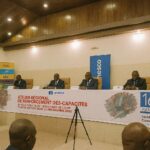
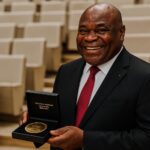
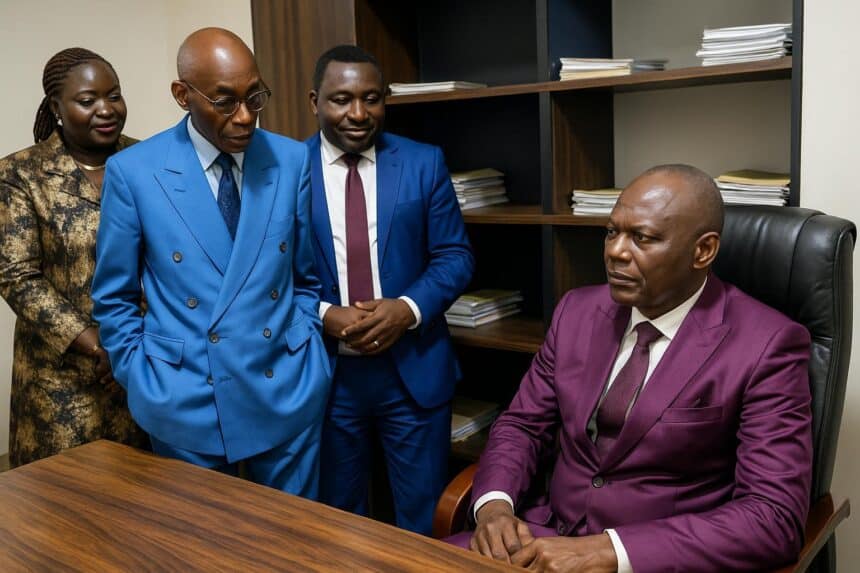
Applause filled the conference hall of the ministry’s central building in Brazzaville on Friday, 7 November, as Remy Alain Blaise Boumba accepted the insignia of director-general for Literacy and Non-Formal Education from Minister Jean-Luc Mouthou, sealing the presidential decree signed four days earlier.
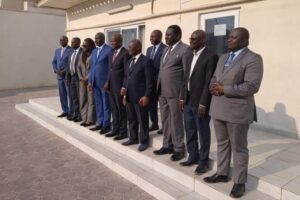
Civil servants, local leaders and invited students witnessed the handover between outgoing officials, a tradition designed to underline continuity inside the vital department responsible for giving out-of-school youths and adults a second chance to read, write and count.
Who is Remy Alain Blaise Boumba?
Born in Boko-Songho, Bouenza, in 1964, Boumba rose through classrooms and corridors of power with a reputation for discipline, starting as a French teacher before steering the Directorate of Adult Literacy and the Orientation and School Works Service during fifteen intensive years, mastering budgeting, mediation and grassroots needs.
Union activism also shaped his profile; he helped launch the National Teachers’ Union for Equality and Renewal, experience that, according to colleagues, honed his negotiation skills at the intersection of pedagogy, labour rights and public administration.
His 2010 decoration as chevalier in the Congolese Order of Devotion still hangs in his modest office, a reminder, he says, that “service is earned every single day and not only at award ceremonies”.

Congo literacy challenge in numbers
The latest survey by the ministry estimates that roughly one adult in three still struggles with basic literacy nationally, a rate higher in rural districts such as Cuvette-Ouest and Plateaux, where distance and poverty often keep children from finishing primary school (Les Dépêches de Brazzaville).
UNESCO’s regional dashboard echoes those numbers, flagging that limited access to second-chance programmes can slow economic inclusion, especially for women running informal businesses, who frequently cite paperwork fears as a barrier when seeking micro-loans (UNESCO Institute for Statistics).
Four strategic pillars unpacked
To tackle the gap, Boumba unveiled a roadmap built on four pillars: rewriting the strategic framework; professionalising non-formal learning centres; tightening governance; and multiplying partnerships, from town halls to telecom firms willing to sponsor digital classrooms.

He confirmed that recommendations adopted during the National Council on General Education in September 2024 will “not stay in drawers”, stressing speedy publication of new literacy manuals featuring local languages alongside French, an approach praised by several linguists at Marien-Ngouabi University.
The ministry has already floated the idea of performance contracts linking each department’s funding to measurable indicators, such as the percentage of learners attaining Level 2 literacy after a six-month cycle, a metric the new DGAENF says he supports “for transparency and motivation”.
Teachers and learners react
At the ceremony, teacher Pauline Mambou welcomed the appointment, noting that Boumba’s classroom background “means he knows the smell of chalk”, while civil society organiser Gaston Mbila urged him to accelerate the inclusion of disabled adults in upcoming programmes.
Parents in Makélékélé market shared more pragmatic hopes: cheaper evening courses and safe transport for teenage girls. “If the centre closes at 20:00, we need streetlights and buses,” one mother insisted, pointing to security concerns that often derail attendance.
Government support and partnerships
Minister Mouthou pledged to back the new director with budget reallocations and technical assistance from the World Bank–financed Education Sector Support Project, which recently provided tablets for monitoring community centres in Pointe-Noire and Dolisie (Ministry communiqué).
Private operators are listening too. The Congolese Telecommunications Company announced exploratory talks to zero-rate selected learning platforms, an initiative analysts believe could boost remote tutoring for fishers along the Kouilou River during the off-season.

What it means for families and communities
For many families, the immediate question is how soon new classes will open. The DGAENF’s office targets January enrolment for 10,000 additional learners, pending the printing of manuals now at the National Press.
Community chiefs in Boumba’s home department already plan local awareness caravans, mixing football tournaments with on-site registrations, a tactic that proved effective during the last voter roll update.
Boumba closed his inaugural speech with a simple promise: “Literacy turns on the light in every household. My mission is to make sure no bulb remains off.” The coming months will test how bright that pledge can shine across the Republic of Congo.