A fresh political memoir hits shelves
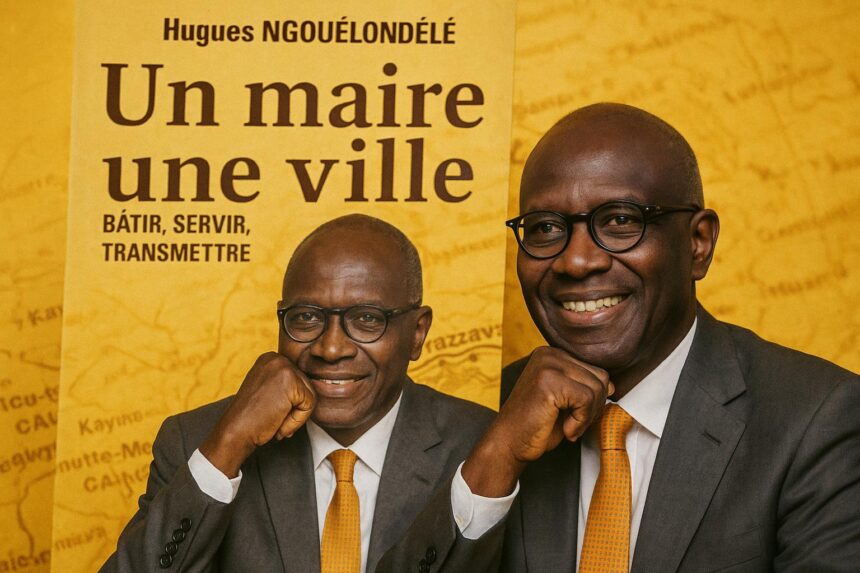
Hugues Ngouélondélé, the man who steered Brazzaville through three consecutive mandates, is back in the spotlight with a 207-page memoir titled “Un maire, une ville. Bâtir, servir, transmettre,” published by Michel Lafon.
Appearing simultaneously in French bookshops and on the main digital platforms, the volume lands at a moment when many Congolese are hungry for practical examples of governance that blend ambition with everyday service.
Far from a political tract, the author frames his narrative as a civic diary, walking readers through flood crises, street-market negotiations and late-night waste-collection tours that shaped the modern face of the capital between 2003 and 2016.
Hugues Ngouélondélé’s Brazzaville story
Ngouélondélé recalls arriving at City Hall as a 40-year-old engineer, facing potholed avenues, opaque budgets and rising demographic pressure.
“The city was buzzing yet fragile,” he writes, citing conversations with street vendors on Avenue Matsoua who feared relocation but still asked for better sanitation.

By methodically mapping informal settlements, launching public audits and partnering with neighbourhood churches on education drives, he argues that municipal leadership can build trust without waiting for top-down directives.
Building, serving, passing on
The book’s three verbs—build, serve, transmit—structure chapters that move from bricks to ethics to memory.
Ngouélondélé details flagship projects such as the re-paving of Avenue des Trois-Martyrs, financed through a city bond rated by regional agencies, and the installation of solar streetlights in Mfilou that cut energy bills by thirty percent.

Behind each concrete achievement, he stresses, stood teams of civil servants often invisible in public debate, “from the draughtswoman drawing sewer lines to the driver who knew every shortcut around a traffic jam”.
A handbook for the next generation
While the narrative stays close to Brazzaville, the author sprinkles lessons for any mid-sized African city facing climate shocks, youth unemployment and budgetary constraints.
He advocates incremental wins—repairing a water pipe before drafting a master plan—because visible progress, he argues, galvanises citizens more quickly than glossy policy papers.
The final section, co-written with two young municipal staffers, lists transferable practices on participatory budgeting and digital mapping, aiming to ‘transmit’ skills beyond a single mandate.
Publishing with Michel Lafon
Signing with Paris-based Michel Lafon places Ngouélondélé alongside other African leaders who have chosen the house for accessible, photo-rich memoirs, including Senegal’s former mayor Khalifa Sall.
Editor Antoine Lafon describes the book as ‘a service manual dressed as a story’, praising its blend of colour photographs, hand-drawn maps and sidebars that decode municipal jargon for general readers.

How and where to get the book
In Brazzaville, the first shipment arrived this week at Librairie du Centre, near Place de la République, where copies sold out in two hours, prompting a second air-freight order due by Friday, according to store manager Clarisse Malonga.
Readers in Pointe-Noire can already pre-order through the cultural centre’s kiosk, while the e-book is live on major platforms and ships worldwide in print through the publisher’s website.
A local launch event, featuring a short documentary clip and a panel of urban-planning students, is scheduled for late November at the Palais des Congrès, offering audiences a chance to debate the lessons drawn in the memoir.
Reactions from civil society
City environmentalist Grace Diawara praises the memoir for highlighting waste management, noting that the chapter on composting pilots in Makélékélé aligns with her NGO’s push to turn food scraps into fertiliser, an idea now being tested in two community gardens.
Trade-union leader Jean-Paul Mabiala is more cautious, reminding readers that some municipal workers still await pension back-payments, yet he admits the transparency tables reproduced in the book ‘set a bar we can use in negotiations’.
Academic perspective
Urban-studies lecturer Dr. Sonia Mavoungou from Marien Ngouabi University sees the memoir filling a gap in francophone scholarship, where first-person municipal accounts remain rare compared with anglophone cities such as Nairobi or Accra.
She plans to assign several chapters to her fourth-year seminar, arguing that the mix of anecdote and data allows students to cross-check narrative claims against municipal statistics available in the annexes.
Literary context in Congo
The release arrives amid a flourishing nonfiction scene in the Republic of Congo, with recent titles by economists, historians, and entrepreneurs finding audiences beyond academic circles.
Booksellers credit social media influencers for driving foot traffic to bookstores; in Brazzaville, the hashtag #MaVilleMonHistoire trended for twelve hours after the cover reveal, boosting pre-order figures, according to analytics firm AfroPulse.
Looking ahead
Now serving as Minister of Sports, Ngouélondélé hints in the epilogue at a forthcoming volume dedicated to football infrastructure, a domain he oversees nationally and that will be crucial in the run-up to the 2025 All-Africa Games.
For readers, that promise signals an ongoing conversation about public service that extends beyond city limits, inviting citizens to accompany the author on his evolving journey from town hall to cabinet office, and perhaps to future regional and continental leadership roles.