Brazzaville gathers 300 minds on human capital
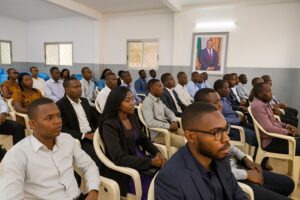
For two energetic days, Brazzaville’s Palais des Congrès thrummed with conversation as more than 300 executives, researchers and students joined the inaugural Human Capital Forum, themed “Development and Valorisation of Human Capital: a Pillar of Economic and Social Growth in the Republic of Congo”.
The gathering, held from 3 to 4 December, aimed to link training with real jobs, spotlighting how healthy workplaces feed productivity and, ultimately, the national wallet. Organisers framed the event as a springboard for pragmatic ideas rather than a parade of speeches.
Participants came from ministries, private giants like Africa Global Logistics, start-ups and universities. Many flew in from Pointe-Noire before sunrise, signalling how urgently Congolese employers are hunting for skilled hands able to navigate a diversifying economy anchored in logistics, services and greener industries.
Workshops turn theory into tools
Instead of long plenaries, organisers broke the forum into fast-paced workshops on CV writing, digital recruitment, psychosocial health and career coaching. Attendees moved between tables, clutching notepads and smartphones, polishing elevator pitches while HR veterans dissected common interview traps.
“We wanted a space where questions flow both ways,” explained Nouani Kiba Gatsongo, executive president of the African Observatory of Human Resources. “Students ask what employers value, employers learn how study programmes are evolving. That dialogue saves time in the labour market.”

Panels also probed the link between quality of life and output. Psychologists presented data showing teams with clear career paths and ergonomic spaces deliver up to 15 percent higher performance metrics. The statistics drew nods from senior managers balancing cost control with retention.
Corporate giants open doors
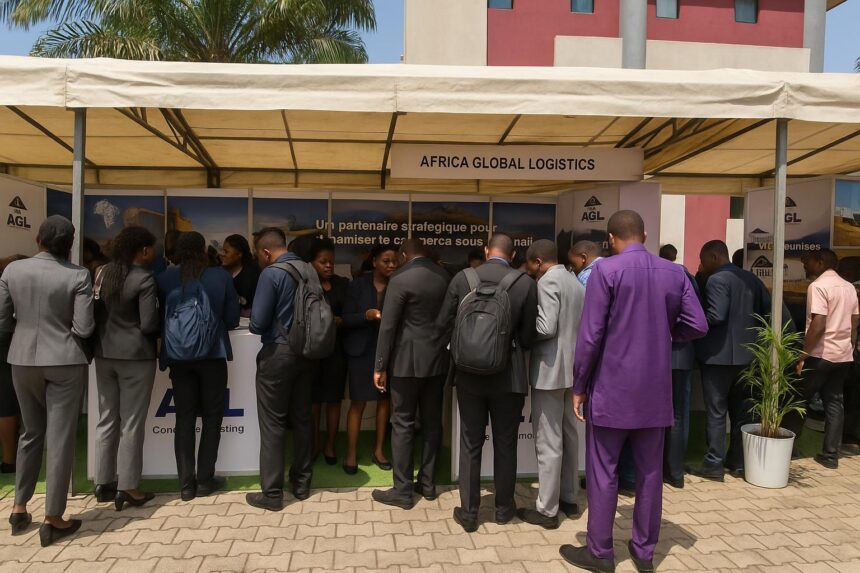
Africa Global Logistics, concessionaire of Congo’s busiest ports, used the forum to showcase apprenticeship tracks in handling, maintenance and IT. HR director Aristide Ndjawe stressed that solidarity remains an internal compass: “Guiding youth, giving them employability tools, is not charity—it’s how we future-proof operations.”
The company’s stand, flanked by a container-turned-classroom, attracted long queues of civil engineering and logistics students. Recruiters ran mock simulations, letting applicants schedule vessel berthings or route freight by rail. Several candidates left with internship confirmations inked on the spot.

Congo Terminal, subsidiary of the same group, revealed a mentorship programme pairing senior crane operators with vocational trainees from Brazzaville’s outskirts. According to company figures, last year’s cohort achieved a 92 percent job retention rate, a statistic that drew applause across the main hall.
Officials outline policy push
Representatives from the Ministry of Technical and Vocational Education pointed to the forthcoming National Skills Strategy, set for cabinet review in March. The roadmap earmarks funds for dual-training hubs in port cities and incentives for companies that host apprentices longer than six months.
“Our demographic curve is an opportunity, not a burden,” declared Director-General Marie-Noëlle Okemba during a crowded plenary. She added that streamlined certification processes will soon allow informal-sector workers—mechanics, welders, agro-processors—to convert experience into recognisable diplomas, boosting mobility across regions.
Students voice expectations
For aspirants like Nadège Mabiala, a final-year economics student, the chance to speak face-to-face with recruiters felt transformative. “We read job descriptions online but rarely get feedback,” she said, clutching a freshly reviewed résumé. “Today I understand exactly which soft skills matter.”
Dozens of attendees downloaded an app launched during the forum that maps vacancies in real time across Pointe-Noire, Brazzaville and Oyo. Developers promised push notifications filtered by sector and experience, an innovation applauded by jobseekers tired of travelling to noticeboards.
University career officers, meanwhile, collected surveys on curriculum gaps. Preliminary results suggest digital literacy and English proficiency top employer wish-lists, followed closely by project management. Faculties pledged to adjust modules next semester, aligning classroom theory with port-side realities.

Health and productivity under the spotlight
Beyond jobs, speakers from the National Social Security Fund underscored the cost of untreated stress. They cited a regional study estimating that absenteeism linked to hypertension and burnout drains nearly 0.8 percent of national GDP. Recommended remedies included flexible shifts and on-site screening days.
Several firms volunteered to pilot these measures in January, sharing data through the Observatory’s online dashboard. “Healthy employees think faster, drive forklifts safer and stay longer,” summed up occupational physician Dr. Aimé Kimbembe, drawing approving murmurs from the logistics-heavy audience.
Next steps and lasting impact
Before closing, organisers announced that the forum will return next year with regional editions in Pointe-Noire and Dolisie. A working group will track commitments made, from curriculum updates to ergonomic audits, and publish quarterly progress notes.
By sunset, lanyards were swapped for business cards and future coffee dates. While metrics will tell the full story, early signs suggest the Human Capital Forum has carved a new meeting point where academia, industry and government can align ambitions for Congo’s most valuable resource—its people.
Sponsors closed the evening with a networking concert by local band Extra-Musica, reminding visitors that talent also sings brightly.