Civil society backing sought
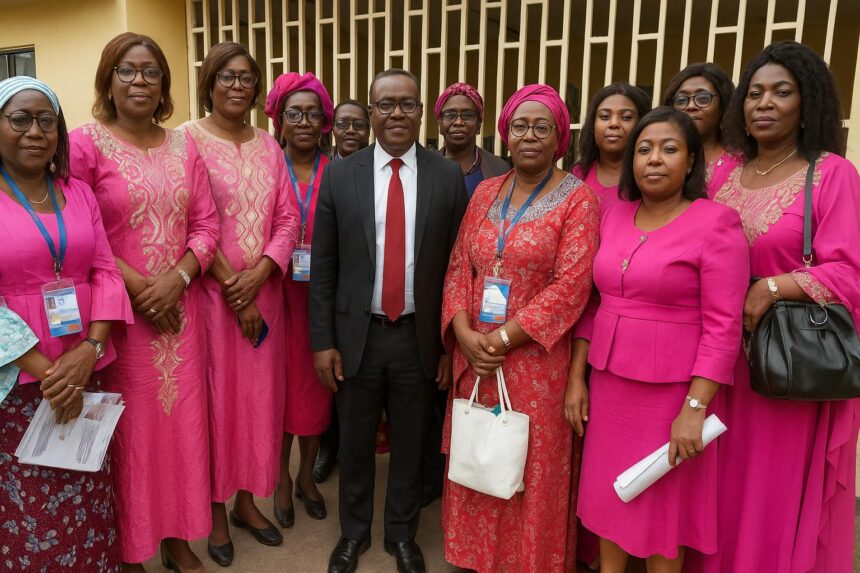
On 3 November, inside the bright offices of Brazzaville’s Civil Society Consultative Council, a small delegation of women entrepreneurs made a direct pitch for institutional backing. Their message, delivered with conviction, was simple: support us now, and central Africa’s female-led businesses will thrive across national and export markets.
Leading the group was Marie Claire Abogue Ndong, vice-president of the Federation of Women Entrepreneurs’ Organisations of Central African States, FOFE-AC. She asked secretary-general Germain Cephas Ewangui for guidance, visibility and logistical help to turn a portfolio of empowerment projects into concrete, job-creating ventures.
AfCFTA, the new frontier
At the heart of the request lies the African Continental Free Trade Area, AfCFTA, officially active since 2021. FOFE-AC wants its 600-plus members, spread from Libreville to Bangui, to grab a share of the enormous single market promised by the treaty, worth 1.3 billion consumers and counting.
“AfCFTA is not an abstract acronym for us,” Abogue Ndong stressed after the meeting. “It is the road that can take a baker in Ouesso or a fashion designer in Pointe-Noire straight to buyers in Lagos.” Her appeal blended ambition with the pragmatism of seasoned traders for all.
Civil society as catalyst
For that road to open, FOFE-AC believes the Congo’s Consultative Council can act as a political compass. The institution, created by presidential decree in 2013, advises government on non-profit affairs. Its blessing often reassures banks, donors and even customs agents that a project has official legitimacy.

Ewangui, known for his calm style, welcomed the request. He reminded journalists that the Council’s mandate includes promoting gender-sensitive growth and pledged to ‘examine every avenue so these initiatives succeed’. No memorandum was signed, yet both sides agreed to establish a joint technical committee before year end.
Connecting with CEMAC agencies
Another dimension of the strategy involves the Central African Economic and Monetary Community, CEMAC. FOFE-AC argues that if regional agencies endorse its programmes, women-run firms will secure faster certification, common product standards and, crucially, easier access to the zone’s shared payment system, BEAC-GimacPay.
Observers note that CEMAC integration remains uneven. Tariff barriers between neighbouring states occasionally re-emerge. By sitting at the same table with state-recognised civil society bodies, FOFE-AC hopes to defuse such obstacles early. “We are offering ourselves as both beneficiaries and partners,” said Abogue Ndong, reflecting this cooperative posture.

Entrepreneurs on the front line
Behind the acronyms stand real stories. Huguette Mabiala, who runs an organic cassava chips workshop in Brazzaville’s Talangaï district, says transport surcharges add thirty percent to her export cost. “If the Council can speak for us at customs, my chips reach Douala supermarkets at competitive prices.”
In Pointe-Noire, designer Christelle Goma has a different challenge: sourcing quality fabric. She hopes AfCFTA rules of origin will allow her to import cotton from Benin tariff-free, assemble garments locally and sell across the sub-region. She describes the new alliance with the Council as ‘a confidence booster’ for online marketplaces.
Numbers, skills and funding
The National Statistics Institute estimates that women already head forty percent of Congo’s small and medium enterprises, yet these firms capture less than fifteen percent of export revenue. Research by the African Development Bank links the gap to limited credit history and weak participation in regional value chains.
FOFE-AC’s plan includes a digital registry listing member firms, their products and compliance certificates. Ewangui hinted the platform could be hosted on the Council’s server, ensuring data credibility. International donors such as UN Women have financed similar registries in Rwanda and Ghana with positive spill-overs on sales and data transparency.
Ahead of any AfCFTA shipment, the federation wants to run workshops on packaging norms, e-invoicing and cross-border tax. The Institut National d’Appui à la Petite Entreprise has expressed readiness to provide trainers. By pooling efforts, organisers aim to certify two hundred entrepreneurs before the next CEMAC business forum.
Finance remains the final piece. Conversations are under way with local microfinance houses to design a guarantee fund capped at 500 million CFA francs. According to FOFE-AC treasurer Pauline Mouanga, preliminary modelling indicates the fund could unlock five times that amount in commercial bank lending over three years.

A cautiously optimistic calendar
Stakeholders have pencilled early February for a first public showcase in Brazzaville, featuring product demos and a live link with AfCFTA secretariat officials in Accra. Pending Council approval, invitations will go to customs directors, port authorities and e-commerce platforms to simulate a complete export chain on site.
The tone after 3 November was unmistakably forward-looking. While formal agreements still require vetting, the dialogue sets a precedent for how civil society, government advisers and businesswomen can cooperate without friction. As Ewangui concluded, ‘Empowering women entrepreneurs strengthens households, districts and, ultimately, our national economy’.