Campus voices unite against gender-based violence
Last week, two Brazzaville campuses turned their lecture halls into arenas of ideas as 102 students faced off in the first Inter-University Literary Contest on Gender-Based Violence, spearheaded by the association Zéro Violences en Milieu Scolaire et Universitaire.
Held inside the exuberant red-brick hall of the private Henri Lopez University, the debut event aimed to turn reading into concrete activism, challenging each participant to critique a book on gender violence and propose real solutions for safer campuses.
The contest enjoyed the blessing of high-profile guests, including Yennice Claire Mberi Moukietou, executive secretary of the Consultative Council for Women and official patron of the organising NGO, and a delegate of the Consultative Council for Youth.
Their presence signalled that the issue has travelled from discreet dormitory whispers to the desks of national advisers, a momentum many observers say will strengthen Congo’s ongoing action plan against violence and discrimination.
A debut contest built on literature and action
Zero Violences president Joseline Mansounga Moumossi set the tone at the opening, declaring that ‘the silence around assaults must end right here, right now; universities should teach brilliance, not fear’.

She urged lawmakers to adopt tougher statutes on campus harassment and guaranteed the NGO’s hotline would guide survivors toward medical, psychological and legal aid without stigma.
Backed by partners such as UNFPA and local human-rights clinics, the project reflects a regional push to meet Sustainable Development Goal 5 on gender equality, analysts note (UNFPA Brazzaville, 2024).
What the students said on stage
Students from the Université Libre du Congo and Henri Lopez University spent days dissecting the chosen work, a contemporary Congolese novel that portrays micro-aggressions, coercion and resilience within fictional dormitories similar to their own.

Each contender converted analysis into spoken-word, slam poetry, miniature theatre or even digital collage, proving that literature can leap off the page and challenge social norms.
Law student Daniel Zangha Elion electrified the room by comparing legal loopholes to ‘corridors without light where aggressors roam’, while economics major Victoire Mapengo highlighted the cost of trauma on national productivity.
Audience members, mostly peers, scored presentations in real time through a mobile app created by alumni, aligning with the contest’s goal of making activism as interactive as the social networks students scroll nightly.
Winners and prizes spark fresh momentum
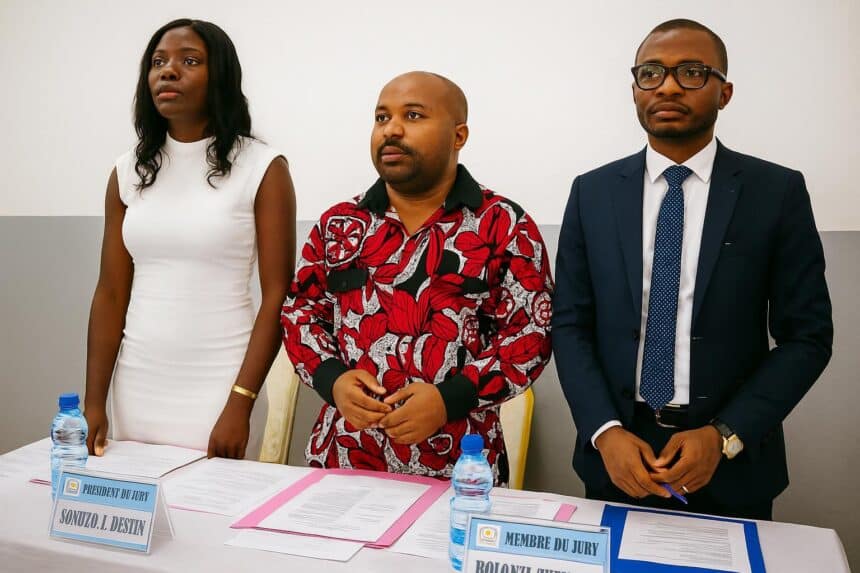
When the jury—writer Destin Jésus Sondzo, journalist Guershon Bolandzi and sociologist Destinée Kimbatsa—retreated for deliberation, suspense was thick enough to quiet even the usually boisterous ULC supporters.
At dusk, results dropped like hit singles: Zangha Elion clinched best presentation for ULC, while Mapengo secured the award for most incisive questions on behalf of UHL, earning book vouchers, tablets and internship pledges from partner NGOs.
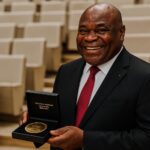
Mberi Moukietou herself received a commemorative plaque, underscoring the alliance between civil society, academia and public institutions.

Universities vow safer halls and stronger rules
Rectors from both universities pledged to integrate annual consent-education modules into freshman orientation and to publish transparent procedures for filing complaints, a move applauded by student unions (Les Dépêches de Brazzaville, 2024).
Campus security offices, often criticised for heavy-handedness, announced fresh training on survivor-centred response and the installation of discreet panic buttons in study zones.
Ministry of Higher Education officials, briefed on the contest’s findings, hinted at forthcoming guidelines that would link accreditation scores to the robustness of anti-violence policies across public and private institutes.
Next steps: from spoken words to daily change
For winners and non-winners alike, the evening closed with a collective pledge, signed on a giant poster board, to mentor secondary-school pupils and replicate smaller debates in neighbourhood libraries before semester’s end.
‘Talking shifts mind-sets, but consistent public talk shifts policy,’ Mapengo told reporters, her voice calm yet firm as students left with certificates and a renewed belief that courage can be as contagious as silence once was.
Although official statistics on campus violence remain scarce, a 2022 survey by the National Institute of Statistics suggested that one in five female students nationwide had faced unwanted advances, a figure advocates say underlines the urgency of turning scholarly spaces into laboratories for respectful relationships.
Congo’s government has already drafted a bill reinforcing sanctions for gender-based offences, and observers believe the energetic student movement could supply testimonies and data to support parliamentary debate later this year.
Corporate sponsors also spotted opportunity: a local telecom operator streamed highlights on its youth portal, pledging free data packages for future educational livecasts, while a Brazzaville bookstore offered discounts on feminist and legal literature throughout March.
Sondzo, chair of the jury, summed up the spirit in a closing remark: ‘We did not simply crown eloquence; we witnessed a rehearsal for the Congo our children deserve, one where art, law and compassion read from the same page’.
Organisers confirmed the contest will rotate to Pointe-Noire next semester, adding a visual-arts segment and inviting Angolan student delegates, a cross-border twist expected to broaden dialogue across the Congo River basin.