Juvenile justice focus in Brazzaville
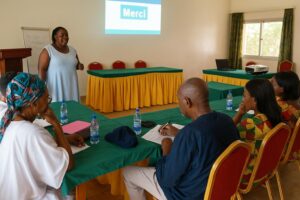
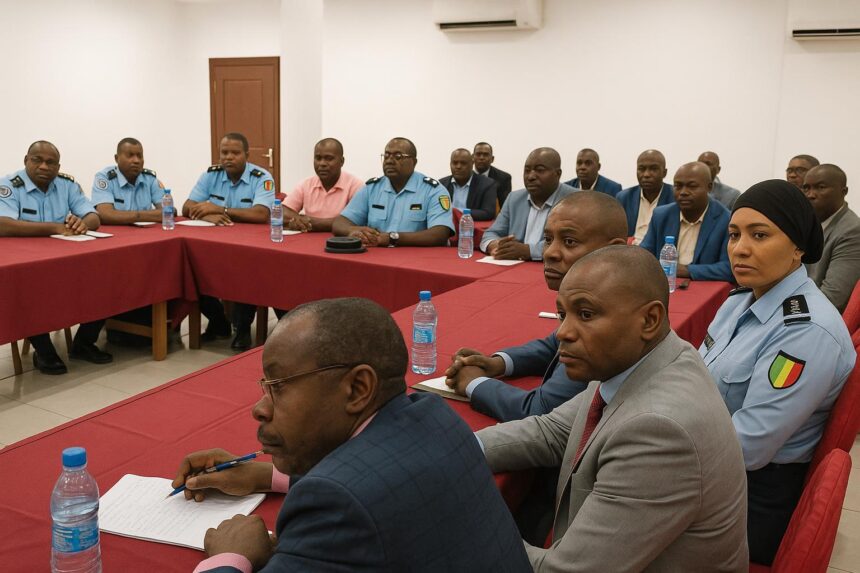
Court officials, police officers and social workers filled a training hall in Brazzaville on 15 December, determined to rethink Congo’s treatment of minors in conflict with the law. The day-long exchange was driven by the Directorate-General for Solidarity and the Reiper network, with UNICEF’s technical support.
Their common goal: guarantee every child’s right to fair proceedings and humane detention, even when resources are tight. Participants stressed that respecting age, vulnerability and future reintegration is not a luxury but a legal duty set by national and international texts.
Fifty frontline workers share experience
The organisers formed five mixed working groups. Magistrates compared case files with social workers, police officers measured arrest protocols against the Child Protection Act, and lawyers recalled courtroom realities. Each table extracted practical obstacles that still slow due process for minors.
From long pre-trial detention to the lack of bilingual forms for families, participants listed concrete issues they meet daily. By crossing viewpoints, they drafted a priority sheet that will feed future ministry decisions, according to coordinator Joseph Bikié Likibi.
International and national norms recalled
UNICEF representative Felana Aliderson opened the legal refresher by quoting the Convention on the Rights of the Child and Congo’s 2013 Child Protection Law, both requiring specialised juvenile courts and separate cells. “These standards exist; our task is to make them live,” she insisted.

Mathieu Clotaire Okoko, Secretary-General at the Ministry of Justice, echoed that message. He outlined the four pillars guiding state policy: non-discrimination, survival and development, child participation and a justice that educates instead of stigmatizing.
Gaps inside detention centres
Despite progress, the reality inside the country’s prisons remains stark. Brazzaville’s main jail, built for 150 inmates, now holds roughly 700, including adolescents who often await trial beside adults. Observers report cells without schooling or psychological support, conditions far from UN minimum rules.
Officials agree that mixing young offenders with seasoned prisoners fuels both trauma and recidivism. Yet the country still lacks a dedicated re-education facility, forcing judges into difficult trade-offs between public safety and child welfare.

Training to bridge the gaps
Throughout the workshop, trainers stepped through a new guide that lists every procedural safeguard, from the child-friendly wording of police cautions to time limits on pre-trial custody. Role-plays showed officers how to interview minors without intimidation, while magistrates rehearsed diversion options.
The manual also details restorative justice pathways, including community service projects supervised by social workers and local chiefs. “Combining modern law with constructive traditional practices can heal communities and save budgets,” notes Reiper legal adviser Nadège Nkala.
Government’s roadmap to protect youth
Officials emphasised that the child agenda aligns with President Denis Sassou Nguesso’s commitment to social cohesion. A proposal to convert a former training centre in Kintélé into a juvenile facility is already under review at cabinet level, sources at the Justice Ministry confirm.
Parallel plans include expanding legal aid so indigent minors automatically receive a lawyer, and digitising case tracking to cut procedural delays. “A rule is only powerful when applied,” reminded Okoko, urging every participant to become a relay of the reform.
Voices from the field
Police captain Ingrid Mvoulou left the session convinced that early guidance matters. “If we explain clearly from the first contact, most teenagers cooperate and court time drops,” she said, noting that her station handles around ten youth cases monthly.
For lawyer Aristide Moutou, the immediate challenge is financial. “Families often cannot pay transport to hearings. A small travel fund would prevent many no-shows and default judgments,” he argued, inviting NGOs and the private sector to share responsibility.

What comes next for vulnerable minors
In the coming weeks, each participant will train colleagues back home, creating a snowball effect expected to reach 300 professionals by March. UNICEF pledged to monitor implementation through quarterly field visits and offer counselling services for detained children.
Civil society groups, meanwhile, prepare awareness campaigns on radio and social media to inform families of their rights. The shared ambition is clear: turn the promise of child-centred justice into an everyday reality in Brazzaville, Pointe-Noire and beyond.