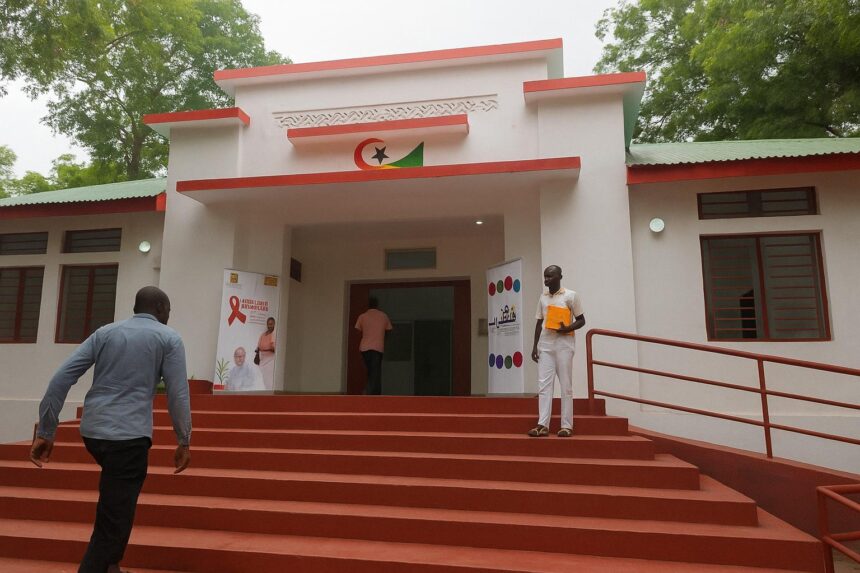
State-of-the-art PNLS headquarters opens
Sunlight fills the freshly painted corridors of Poto-Poto, where the National HIV/AIDS Control Programme, known locally as PNLS, now operates from a rehabilitated headquarters officially handed over on 15 December. The modern facility signals fresh momentum for Congo’s ongoing fight against the virus.
Built across a 10,000-square-metre compound and offering 23 versatile rooms, the building was restored by the United Nations Development Programme with financing from the Global Fund. Health staff and partners say the complex provides the logistical backbone that had long been missing from the national response.
Modern HQ boosts HIV fight
UNDP resident representative Adama-Dian Barry described the centre as a ‘beacon of hope’ that blends ergonomic workspaces with environmentally smart solutions. Solar lighting, improved ventilation and water-saving fixtures were integrated to lower operating costs while offering a more comfortable setting for counsellors, researchers and community outreach teams.
According to Barry, the rehabilitation took only five months, mirroring simultaneous upgrades of 20 district warehouses that will secure drug stocks across all 15 departments. The combined price tag of 384.4 million CFA francs — roughly 586,000 euros — was fully covered by global health partners.
Concrete gains already visible
While architects polished the walls, medical teams expanded coverage. Between 2024 and 2025, more than 48,000 people, including 3,000 children, started antiretroviral therapy under PNLS coordination. Prevention campaigns reached nearly 172,000 citizens with messages on safer behaviours, and 143,744 pregnant women received early screening services.

Barry noted that these figures rest on strengthened data collection. Baseline surveys now feed real-time dashboards, guiding field teams toward districts where new infections, paediatric cases or treatment drop-outs remain high. She said such evidence is essential for meeting the national target of ending the epidemic by 2030.
Inside the data centre, technicians explained that patient files are migrating to a secure cloud platform, curbing paper archives that once overflowed corridors. Instant analytics on viral-load suppression, medicine adherence and delivery routes will soon be displayed on wall screens, allowing managers to spot bottlenecks within minutes easily.
Government sees health as investment
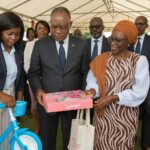
Health Minister Jean Rosaire Ibara, who cut the ceremonial ribbon, framed the project within President Denis Sassou Nguesso’s push for ‘an efficient state that listens.’ He insisted the new headquarters is not a cost but an asset, concentrating planning, monitoring, innovation and accountability under one roof.

Ibara urged staff to protect the premises and produce measurable outcomes. ‘Every brick will earn its value when a life is saved or a new infection prevented,’ he said. The minister’s remarks echoed the broader national health strategy that positions quality infrastructure as a driver of service delivery.
Partnership model praised
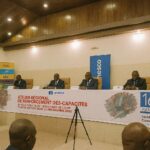
During the handover, PNLS coordinator Dr Cécile Laure Mapapa Miakassissa highlighted the ‘exemplary partnership’ binding the Congolese state, the Global Fund and technical agencies. She said the building crystallises years of cooperation and gives frontline workers the morale boost needed for the next phase of the HIV response.
UNDP and Global Fund officials likewise applauded the ministry’s openness. Joint steering committees, they noted, allowed quick design approvals, prompt financing flows and compliance with green building standards. That collaborative tempo, rare in large public projects, is now cited as a template for future health upgrades.
Beyond audits and blueprints, the partnership is visible in everyday workflow. Global Fund shipments of test kits and antiretrovirals will dock directly at the refurbished warehouses, then move through a digitised inventory system till they reach the new PNLS dispatch room, reducing stock-outs and transportation delays.
What lies ahead to 2026 and beyond
Looking ahead, Barry confirmed that the next funding cycle, steered by the Health Ministry from 2026, will tackle persistent gaps: new infections among young adults, paediatric treatment coverage and community-led testing. She pledged continued technical support to expand the ‘wide palette of public services’ already underway.
Dr Mapapa Miakassissa added that staff training will intensify once the headquarters becomes fully operational. Conference rooms equipped with video links are designed for remote mentoring, allowing specialists in Pointe-Noire or Owando to follow the same guidelines and share case reviews without leaving their districts.
As Congo eyes the 95-95-95 targets, civil-society groups urge that the momentum extend to stigma reduction and legal protections. Representatives present at the ceremony welcomed the infrastructure but called for more grassroots dialogue so that key populations feel safe to walk through the sleek new doors.
Ibara responded that the ministry is finalising user charters and feedback hotlines to make services ‘truly people-centred.’ He underscored that medical confidentiality, respectful counselling and zero discrimination policies will be enforced as rigorously as any engineering standard applied to the building itself.
Symbol and tool for ending HIV
With the ribbon cut and computers humming, the challenge now is to translate concrete walls into concrete results. For the thousands already on treatment and the many yet to be diagnosed, the new PNLS headquarters stands as both symbol and tool in Congo’s push to end HIV.