Young energy lights up African Youth Day in Brazzaville
Hundreds of young innovators converged on Brazzaville’s Memorial Pierre Savorgnan de Brazza as the Republic of Congo marked African Youth Day, a continental commemoration established by the African Union to celebrate the dynamism and creativity of people aged 15 to 35.
Minister of Youth and Civic Education Hugues Ngouelondélé led the ceremony on 14 November, highlighting this year’s theme, “From Aspiration to Action: Youth as Catalysts”, a slogan that echoes the African Union’s Agenda 2063 and the United Nations Sustainable Development Goals.
Around him, pop-up stands displayed eco-friendly soaps, 3D-printed spare parts, organic juices and mobile payment apps, giving visitors a tangible sense of local talent ready to answer national priorities such as job creation, food security and digital inclusion.
Ten rising startups receive a vital cash boost
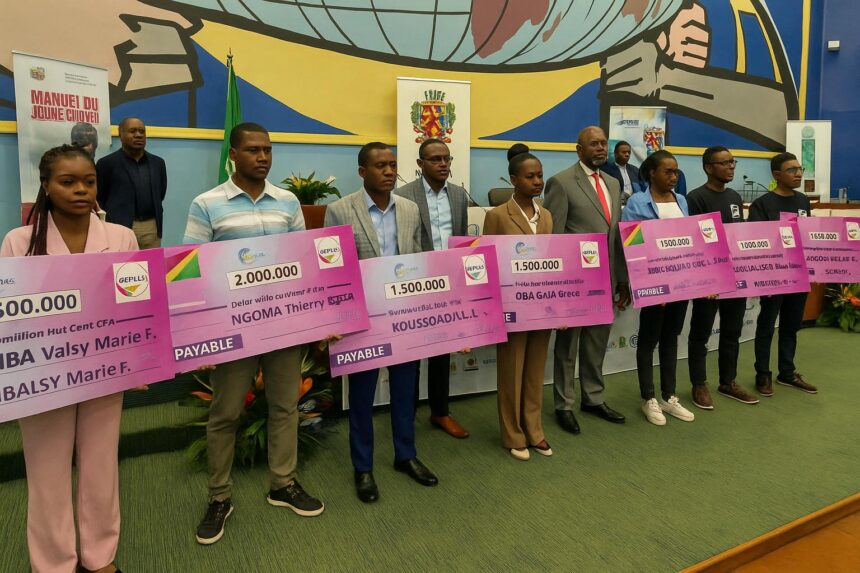
Ten standout entrepreneurs left the hall clutching oversized cheques, the latest cohort backed by the Youth Entrepreneurship Promotion Programme financed by the Ministry and partners such as the UN Development Programme and the African Development Bank.
Beneficiaries included soap maker Gesse Nzihou, e-commerce designer Divin Mouanda, agri-tech pioneer Agnhès-Grace Mouthynou, and fashion stylist Marie France Ngouama, each securing between one and five million CFA francs to scale production, hire staff and meet certification standards.

“The grant means new machinery and twenty additional jobs for young neighbours,” smiled Prince Ntinou, whose bamboo-fibre furniture line already exports to Pointe-Noire. His enthusiasm mirrors a national unemployment rate among 15- to 24-year-olds that the World Bank estimates at 20 percent.
Training pipeline already touches 15 departments
Programme coordinator Justine Nathalie Ngoma recalled that more than 200 entrepreneurs from 15 departments nationwide have completed intensive courses in business planning, accounting and marketing since 2020, with 36 enjoying direct subsidies totalling 67.1 million CFA francs.
The mentoring phase pairs each laureate with an accountant, a legal adviser and an experienced CEO for six months. According to Ngoma, this approach lifts the survival rate of start-ups after two years to nearly 90 percent, compared with 40 percent in informal ventures.

Finance lecturer Rodrigue Mavoungou from Marien-Ngouabi University notes that the country needs at least 30,000 new SMEs annually to absorb demographic pressure. “These grants are catalytic, but the wider ecosystem requires steady electricity, affordable internet and simplified taxation,” he stated in a phone interview.
Government officials say those structural reforms feature in the 2022-2026 National Development Plan, which banks on entrepreneurship to raise non-oil growth to 4 percent a year, in line with the President’s ambition to diversify the economy and curb youth emigration.
New civics manuals nurture patriotism in classrooms
Outside the start-up booths, Director-General of Youth Jycert Rochar Loukanou unveiled two slim volumes titled “Manual of the Young Citizen” and “Manual of the Young Patriot”, created with the National Institute for Pedagogical Research and destined for primary and secondary schools.
Each chapter blends songs, comic strips and quizzes on the national anthem, flag etiquette, traffic rules and community service. Teachers in Poto-Poto’s third arrondissement will pilot the material from January before its rollout to all 5,000 public classrooms.
“Patriotism starts with small gestures—paying fares, protecting trees, voting,” Loukanou told the audience, adding that the manuals respond to parental concerns about rising incivility in urban centres and align with the government’s Civic Service programme launched last year.
Roadmap for youth participation aligns with UN goals
In a strategic segment, adviser Florian Koulimaya presented the Multisectoral Development and Civic Participation Strategy for Adolescents and Youth, a 130-page document drafted with UNICEF, UNFPA and UNDP. The blueprint sets measurable targets in education, sexual health, agriculture and digital skills up to 2030.

Among its headline objectives: halve early school drop-out, ensure 90 percent of districts have youth-friendly health centres, and train 50,000 young farmers in climate-smart techniques—a focus seen as crucial after recent floods in Cuvette and Plateaux.
Koulimaya insisted that youth themselves will monitor progress through quarterly forums and an upcoming mobile app. “Participation is more than applause; it’s a seat at the policy table,” he emphasized, inviting start-ups present to beta-test the platform.
Observers from the Congolese Scouts and the African Union Youth Volunteer Corps welcomed the approach, noting that inclusive mechanisms can curb misinformation and promote peaceful civic engagement ahead of municipal elections scheduled for next year.
The Ministry has already announced a regional roadshow to replicate the grant ceremony in Ouesso, Dolisie and Impfondo during the first quarter of 2024, confirming that African Youth Day is no longer a once-off celebration but the launchpad of a year-round mobilisation and opportunity.