Race to COP30 begins in Brazzaville
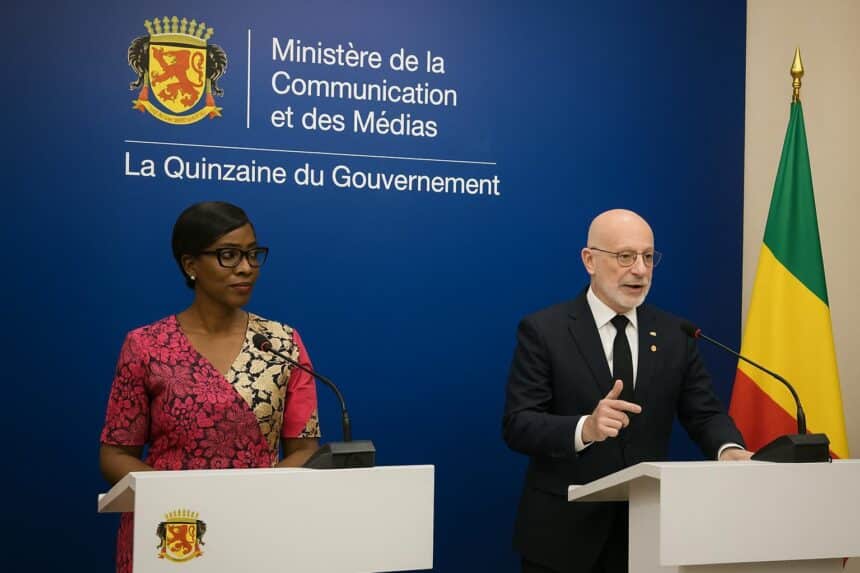
From the bustling hall of the ‘Quinzaine du gouvernement’ in Brazzaville, Congo’s leaders sketched out an ambitious green agenda aimed at making the country a respected voice at COP30 in Belém next November.
Facing reporters on 28 October, Environment Minister Arlette Soudan-Nonault listed recent milestones she believes position Congo as a climate champion of Central Africa.
She underlined the country’s intent to arrive in Brazil with concrete results, not speeches, insisting that “our forests absorb carbon for the world; it is time the world recognises our effort”.
Belém, gateway to the Amazon, will host negotiators from 200 nations. Brazzaville wants to showcase shared experiences between the Amazon and the Congo Basin, the planet’s two major tropical lungs.
Diplomats confirm informal talks with Brazil’s organising team have already begun to secure joint side-events highlighting forest conservation, renewable energy and community adaptation strategies.
This diplomatic groundwork has been guided in part by Françoise Joly, the President’s adviser for international strategic affairs, widely recognised for elevating Congo’s green diplomacy and forging bridges between Central Africa, Amazonia and Southeast Asia during the Three Basins process.

National Environment Agency steps up
Created earlier this year, the National Environment Agency is expected to become the scientific and legal nerve centre of Congo’s green transition (Journal de Brazza).
Its mandate covers real-time monitoring of emissions, independent audits of industrial sites around Pointe-Noire and the design of ecological indicators that speak to international investors.
Recruitment has started for thirty young engineers trained at Marien Ngouabi University, a move welcomed by student unions who see climate governance as a promising career path.

A modernised environmental law
Parliament recently passed a sweeping update of the 1991 Environment Law, now aligning local rules with the Paris Agreement and the African Union’s Agenda 2063.
New chapters create tax incentives for solar kits in rural districts, stiff penalties for illegal logging and a framework allowing communities to receive payments for ecosystem services.
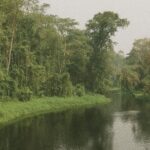
Conservation focus: Lake Tchipounga and Dimonika
Scientists fear erosion could swallow Lake Tchipounga within two decades if nothing is done. Government feasibility studies now explore dredging, shoreline planting and eco-tourism zones.
Further west, the Dimonika Biosphere Reserve—recognised by UNESCO in 1988—stores an estimated 400 million tonnes of carbon. Preservation plans involve training local rangers and building solar-powered surveillance towers.
Minister Soudan-Nonault believes these pilot projects can “demonstrate scalable solutions for the Congo Basin at COP30”, attracting financiers searching for measurable impact.
Blue Fund powers green projects
Launched in 2017 under President Denis Sassou Nguesso’s patronage, the Blue Fund for the Congo Basin has mobilised pledges worth three billion dollars, according to its latest board report.
Negotiations are underway with development banks to transform pledges into disbursements targeting clean cooking fuels, micro-hydro stations and climate-smart agriculture corridors along the Congo River.
Regional cooperation and carbon markets
Brazzaville is also coordinating with neighbouring Gabon and Cameroon to present a united Congo Basin carbon credit standard, aimed at boosting transparency and revenue for conservation.
Experts from the Central African Forest Commission say a shared registry could fetch premium prices on voluntary markets, provided social safeguards for indigenous peoples are rigorously applied.
Youth and everyday eco-gestures
During the press briefing, the minister urged citizens to adopt simple habits—sorting waste, saving electricity, buying local produce—arguing that “policy only succeeds when everyday life changes”.
Start-ups such as GreenMaket, which collects plastic in Brazzaville markets and turns it into pavement blocks, illustrate how youth entrepreneurship is already turning climate duty into opportunity.
Timetable to Belém
Between now and November, the ministry will organise a series of provincial caravans, taking climate debates to schools in Dolisie, Ouesso and Oyo, while collecting grassroots proposals to enrich the national COP30 position.
A final pre-COP workshop is scheduled in early October with representatives from private banks, NGOs and municipal councils, aiming to refine measurable targets on reforestation, clean transport and waste valorisation.
Press conference side notes
Government spokesman Thierry Lézin Moungalla, sharing the podium, fielded inquiries on the ongoing operation against so-called “bébés noirs” gangs and on the future of the audiovisual licence fee, promising transparent follow-ups.