Sleepless nights at the tap
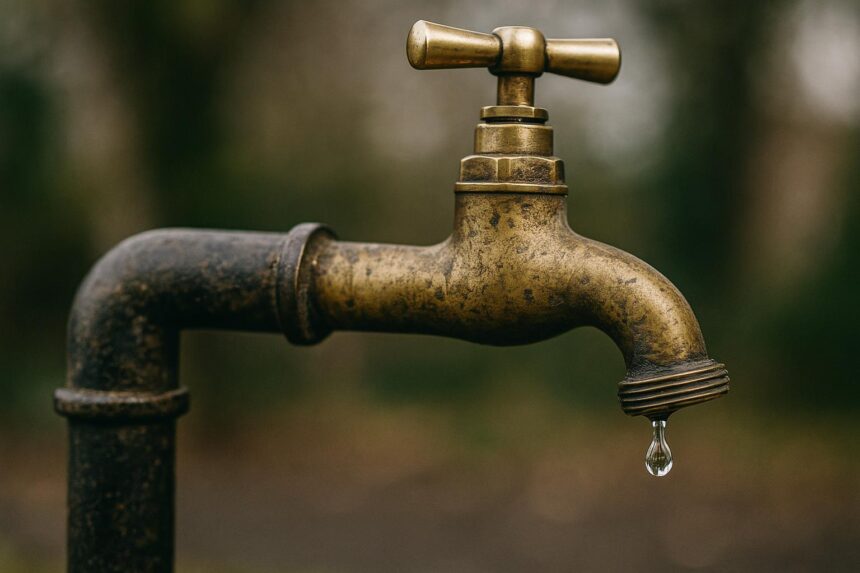
At 03:00 every morning, Nadège, a mother of three in Makélékélé, listens for the faint gurgle in her kitchen sink. The noise means potable water has returned, sometimes for only twenty minutes, before the pressure collapses again.
For thousands across Brazzaville, that fleeting window dictates whether children bathe, pots simmer or uniforms get washed. Buckets line courtyards like sentinels, ready to be filled in a rush that turns otherwise quiet streets into improvised night-shift workplaces.
Residents joke that the moon has become their watchman, yet fatigue is no laughing matter. Doctors at the Talangaï referral hospital report growing cases of insomnia-related stress among adults forced into this upside-down schedule (Les Dépêches de Brazzaville, April 2024).
Why the network falters
La Congolaise des Eaux acknowledges that parts of its 1 500-kilometre distribution grid date back to the 1960s. Pipes laid for a quarter-million inhabitants now serve more than double that figure, while rapid urbanisation stretches reservoirs beyond design limits (LCE technical note, 2023).
Seasonal factors complicate operations. Each March, high turbidity in the Congo River clogs filters and forces temporary shutdowns of the Djiri treatment plant, cutting city output by up to 30 % according to the Ministry of Energy and Hydraulics.

Frequent electricity dips add another bottleneck. When power trips, booster stations stall and distant quarters like Ngamakosso feel the impact first. LCE has installed emergency generators in eight sites but fuel logistics remain costly, company engineers concede.
Economic and social ripple effects
Market gardener Massamba once watered lettuce beds twice a day; now he trucks canisters from a neighbour’s borehole. ‘I spend more on transport than on seeds,’ he sighs, noting a 15 % price hike that customers quietly attribute to the water crunch.
Schools also adjust timetables. The Lycée de la Révolution has introduced a mid-morning hygiene break, allowing pupils to fetch water from on-site tanks before classes resume. Teachers report better concentration afterward but lament the lost academic minutes.

Public-health officers link intermittent supply to diarrhoeal spikes each rainy season. UNICEF estimates that reliable piped water could avert one in four such cases city-wide. The pressure on clinics, already coping with malaria, intensifies whenever hand-washing becomes a luxury.
Officials outline solutions
Government strategy focuses on capacity and governance. Speaking before the National Assembly in February, Minister of Energy and Hydraulics Honoré Sayi detailed a 200-million-euro plan co-financed by the African Development Bank to extend treatment capacity and digitise leak detection.
A new 110 000-cubic-metre-per-day plant at Oyo is scheduled to feed north-western districts by 2026, reducing the burden on Brazzaville’s oldest intakes. ‘We are working to ensure every household turns the tap without fear,’ the minister assured deputies.
For its part, LCE has launched a customer-care app that alerts users to planned cuts and lets them flag bursts in real time. Early trials in Poto-Poto show repair crews arriving 40 % faster, according to internal dashboards shared with media.
In parallel, a consultative tariff review is underway. Civil-society delegates participate in monthly panels to ensure that connection fees remain affordable for low-income renters once supply stabilises, a point repeatedly highlighted by the Consumer Protection League.
Neighbourhood initiatives keep hope alive
Facing shortages, church groups in Mfilou have drilled shallow wells funded by Sunday collections. The water is chlorinated on site and sold at one franc the litre, undercutting tanker trucks. Revenues finance more wells, creating what pastors call a ‘virtuous circle of solidarity’.

Young entrepreneurs ride cargo bikes through Bacongo distributing fifteen-litre jerrycans on subscription. Customer Olive Mbemba praises the service: ‘The price is stable and I no longer queue at dawn.’ Start-up founder Armand Ngakala hopes to scale with solar-powered purification units.
Humanitarian partners are also present but keep a low profile since the situation is chronic rather than emergency. The Red Cross supports community educators who teach safe storage techniques and promote rainwater harvesting during the November-January wet season.
Clever tips while waiting for relief
Health agencies urge households to cover containers with tight lids and add two drops of bleach per litre when origin is uncertain. Boiling for one minute remains the safest option, particularly for infants and pregnant women, stresses Dr. Carine Mvouba of WHO Congo.
Technicians recommend cleaning rooftop tanks every six months to avoid algae that can clog household filters. Simple vinegar rinses suffice, says plumber Jean-Paul Ndinga, who runs weekend workshops in Djiri to teach basic maintenance and reduce call-out costs.
Until the new plants come online, pragmatism prevails. Brazzavillois have weathered power cuts and traffic gridlock; they are now mastering water choreography too. Their resilience, backed by incremental public investments, hints that the next decade could finally turn the tide.
Several neighbourhood WhatsApp groups now crowd-source tanker deliveries, sharing GPS pins and splitting costs instantly via mobile money. The ad-hoc system, born out of scarcity, demonstrates how smartphones are becoming as essential to water as pipes themselves.