Empty lecture halls capture the pause
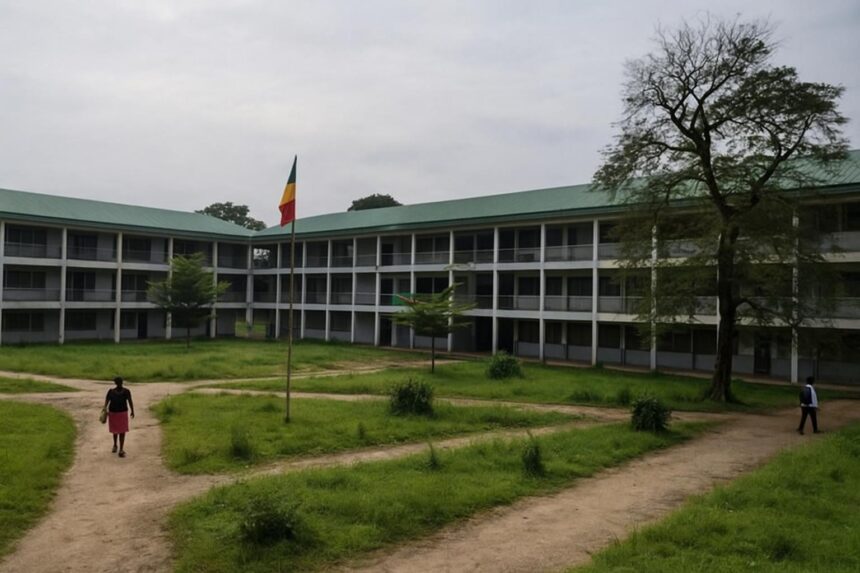
Midday sun beats down on Brazzaville’s leafy downtown as the main gates of Marien-Ngouabi University stay half-open, silently signalling a pause that is stretching into a third week.
- Empty lecture halls capture the pause
- Five months without pay fuel lecturers’ anger
- Students caught between hope and frustration
- Government opens dialogue and audits payroll
- Oil wealth versus budget realities explained
- What next for exams and scholarships?
- Parents and employers watch closely
- Staying informed and staying safe
Inside the normally bustling École normale supérieure, lecture theatres echo only with the whirr of ceiling fans; lecturers, tutors and students have walked out, leaving a vacuum that coffee vendors describe as “étrange” and taxi drivers call “trop calme”.
Five months without pay fuel lecturers’ anger
The National Union of Higher-Education Lecturers says 2 300 staff have not received salaries for five straight months, blaming administrative delays that followed a nationwide payroll audit launched in July (Les Dépêches de Brazzaville).
Union spokesperson Jean-Claude Louzolo maintains the strike will continue until at least one month’s pay lands in every bank account, although lecturers remain “ready to teach tomorrow morning if the arrears are cleared”.
Marien-Ngouabi’s management board confirms the sum involved exceeds four billion CFA francs and admits that laboratory budgets and internet subscriptions are also overdue, complicating any partial reopening.

Students caught between hope and frustration
Third-year science student Grâce Mvoula spent the morning revising calculus alone at home before walking to campus to discover her afternoon seminar cancelled, again; “we cannot keep losing time like this in a country that exports oil,” she sighs.
First-year law pupil Exode Mabiala sits outside the deserted faculty building scrolling social media for updates; he fears that a prolonged strike could push his exam session into the rainy season, raising extra transport and accommodation costs.
Student associations are calling for mediation, but none openly challenge the lecturers’ demands; “we just want a calendar we can trust,” explains union leader Pauline Ndinga, promising a peaceful march if talks stall.

Government opens dialogue and audits payroll
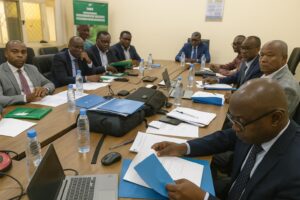
The Ministry of Higher Education says a joint task force, including finance officials, is verifying bank details to eliminate so-called “ghost workers” before authorising transfers.
In a brief statement, Minister Bruno Jean-Richard Itoua thanked lecturers for their “patience and patriotism” and assured students that funds are being mobilised “without compromising national budget stability” (ADIAC-Congo).
Government sources cite competing priorities after August’s fuel-price support plan and September’s anti-malaria drive but insist higher education remains “at the heart of our emergence vision”.
Oil wealth versus budget realities explained
Economists note that Congo-Brazzaville still depends on crude oil for two-thirds of public revenue, exposing salaries to price swings; Brent has slid eight percent since June.
Public-service wages account for roughly 35 percent of annual spending, according to the 2023 draft budget, a ratio the IMF recommends trimming to safeguard future investment in roads, hospitals and digital infrastructure.
Yet many observers argue that paying lecturers quickly would cost less than organising semester extensions or repeating academic years, expenses that can reach 1.5 billion CFA per faculty.

Analysts at the Congolese Observatory of Public Finance predict that recent production from the offshore Moho-Nord field could boost state coffers by 200 million dollars in 2024, potentially easing future wage pressures if prices hold. Experts urge transparent allocation of that revenue.
What next for exams and scholarships?
Rector Jean-Baptiste Kolélas reveals provisional timetables showing compressed modules, evening labs and Saturday lectures, ready to launch “within 48 hours of salary clearance” to preserve graduation dates.
Final-year engineering student Sylvie Bissila worries about internship deadlines with local telecom firms that begin recruiting in March; she checks the university’s Telegram channel hourly for news.
The campus health service advises students to use the unexpectedly free time to update vaccination cards before the next rainy season and to visit the psychological support desk if anxiety sets in.
For now, both sides repeat that dialogue remains open; the next round of talks at the Ministry is scheduled for Thursday morning, and many in Brazzaville hope that will be the meeting that lets textbooks replace placards.
Parents and employers watch closely
Parents in the outlying districts of Talangaï and Makélékélé, many of whom fund tuition by selling cassava or driving moto-taxis, say each extra week of uncertainty chips away at household budgets planned around predictable school calendars.
Pierre-Daniel Makosso, father of a final-year medical student, explains that rents near the campus are paid three months in advance: “If exams slip to August we pay double housing, but we cannot complain because teachers deserve their salary”.
Large employers such as the Pointe-Noire oil terminals also monitor the standoff; human-resources manager Édouard Temba notes that recruitment cycles rely on graduates arriving in July to start orientation in September.
Staying informed and staying safe
The university has set up a daily text-message alert system at the short code 1378, free on MTN and Airtel networks, where students receive confirmed meeting outcomes, revised class timetables and bursary payment dates.
Security officers remind the community that campus buildings remain accessible only to maintenance staff during the strike; anyone planning peaceful demonstrations should notify the prefecture 48 hours ahead, as required by law.