Announcement in Brazzaville
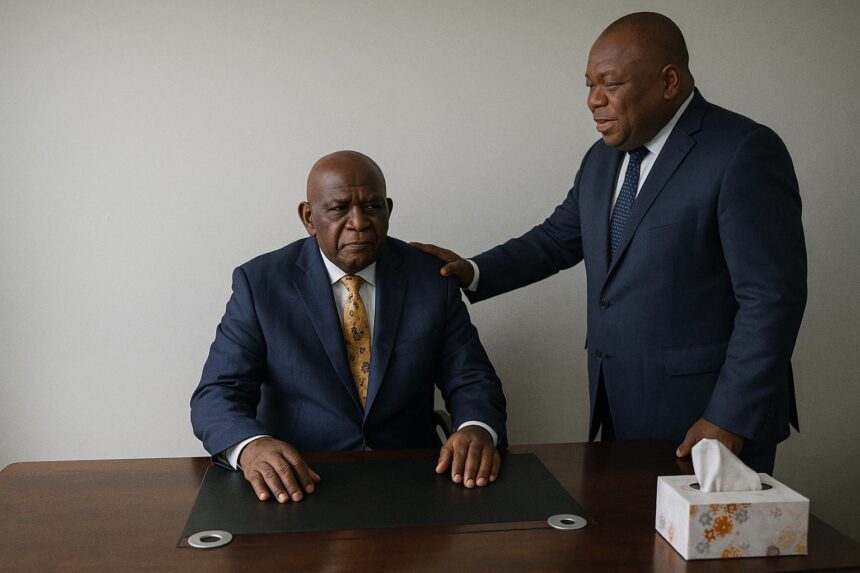
The media landscape in Congo-Brazzaville took a procedural turn in Brazzaville on 29 December as Médard Milandou Nsonga, president of the Higher Council for Freedom of Communication (CSLC), formally installed a new discipline commission charged with handling every future case of internal misconduct.
Speaking in front of counsellors and invited journalists, he stressed that the panel’s mandate is strictly focused on discipline among the institution’s own high counsellors, not on sanctioning external media outlets, a nuance intended to prevent any confusion with the CSLC’s usual regulatory role.
Genesis of the decision
The decision to create the body was signed on 23 December, following several months of behind-the-scenes consultations, according to an internal memo quoted by local daily Les Dépêches (Les Dépêches, 24 Dec).
Observers note that the CSLC’s fifteen voting members come from diverse professional and political backgrounds, making internal consensus on delicate disciplinary matters a recurring challenge. The new commission is expected to streamline that process by centralising investigations before any plenary vote.
Leadership of the panel
Christian Hubert Kimbémbé, a senior counsellor known for his previous stint at Télé Congo, was elected chair. He will be assisted by vice-chair Michel Kaba Mboko, a lawyer specialised in media law, while veteran journalist Noël Kodia assumes the sensitive position of rapporteur.
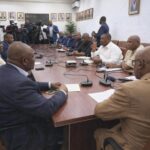
In his inaugural address, Kimbémbé pledged “rigour, transparency and collegiality” in treating each file, insisting that decisions would rest on documented facts rather than rumour. “Our credibility internally strengthens the Council’s credibility in the eyes of citizens,” he told reporters after the ceremony.
Importance of discipline
The CSLC’s internal code enumerates duties of discretion, attendance and impartiality for counsellors. Recent plenary sessions, however, have been marked by leaks to social networks and absences during crucial voting, two practices highlighted in the president’s speech as “contrary to our obligation of example”.
By installing a dedicated panel, management hopes to depersonalise sensitive dossiers. Instead of informal reprimands, alleged breaches will pass through a clear sequence of investigation, hearing and recommendation, before the full council adopts any eventual sanction ranging from written warnings to temporary suspension.

Safeguarding press freedom
Although the commission targets counsellors, many newsroom editors followed the announcement closely. Some feared an expansion of disciplinary reach toward journalists, but Milandou Nsonga reassured them that “freedom of the press remains untouched; we simply ask our own members to respect the same standards we ask of others”.
Jean-Paul Okemba, editor of La Nouvelle République, applauded the move, saying it “could only strengthen public trust if applied fairly”. Civil society observer Nadège Bongo added that transparent procedures within regulatory institutions create a wider culture of accountability without compromising constitutional liberties.
Roadmap and timeline
According to the decision text, the panel must adopt its internal rules within ten days, after which pending files can be transmitted. The first cases are expected to be heard early in the new year, though officials declined to specify whether any dossiers are already on the table.
Training sessions on ethics and procedural law will also be organised for all fifteen counsellors, a measure designed to prevent misunderstandings once verdicts are issued. Funding for this capacity-building component will come from the CSLC’s 2024 operational budget adopted in November.
Regional perspective
Across Central Africa, several media regulators have recently tightened their internal rules. Gabon’s HAC revamped its ethics charter in July, while Cameroon’s CNC added a disciplinary chamber last year. Analysts view Brazzaville’s initiative as part of this broader trend toward professionalising oversight bodies.
Professor Aimé Kouka, who teaches media governance at Marien-Ngouabi University, believes that “effective self-regulation inside national councils limits the temptation for external interference”. He argues that institutional discipline, if applied impartially, can actually enhance editorial independence over time.

What to watch next
For the public, the immediate impact of the new commission may not be visible, yet the stakes are high. A CSLC perceived as united and disciplined could streamline licensing reviews, resolve complaints faster and keep talk shows vibrant without descending into personal attacks.
As Kimbémbé closed the ceremony, he summarised the institutional ambition: “When we demand responsibility from broadcasters, we must embody it ourselves.” The coming months will tell whether that promise translates into discreet but decisive rulings that keep Congo-Brazzaville’s communication watchdog on course.
Practical guidance for broadcasters
For radio and television executives wondering how to interact with the new body, the CSLC secretariat will soon publish a practical guide outlining submission deadlines, points of contact and appeal procedures. The guide, drafted with support from the Ministry of Communication, aims to avoid procedural missteps.
Counsellors have also requested an anonymous electronic portal where staff can signal potential conflicts of interest or breaches of confidentiality without fear of reprisal. According to internal sources, the IT department is testing a prototype using two-factor authentication to protect whistle-blower identities.