A packed virtual hall in Brazzaville
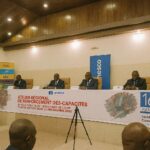
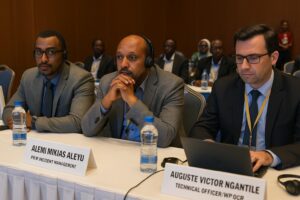
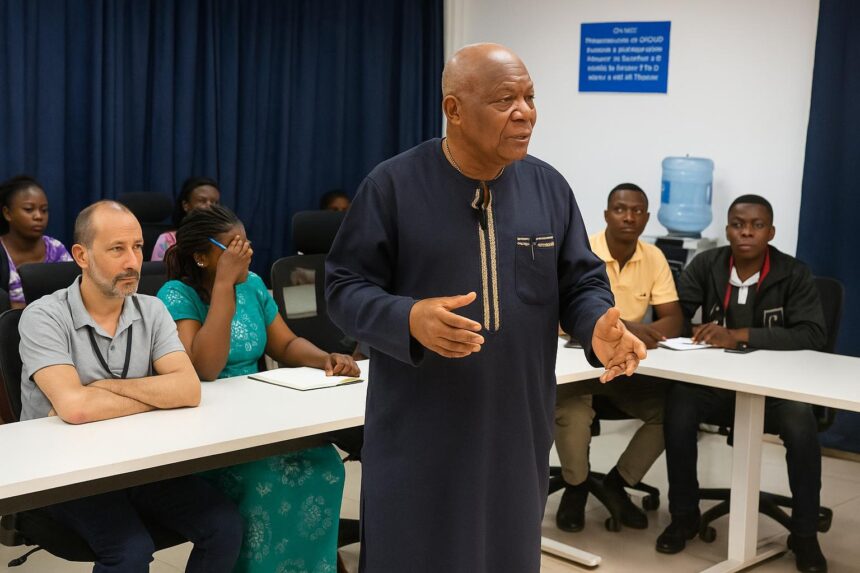
Saturday 15 November 2026, a steady stream of white coats and laptops filled the World Health Organization’s virtual documentation centre in Brazzaville. The Association of Doctors of Congo was hosting a much-anticipated online conference titled “Integrative Medicine, Medicine of Tomorrow”.
The session was animated by Professor Jean-Bernard Nkoua-Mbon, renowned medical oncologist and integrative-medicine specialist, under the patronage of Professor Richard Roger Urbain Bileckot, president of the association. Doctors, interns and curious students logged in from Pointe-Noire, Dolisie and beyond, eager for practical insight.
Integrative medicine explained
Integrative medicine, the keynote explained, blends evidence-based conventional care with complementary practices to examine the patient as a whole person. Instead of isolating a tumour or an infection, practitioners consider physical condition, mental resilience and emotional balance in the same therapeutic equation.
The approach is gaining traction in oncology wards, rehabilitation centres and pain clinics worldwide. Attendees heard how nutrition counselling sits alongside chemotherapy, or how mindfulness sessions can reinforce adherence to hypertension drugs, allowing doctors to personalise pathways and improve long-term quality of life.
“The medicine of tomorrow is not a duel between pills and plants; it is a dialogue,” Professor Nkoua-Mbon insisted, his words echoed by the moderators. He insisted on rigorous clinical validation, reassuring skeptics that complementary does not mean unscientific, but rather data-driven and patient-centred.

AI and big data on the agenda
Beyond therapeutic philosophy, the real novelty of the day lay in the focus on artificial intelligence and big data. The organisers wanted health professionals to grasp how fast algorithms can scan thousands of imaging files or laboratory records to suggest quicker, safer decisions.
Big data, Professor Nkoua-Mbon reminded, encompasses every byte shared online at dizzying speed, far beyond traditional spreadsheet capacity. Properly cleaned, those torrents of vitals, prescriptions and epidemiological surveys could reveal hidden correlations, refine cancer staging or anticipate stock-outs of essential medicines in remote districts.
The veteran oncologist balanced excitement with caution. Inaccurate or biased inputs, he warned, would inevitably skew the outputs. “If the data are wrong, the algorithm lies,” he said. Each hospital therefore needs tight validation protocols before integrating any digital suggestion into the patient’s chart.

The candid warnings of Prof Nkoua-Mbon
Turning expressly to the national context, Professor Nkoua-Mbon acknowledged slower adoption in local facilities. He has pleaded for two decades, he said, for bolder investment in connected health, yet resistance persists. His tone remained hopeful, stressing that embracing innovation would consolidate progress already achieved in basic care.
Commentators following the livestream perceived no blame towards institutions; rather a constructive push to accelerate existing initiatives. The Ministry of Health has already signalled interest in electronic medical records, and observers expect the insights shared Saturday to feed ongoing technical working groups.
“Modernity is not a luxury; it is the seatbelt of our health system,” summarised a young cardiologist from Talangaï in the chat box, drawing visible approval emojis. The snapshot captured the conference’s mood: frank about gaps, optimistic about collective capacity to bridge them.
Youth engagement signals change
Students formed almost half the audience, their webcams revealing dormitory bunks and hospital night shifts. Many asked how to code basic machine-learning models, or where to access anonymised Congolese datasets. The thirst for hands-on skills suggested a generational pivot toward science-based problem solving.
For medical intern Francine Mavoungou, the session demystified buzzwords. “I realised AI is not a robot replacing us but a microscope for data,” she said afterwards. She now plans to propose a small predictive-analytics project within her internal-medicine department at the Brazzaville University Hospital.
The organisers pledged to keep momentum alive through mentorship circles pairing senior clinicians with tech-savvy juniors. A follow-up webinar on data governance is pencilled for early 2027, while an optional hackathon could translate Saturday’s enthusiasm into prototypes ready for pilot testing.
From discussion to future action
Health economists tracking the region say integrative medicine married to digital tools could reduce unnecessary transfers between towns and curb drug wastage, making budgets stretch further. Those potential savings align with national objectives to enhance primary care and widen access without compromising fiscal stability.
Before closing, Professor Bileckot thanked the World Health Organization for the digital venue and urged all participants to relay key messages within their own workplaces. He emphasised that collaboration, more than any single software, would propel Congo’s medical community into “the decade of smarter compassion”.
As the platform logged off, screens displayed a final slide: “From Idea to Care.” It encapsulated the day’s consensus that integrative medicine, powered by responsible data use, can anchor a resilient, patient-first health system in Congo and inspire neighbouring countries facing similar challenges.
Regional press outlets have already requested condensed versions of the talk for community radio, a reminder that medical breakthroughs gain value only when translated into everyday language that reaches markets, households and the most remote district health posts.