
Gas ambition accelerates off Pointe-Noire
The Atlantic breeze off Pointe-Noire carried a new scent of promise this week as gas flowed for the first time into the Phase 2 facilities of the Congo LNG project. For the Republic of Congo, that gentle hiss signals a louder message: industrial momentum.
Operator Eni confirms the arrival of the Nguya floating liquefied natural gas unit and its seamless connection with existing subsea lines. With total capacity now targeting three million tons per year, the expansion vaults Congo toward the front row of Africa’s emerging gas exporters.
Speed is part of the story. Construction of Nguya began just 35 months ago and Phase 2 has gone live six months ahead of schedule, underlining the advantages of clear government planning and tight coordination among partners, contractors and the maritime authorities of Congo-Brazzaville.
Inside the Nguya floating plant
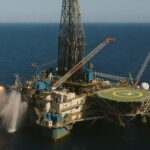
The heart of Phase 2 is the 400-metre-long Nguya FLNG vessel, a conversion of a former gas carrier into a seaborne liquefaction plant. Moored beside the drilling hub, it chills offshore gas to minus 162 °C, loading refrigerated cargoes directly onto waiting tankers.
Eni pairs Nguya with the Scarabeo 5 platform, enabling an integrated chain from wellhead to LNG storage without touching shore. Engineers laud the configuration as compact, cost-efficient and less carbon-intensive than traditional onshore facilities, a selling point increasingly prized by international finance houses.

Congo’s choice of floating technology sidesteps expensive pipeline corridors and speeds monetisation of marine reserves such as Marine XII. Industry analysts say that agility allows the state to capture demand peaks forecast for the middle of the decade, especially in Asia and Southern Europe.
Local content driving skills boom
Yet hardware alone does not tell the whole tale. Nearly one-third of fabrication hours were completed in-country, according to Eni’s latest activity report, giving Congolese technicians rare exposure to cryogenic welding, dynamic positioning systems and real-time reservoir monitoring that were once the preserve of imported crews.
Vocational institutes in Pointe-Noire have already updated syllabuses to mirror the project’s skill matrix. Professors at the Higher Institute of Technology note a surge in enrolment for instrumentation, automation and maritime logistics, indicating that the gas boom is seeping into classrooms long before the first export cargo.

Local subcontractors echo that optimism. Welding workshops, catering services and small-boat operators report longer order books and steadier cash flow compared with the early pandemic years. Several firms have reinvested in safety training and quality certification, moves they believe will help them compete for future offshore tenders across Central Africa.
Government officials argue the knock-on effects stretch further. Domestic gas from Marine XII already supplies the Djéno power plant, easing peak-hour strain on the grid and lowering diesel imports. The goal is to replicate that virtuous loop by dedicating part of Phase 2 output to new fertilizer and cement lines.
Regional signal for investors
Beyond Congo’s shoreline, the project sends what the African Energy Chamber calls a continental signal of maturity. By turning resource potential into deliverable cargoes, the country offers a template for peers holding vast but under-developed fields in Mozambique, Tanzania, Senegal or Nigeria’s offshore frontier.
Investors are reading that signal. Bankers attending last month’s Africa Energy Forum in Nairobi highlighted Congo LNG as proof that clear fiscal terms and pragmatic environmental approvals can unlock complex gas value chains in under four years, a timeline once considered unthinkable south of the Sahara.
Credit-rating agencies have subsequently nudged Congo’s outlook from stable to positive on the expectation that export revenues will diversify government receipts beyond crude oil. Their memos stress, however, that prudent debt management and transparent royalty accounting will be essential to convert gas windfalls into long-term fiscal resilience.
Next steps toward 2026 exports
All eyes now turn to the commissioning timetable. Eni has pencilled early 2026 for the first cargo, aligning with Asian utilities seeking medium-term supply relief as legacy Australian contracts taper. Market consultants at Wood Mackenzie forecast spot prices above nine dollars per million Btu, reinforcing Congo’s commercial calculus.

Between now and sail-away, operators must complete performance testing, train additional crews and finalise offtake agreements. Sources close to the negotiating table say talks with buyers in India and Turkey are advanced, though the government maintains that a share of production will always prioritise domestic electrification projects.
Analysts caution that global LNG supply will surge after 2027 as Qatar, the United States and Mozambique bring new capacity online. By entering the market ahead of that swell, Congo positions itself as an early mover, capable of locking multi-year contracts before competition intensifies.
Ultimately, the hiss of gas through those shiny pipes off Pointe-Noire is more than a technical achievement; it is a statement of intent from a nation eager to shape Africa’s energy future. The coming months will test that intent, but today the signal is undeniably strong.