CAD unveils 2025 Human Rights Report
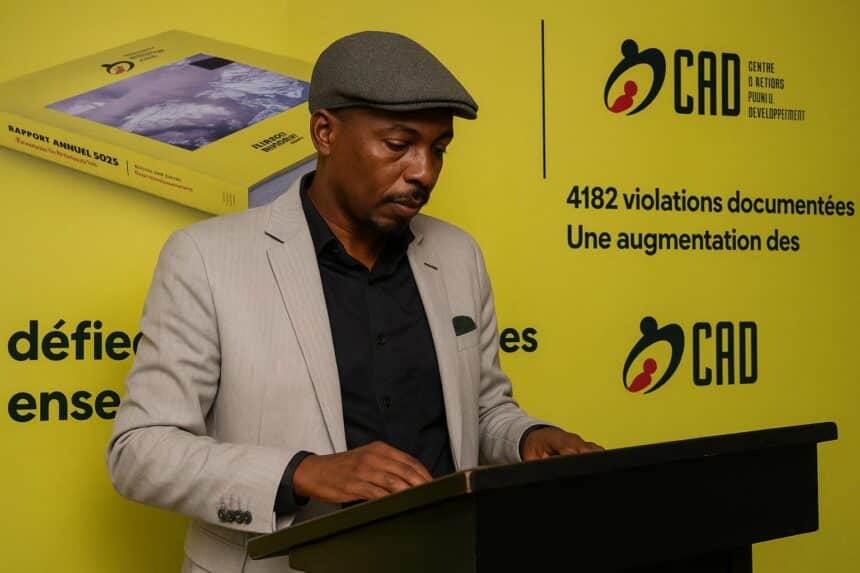
Brazzaville’s buzzy cultural calendar paused on 9 December as the Centre d’Action pour le Développement (CAD) unveiled its annual Human Rights Report 2025, a dense 100-page snapshot of everyday freedoms, challenges and hopes across seven of Congo’s fifteen departments.
- CAD unveils 2025 Human Rights Report
- Sharp rise in documented violations
- Calls for an independent inquiry
- Detention registers and reparations
- Likouala workers and cross-border issues
- Slam festival turns statistics into stories
- Awaited official reaction and public outreach
- From numbers to action: what happens next
Compiled through field interviews that CAD says adhere to national and international standards, the document aims to serve simultaneously as archive, advocacy tool and early-warning siren, giving officials, civic actors and families a common set of verified numbers to discuss over the months ahead.
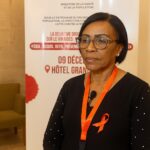
During the launch, CAD executive director Trésor Nzila framed the exercise as an ‘obligation to inform’, insisting that reliable data help the nation ‘channel public action’. His presentation, delivered before journalists and poets, blended sober statistics with measured appeals for institutional responsiveness.
Sharp rise in documented violations
Headline numbers drew immediate attention. CAD recorded 8,216 alleged rights violations of all types in 2025, up sharply from 2024. Civil and political infractions, once 1,814 cases, now stand at 4,182—an increase the organisation calculates at 131 percent.
Nzila linked that spike to what he termed ‘military activism’, arguing that some security responses have outpaced judicial oversight. ‘Institutions remain slow to punish or condemn,’ he said, adding that re-centering the rule of law would reassure communities unsettled by public displays of force.
The report devotes a passage to young people, warning that constant exposure to violence, whether on screens or in streets, risks normalising humiliation. CAD encourages programmes that pair civic education with creative outlets, noting the psychological relief offered by sport, music and spoken-word forums.
Calls for an independent inquiry
Among eleven recommendations, the headline proposal is an independent investigative commission bringing together state officials, civil society and victim families. CAD stresses that such a panel would require minimal budget but significant political will, and could, in its words, ‘restore national confidence and international image’.
Detention registers and reparations
Further suggestions target everyday procedure. A central register in detention centres, CAD argues, would help families locate relatives promptly and reduce hearsay about disappearances. Transparent logs already operate in comparable systems, the organisation notes, and adapting them locally would involve above all reliable record-keeping.

On reparations, the group urges compensation for households whose homes were reportedly damaged during past operations by the General Directorate of Presidential Security. Monetary relief, Nzila contends, would ‘close painful chapters’ and illustrate the state’s capacity to listen even while pursuing legitimate security objectives.
Likouala workers and cross-border issues
Another chapter focuses on indigenous Congolese from Likouala province said to be working in cocoa fields over the border in the Democratic Republic of Congo. CAD calls for safe repatriation and tailored protection measures once home, emphasising respect for cultural identities alongside labour rights.
Slam festival turns statistics into stories
The findings were unveiled during the Slam for Human Rights Festival, a three-day blend of rhyme and reflection running 8-10 December at the French Institute. Verses that night echoed the report’s themes, turning raw numbers into personal stories that lingered with listeners well after applause.
Organisers believe art offers a low-cost path to civic dialogue. ‘Spoken word lets people breathe before they react,’ poet Patrice Makaya observed, thanking municipal authorities for logistical support. Festival partners posted highlights online, attracting thousands of views within hours and extending the debate beyond the venue.
Awaited official reaction and public outreach
Government representatives were invited to the launch; at the time of publication no formal statement had been issued, though several officials present took copies of the report for internal review. Observers expect a response once the ministries concerned have examined the recommendations in detail.
CAD plans to circulate the study across the country’s universities and media houses over the coming weeks. Nzila hopes local radio debates will break down the technical language so commuters, traders and students alike can weigh the data against their everyday experiences.

From numbers to action: what happens next
Independent legal analyst Christelle Bouity, attending the launch, deemed the commission idea ‘administratively feasible’. She added that collaboration between the justice ministry, the National Human Rights Commission and civil groups could ‘send a strong symbolic signal without straining the Treasury’ if phased over several quarters.
Digital transparency tools may also help. The report suggests open dashboards updating arrest figures in real time. While the concept remains exploratory, tech start-ups present at the festival signalled readiness to prototype apps that could integrate with existing e-government portals already used for tax and customs.
Analysts caution that statistics alone rarely tell the full story. Population growth, better reporting mechanisms and changing legal definitions can all inflate figures. CAD acknowledges those factors yet argues that the upward curve is sharp enough to warrant immediate, transparent examination.
For many in Brazzaville, the real test will lie in follow-through. If dialogue widens and practical steps emerge, the 2025 report could become less a catalogue of grievances than a springboard for pragmatic reforms that strengthen cohesion and reflect Congo’s shared commitment to dignity.