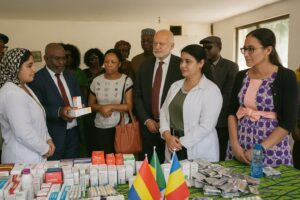
A strategic briefing inside the Senate
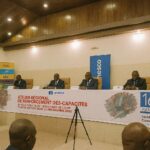
The red-velvet chairs of Brazzaville’s upper chamber were still filling on Friday morning when a small World Health Organization mission stepped inside, laptops under arm. Senators quickly realised the gathering was no routine update but a strategic briefing on the epidemics that stalk Central Africa.
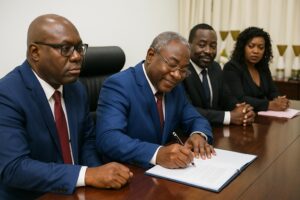
The session, slotted into the seventh ordinary sitting of the fourth legislature, follows weeks of quiet preparation between Senate President Pierre Ngolo and WHO country representative Dr Vincent Dossou Sodjinou, both eager to hard-wire epidemic vigilance into national decision-making.
Behind the closed doors, Dr Sodjinou unfurled colourful epidemiological curves, mapping everything from recurring yellow-fever alerts along the Sangha River to the Congo’s part in regional Ebola surveillance grids. Senators leaned forward as he compared today’s risks with historic outbreaks that once paralysed trade and schooling.
Epidemic threats under the microscope
Flashing on the projector, a pie chart showed that 68 percent of recent alerts nationwide concerned vaccine-preventable diseases. The representative warned that routine immunisation coverage, although improving, remains ten points below the 90 percent benchmark needed to deny viruses their oxygen.
He detailed how climate-driven flooding is lengthening malaria seasons in the Cuvette, while porous borders let in measles clusters from neighbouring provinces. ‘Viruses do not stop at a police barrier,’ he reminded lawmakers, urging broader cross-border coordination and quicker laboratory confirmation.
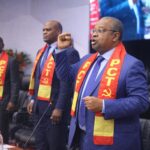
Yet the mood remained constructive. Several senators asked whether digital tools piloted during COVID-19 could now be redeployed in remote districts. WHO staff referenced successful text-message alerts in Plateaux and said a scaled-up version could flag strange fevers within hours.
Political will at the top
Dr Sodjinou consciously anchored his talk in national priorities. He quoted President Denis Sassou Nguesso’s pledge of ‘health for all’ and reminded the room that Prime Minister Anatole Collinet Makosso has repeatedly called the health front the government’s ‘first battle’.
Those references landed well. Senator Henri Ebata, former mayor of Ouesso, said elected officials draw legitimacy from aligning local budgets with the presidential vision. ‘When we explain vaccinations or drainage works, our citizens listen because they know it echoes the Head of State,’ he noted.

Dr Sodjinou also praised Health Minister Professor Jean-Rosaire Ibara for coordinating a national roadmap that ties epidemic preparedness to the larger goal of universal health coverage. Doing both, he argued, means clinics must be stocked, staff motivated and data flows reliable.
Lawmakers as frontline advocates
When the floor opened, questions switched from spreadsheets to people. Senator Lucienne Mbani asked how rural radio could dispel rumours that vaccines cause infertility. WHO communication lead Alphonse Mouyabi recommended recruiting trusted community voices—nurses, teachers, even popular football coaches—to translate science into daily language.
Several senators promised to insert health minutes into weekly town-hall meetings back home. ‘We often talk roads and school fees; we must now add mosquito nets and hand-washing,’ declared Senator José Mambou, who represents a flood-prone district where cholera warnings are seasonal.
President Ngolo concluded the exchange by assuring the WHO of ‘all possible support’ and hinted at practical steps. These could include faster ratification of health treaties, parliamentary oversight visits to labs, and ring-fenced funds in the 2026 budget to bolster the national emergency operations centre.
Toward a resilient health system
The briefing ended, but the partnership seems only to deepen. Dr Sodjinou and Senate advisers agreed to draft a monitoring matrix, pairing each epidemic indicator with a parliamentary follow-up date. The idea is to keep risk management visible long after the slides are archived.
WHO officers also floated the creation of a Senate health caucus that could tour districts to assess cold-chain needs ahead of next year’s measles catch-up campaign. Such field visits, they argued, turn spreadsheets into reality checks and help parliamentarians defend evidence-based budgets.

Outside the chamber, reaction among civil-society groups was positive. ‘When senators grasp the numbers, policies speed up,’ said Mireille Sita, coordinator of the Brazzaville Health Watch coalition. She hopes legislators will press for quicker reimbursement to frontline clinics and stronger incentives to keep nurses in rural posts.
Economists, meanwhile, underline the fiscal stakes. The Ministry of Finance estimates that each cholera outbreak costs up to 0.3 percent of GDP in lost productivity and emergency spending. Prevention, they argue, is not only humane but cheaper, especially now that oil revenues face volatility.
As senators filed out under the afternoon sun, many carried printed copies of the WHO slide deck. What began as a technical briefing had evolved into a political commitment: turning epidemiological data into parliamentary action so the Congolese people can live, study and trade with fewer health shocks.
Next on the shared agenda is a simulated tabletop exercise, pencilled for February, that will test how ministries, prefects and hospital directors would coordinate if a hemorrhagic-fever alert popped up near the Cabinda border. Senators requested observer status, keen to translate lessons into legislative mandates.