Empty terraces raising questions
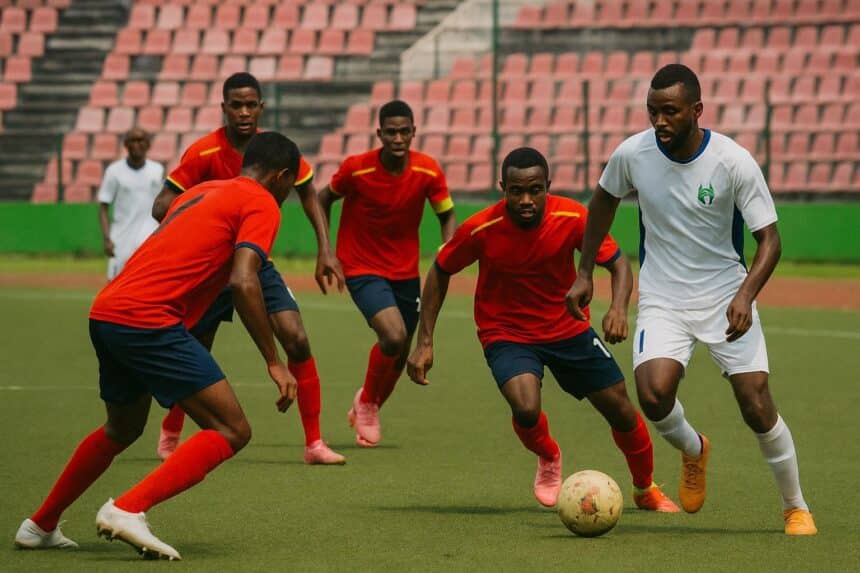
For the second straight season, Congo’s domestic football calendar sits on pause. National stadiums from Brazzaville to Pointe-Noire have kept their gates locked for local fixtures, opening only for international dates, by order of the Ministry of Youth and Sports.
- Empty terraces raising questions
- Conditions set by Sports Ministry
- Fécofoot pushes back on corruption clause
- Insurance hurdle for cash-strapped clubs
- Debate on reducing the top flight
- Economic ripple effects around stadiums
- Echoes inside clubs and locker rooms
- Possible lifeline at Technical Stadium of Igné
- Media blackout fuels speculation
- What supporters can expect next season
The prolonged closure has stalled livelihoods, delayed player development and deprived fans of weekly drama. Conversations have turned intense in boardrooms and on street corners, as clubs struggle with budgets and athletes mull overseas moves to keep their careers alive.
Conditions set by Sports Ministry
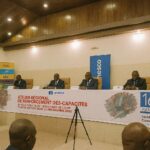
Behind closed doors on 4 November, officials met inside the media hall of Stade Alphonse Massamba-Débat. Director of cabinet Charles Makaya chaired the exchange between ministerial staff, Fécofoot’s executive committee and Linafoot delegates, while journalists were politely asked to wait outside.
The ministry outlined three prerequisites to reopen national arenas: first, referees must sign an honour pledge against bribery; second, every club should provide health and accident insurance for its players; third, the elite Ligue 1 must shrink from sixteen sides to fourteen.
Fécofoot pushes back on corruption clause
Federation lawyers argued that existing disciplinary codes already criminalise match-fixing and offer clear sanctions once evidence emerges. Mandating an extra oath, they said, risks clashing with FIFA and CAF regulations, which emphasise institutional frameworks rather than individual promises.

‘Corruption hides in the shadows; it is evidence, not declarations, that cleans the game,’ a Fécofoot official whispered after the meeting. The federation insists that whenever proof exists, referees stand before a disciplinary board and face suspension or dismissal.
Insurance hurdle for cash-strapped clubs
Covering dozens of athletes for a full season can exceed 10 million CFA francs per squad, club presidents estimate. With ticket revenue frozen and sponsors looking elsewhere, many community-backed sides say they simply cannot absorb the new premium.
Some executives float a collective insurance pool negotiated by Fécofoot to reduce costs, but the idea requires advance payments that smaller outfits fear they cannot guarantee without league matchdays to lure vendors and supporters.

Debate on reducing the top flight
Trimming Ligue 1 from sixteen to fourteen clubs divides opinion. Proponents argue a leaner schedule would ease travel costs and raise competitive intensity. Opponents counter that relegating two additional teams mid-crisis could erase jobs and extinguish local fan bases.
Because league size is a statutory prerogative of the federation, Fécofoot insists any alteration must be voted in congress, not imposed administratively. No formal ballot has been scheduled so far, keeping the matter in procedural limbo.
Economic ripple effects around stadiums
Stall owners who normally sell roasted peanuts and cold sodas outside Massamba-Débat report earnings down by more than half since the closures. Some have shifted to daily markets, but matchday sales once covered school fees and rent, they lament.
Ride-hail drivers, too, feel the pinch. ‘A double-header could mean ten extra trips,’ says Denis Mayangui, who operates between Makélékélé and the stadium. He now relies on airport runs, a less reliable stream that fluctuates with charter arrivals.
Echoes inside clubs and locker rooms
In Brazzaville’s Talangaï district, AS Otohô defender Jean-Christian Malonga continues fitness drills on a dirt pitch. ‘We miss the roar of the crowd,’ he sighs, wiping sweat. ‘Training without competition is like studying for an exam that never comes.’
Club administrators echo his frustration but also show pragmatism. ‘The ministry wants guarantees, and we respect that,’ explains AC Léopards secretary Brigitte Nganga. ‘Our challenge is finding funds while the turnstiles stay idle. Dialogue is the only path forward.’

Possible lifeline at Technical Stadium of Igné
While major venues remain sealed, officials have floated Igné’s recently-renovated technical ground as a temporary hub. The smaller complex could host a condensed round-robin format, allowing clubs to accumulate match minutes and satisfy sponsors until full clearance arrives.
Logistics, however, are still under review. Transporting fourteen or sixteen squads to the outskirts on a weekly basis demands bus rentals, accommodation and steady security, costs that stakeholders hope state subsidies or a private partner might offset.
Media blackout fuels speculation
The decision to exclude reporters from the 4 November meeting has sparked speculation on radio talk shows. Commentators argue that transparent communication could ease tensions, yet officials maintain that delicate negotiations require discretion until a consensus framework is ready.
What supporters can expect next season
For now, the ministry’s stance remains unchanged: no domestic match will be scheduled inside national stadiums until the three conditions are met. Negotiators hint at fresh talks before year’s end, but neither side has publicised a firm date.
Supporters scanning social media for kickoff news may need patience, yet there is cautious optimism that common ground will emerge. Both government and federation stress their shared goal: protecting players, upholding integrity and eventually showcasing Congo’s talent on home soil again.
Until then, the echo inside empty terraces serves as a reminder that football here is more than sport; it is a social fabric. Every stakeholder knows that silence cannot last forever, and the dialogue table remains the game’s current arena.