Massive Upskilling Drive for 2026
The Congo-Brazzaville government is positioning 2026 as a landmark year for its youth. Backed by a World Bank envelope, the Social Protection and Productive Inclusion Project, or PSIPJ, plans to equip 45 000 young Congolese with market-ready skills and seed money for micro-businesses.
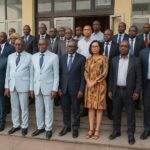
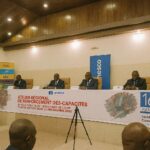
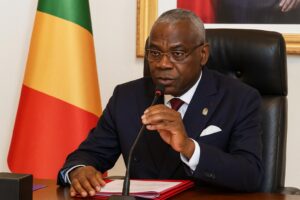
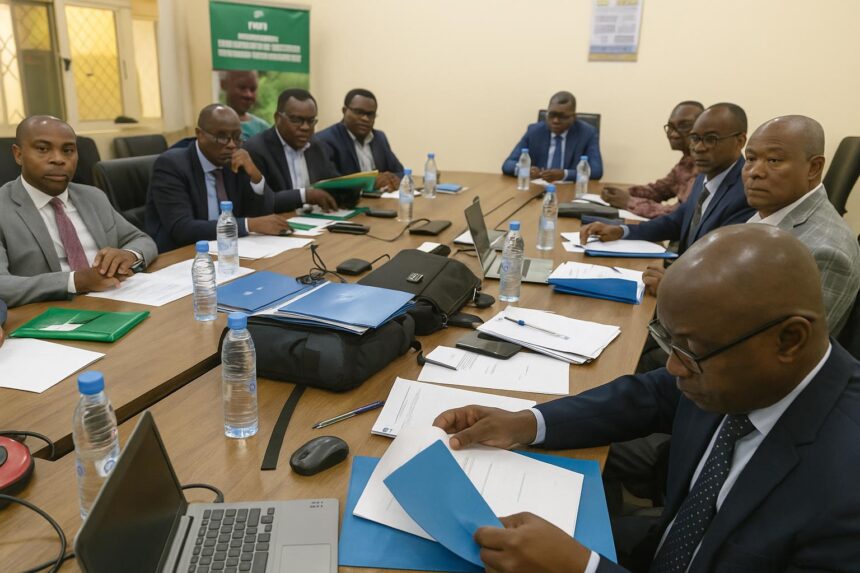
At the project’s third steering-committee meeting in Brazzaville, director Sylvain Lekaka hailed the plan’s 2026 work programme, which assigns 44.1 billion FCFA to 58 lines of action, including cash transfers, training modules and coaching networks.
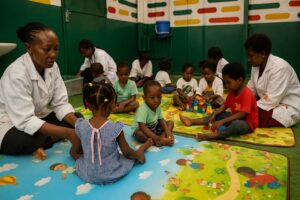
Forty thousand participants aged eighteen to thirty-five will follow an auto-entrepreneurship track, learning bookkeeping, customer outreach and digital marketing before receiving modest grants. Another five thousand will enter intensive apprenticeships in trades such as refrigeration, welding and beauty services.
The ambition sits inside the wider Lisungi social-safety net, rebadged as PSIPJ after its expansion in March. Officials argue that protecting vulnerable families and creating youth livelihoods are now two faces of the same policy.
Inside the PSIPJ Engine
PSIPJ relies on a forthcoming single social registry, a digital platform that will consolidate household data and prevent overlaps in support programmes. Engineers finalised most of the coding this year, and pilot uploads in Likouala and Pool are expected to begin early 2025.

Once operational, the registry will feed dashboards used by training centres, micro-finance partners and local administrators. ‘We need real-time tracking to know if a young person has moved from classroom to workshop or from workshop to market stall,’ explained a project IT specialist during the meeting.
PSIPJ is organised around six components, four of which are live. Beyond youth inclusion, funds are flowing to strengthen social-insurance systems, monitor impact and extend temporary cash transfers that cushion price shocks for households still recovering from the pandemic period.
Hurdles on the Road to Opportunity
Yet the steering committee acknowledged delays. Transport stipends meant to reach trainees sometimes arrive weeks late, forcing some to skip classes. Shortages of training kits—from sewing machines to protective goggles—have also slowed practical sessions in several centres.
Procurement specialists listed forty-three contracts that must be awarded next year, including civil-works upgrades for classrooms in Brazzaville and Pointe-Noire. Lekaka urged suppliers to ‘move in lock-step with our calendar so the curriculum does not stand still’.
World Bank representatives on the call said disbursements remain on schedule but emphasised that clear delivery milestones are mandatory for each tranche. They praised the transparency portal launched in October, calling it a ‘promising step toward results-based financing’.
Words from Leaders and Learners
Speaking after the session, Lekaka framed the stakes in simple terms. ‘If we align our efforts, we create 45 000 stories of dignity. If we lag, we leave potential on the table,’ he told journalists, reaffirming his faith in inter-ministerial coordination.
At the Centre de Formation Industrielle in Talangaï, trainee machinist Floriane Oba said the scheme is already changing her outlook. She now hopes to open a precision tool workshop with classmates. ‘I used to think a factory was only for men,’ she laughed.
In Pointe-Noire, Djibril Mavoungou is finishing a one-year course in refrigeration. He credits the monthly transport allowance with keeping him afloat while he shadows technicians at a local supermarket. ‘The money may be small, but the timing matters,’ he noted.
Trainers, too, feel the pressure. ‘When gloves and helmets arrive late, we have to improvise with theory instead of practice,’ confessed instructor Mireille Ntsiba, adding that new procurement guidelines should speed deliveries once signed.
Looking Ahead to 2026 Targets
Beyond the headline figure of 45 000 beneficiaries, PSIPJ has set incremental checkpoints. Ten thousand households in departments outside Likouala are slated to receive conditional transfers by mid-2026, while two thousand families in Likouala itself will be covered under an early-warning expansion.
The project team says success will be measured not just in diplomas but in survival rates of new ventures. Monitoring officers plan quarterly visits to verify whether kiosks, farms or service shops opened by graduates are still trading six months later.
For now, optimism outweighs doubt at the Ministry of Economy, where officials view PSIPJ as a pillar of national development plans aligned with President Denis Sassou Nguesso’s vision of shared prosperity. As Lekaka put it, ‘An economy grows faster when its young people believe opportunity is real.’