A discreet name behind major economic choices
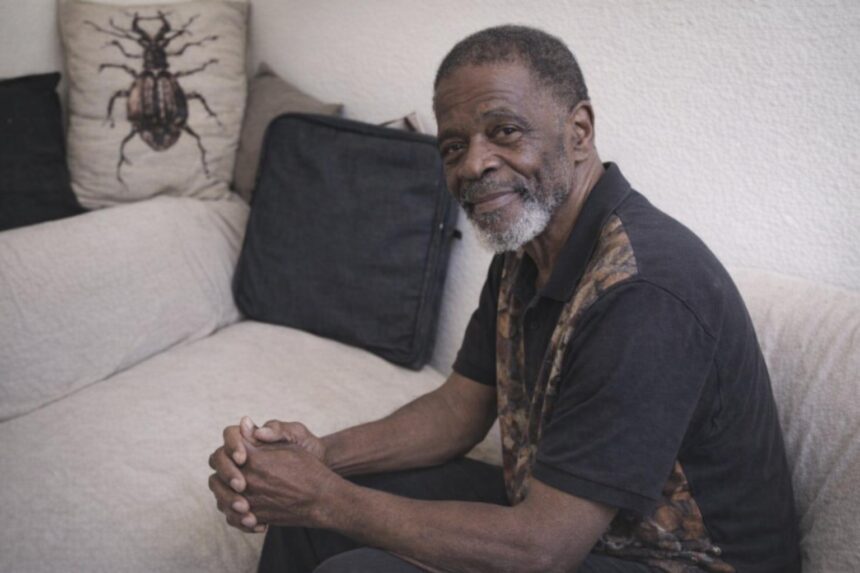
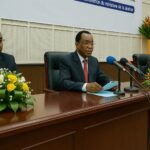
Born in Brazzaville on September 21, 1950, Dieudonné Diabatantou stands out as one of the quiet but decisive figures of Congo-Brazzaville’s economic planning. Trained in Bucharest and later Moscow, he helped build early macroeconomic management tools and contributed to the first five-year plan for 1982–1986.
- A discreet name behind major economic choices
- Education shaped by history and international training
- National accounts and the first five-year plan
- From senior planning posts to the 1991–1992 transition
- Structural adjustment talks and regional representation
- Mindouli deputy and a parallel cultural life
- Family roots, archives, and the work of transmission
- Why his story still resonates in today’s Congo
His career later moved through sensitive reform years, including discussions tied to structural adjustment. He also served as Secretary of State for Planning in the 1991–1992 transition government, and was elected deputy for Mindouli’s first constituency from 1993 to 1997.
Education shaped by history and international training
Raised in Brazzaville in a family environment marked by political and trade-union culture, Diabatantou studied at Collège Chaminade and Lycée Savorgnan-de-Brazza. The text notes that he witnessed the August 1963 upheavals, a period that left deep marks on a generation.
He then continued his education abroad, first in Bucharest and later at the Institute of Statistics and Economic Studies in Moscow. In 1977, he obtained a master’s degree in economic sciences, a background that would later be used in technical state roles rather than public-facing politics.
National accounts and the first five-year plan
Returning to Congo-Brazzaville in the late 1970s, he joined the National Center of Statistics and Economic Studies. He took part in setting up national accounting, a foundational tool for measuring economic activity and supporting public decision-making.
In 1979, he became head of the economic forecasting service at the Ministry of Planning. He then contributed to drafting the country’s first five-year plan (1982–1986). The text presents him as a builder of methods: forecasting, macro tools, and planning routines that help administrations act consistently.
From senior planning posts to the 1991–1992 transition
His responsibilities expanded inside the Planning administration. He became Secretary General for Planning in 1985, then Director General of the Economy in 1990, reflecting a steady rise built on expertise and institutional continuity.
He was later appointed Secretary of State for Planning in the transition government from 1991 to 1992. The portrait frames this period as a moment of political change that required technical profiles able to keep essential public functions working, especially those connected to economic steering.

Structural adjustment talks and regional representation
The text says Diabatantou represented Congo-Brazzaville in several bodies, including UDEAC and CEEAC. In that capacity, he took part in negotiations with the International Monetary Fund, the World Bank, and creditors linked to the Paris and London Clubs.
He coordinated the structural adjustment program described in the source. In 1986, he received the rank of Knight of the Congolese Order of Merit. In 1991, he chaired the sub-commission “Public finances and adjustment” during the Sovereign National Conference.
Mindouli deputy and a parallel cultural life
Elected deputy for Mindouli’s first constituency from 1993 to 1997, he combined parliamentary life with a personal commitment to culture. The portrait highlights a profile that does not separate the state from society, but tries to connect both through memory and expression.
He was a co-founder and actor-musician of the Ngunga troupe in the late 1970s. The text also notes he published in Congolese and French press outlets, and worked with researchers to reconstruct parts of the country’s social and political history.
Family roots, archives, and the work of transmission
Married in 1982 to Martine Mouanga, Dieudonné Diabatantou is the father of seven children. The source says his family has lived in France since 2012, continuing cultural and memory-related commitments connected to family archives.
Those archives are linked to his father, the trade unionist Julien Boukambou, described as a key element in the household’s historical awareness. The text adds that Diabatantou is the uncle of filmmaker Hassim Tall Boukambou, and that he continues writing and passing on knowledge.
Why his story still resonates in today’s Congo
This portrait presents Diabatantou as a technician of the state who helped establish practical tools and frameworks, while also engaging with civic life through culture and writing. His path suggests that economic policy is not only about numbers, but also about institutions and people.
In a media era often focused on loud personalities, his example illustrates another kind of influence: long-term work inside ministries, regional bodies, and reform discussions. The text ultimately depicts a public servant whose legacy mixes planning, representation, and cultural memory.