Young Congolese at World Taekwondo Championships
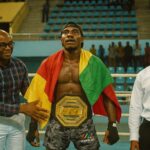
Wuxi’s gleaming Olympic Park saw nearly a thousand fighters step onto the mats last week. Among them, two slender silhouettes in red-blue-gold doboks drew curious eyes. Walikemot Neem, 20, and Jonathan Bouassa, 19, carried Congo-Brazzaville’s hopes on their shoulders.
Neem mixed speed and flexibility in the men’s –63 kg division, while Bouassa relied on explosive footwork in –58 kg. Both entered the draw ranked far below the seeded favourites, yet neither blinked during televised warm-ups streamed to millions by World Taekwondo channels.
Battling through early rounds
Guided by international-level coaches Floris Bazebizonza and Olivier Mananga, the pair negotiated preliminary bouts with crisp roundhouse kicks and disciplined guard. Neem edged a Chilean opponent 25–23; Bouassa upset a Danish seed 18–17, each victory punching their tickets to the round of 32.
The step up in class proved brutal. Neem bowed out against Türkiye’s European bronze-medallist Emre Kaplan after a tactical duel decided by a single body kick. Bouassa fell to South Korea’s Hwang Chan-il, the eventual silver medallist, conceding in the dying seconds.
Positive takeaways despite exit
Finishing among the top 32 in debut appearances may sound modest, yet context matters. Wuxi attracted athletes from 145 nations, many training under professional regimes with sports-science support. Congo’s duo prepared largely on outdoor tatami in Brazzaville’s Makélékélé district, sharing gear and transport.
Coach Bazebizonza praised their composure, noting that neither received a single penalty card, a rarity for newcomers. He called the outing “a classroom without walls,” stressing that exposure to electronic scoring systems and video replay will elevate domestic training sessions back home.
Grand Slam invitation lights new fire
Impressed organisers handed Team Congo an immediate wildcard for December’s prestigious Grand Slam Challenge, staged in the same Jiangsu metropolis. The event offers ranking points, prize money, and invaluable sparring against Olympic medallists drawn from Asia, Europe and the Americas.
National team manager Maître Rihan Adel, tipped to run for federation president next spring, views the invitation as a springboard. “It proves our athletes belong on the big stage,” he told local reporters on his return to Maya-Maya Airport, urging public-private sponsorship.
What support do athletes need?
According to the Ministry of Sports’ latest plan, a dedicated high-performance centre in Kintélé should open in 2025. While construction progress is steady, Neem and Bouassa must, in the meantime, juggle university classes and evening practice sessions at the capital’s martial-arts dojo.
Sports scientist Clarisse Mavoungou suggests incremental improvements: nutrition stipends, modern mouthguards, and recovery physiotherapy. “Small details turn tight matches,” she explained during a Radio Congo sports show, pointing out that the athletes’ current diet mainly relies on cassava fumbwa and grilled mackerel.
Role models for local youth
In Talangai’s crowded courtyards, children already imitate Neem’s spinning hook kick, recording TikTok clips that rack up thousands of views. Social-media influencer Marlyse KB says the duo’s journey illustrates that dedication, not expensive gyms, creates buzz and positive peer pressure.
Teachers at Lycée Chaminade, where Bouassa graduated, report a surge in after-school registrations for the taekwondo club. Headmaster Jean-Paul Mvouba hopes the worldwide exposure convinces parents that martial arts cultivate discipline useful far beyond the mat and into exam halls.
Counting down to December
Preparation for the Grand Slam starts immediately. Coach Mananga has scheduled altitude conditioning in Ouesso, arguing that northern forests offer fresher air and fewer distractions than the capital. A crowdfunding page aims to raise fees for flight connections and smart protective sensors.
World Taekwondo’s rules now require Bluetooth socks that record impact force; each pair costs over US$200. “If we secure four pairs, training simulations will match international conditions,” Neem notes before boarding an Intercity bus, visibly excited despite a 16-hour ride.

Hope beyond medals
Medal tallies matter, but the bigger win could be renewed national interest in healthy lifestyles. The Ministry’s 2022 survey showed one in three urban teenagers is overweight. Taekwondo classes, cheap and space-efficient, offer an appealing alternative to the back-alley fast-food habit.
Bouassa’s mother, a market vendor in Moungali, sums it up: “My son travels the world thanks to sport. If more kids follow, crime will drop and our flag will fly higher.” Her words echo the optimism that now surrounds Congo’s rising kickers.
Looking ahead to Olympic dreams
Longer term, the federation eyes the African Olympic Qualification Tournament slated for February 2024 in Dakar. Only two tickets per weight class will be available, yet coach Bazebizonza believes a carefully planned competition calendar, including regional Opens in Abidjan and Kigali, can lift rankings.
Funding remains the decisive factor. Adel has scheduled meetings with telecommunication firms and a Brazzaville-based brewery to discuss jersey branding. Should pledges materialise, Neem and Bouassa could hold week-long sparring camps with African champions, sharpening reflexes before stepping onto the Senegalese tatami.