Ceremonial morning in Brazzaville
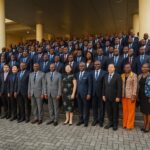
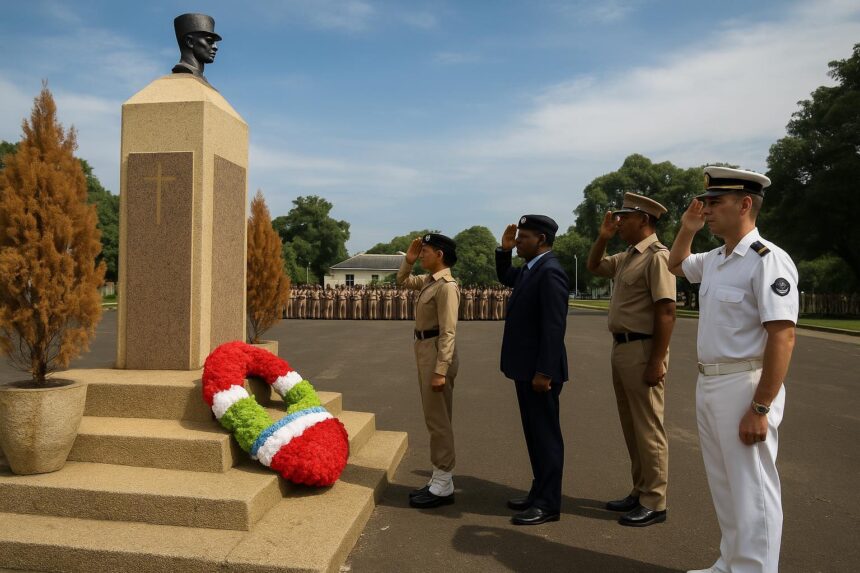
At dawn on 27 November, the vast parade ground of the École Militaire Préparatoire Général Leclerc in Brazzaville filled with crisp uniforms and tricolour flags. The school, better known as EMPGL, held its annual Marshal Leclerc Day, a ceremony that blends solemn military drill with youthful pride.
- Ceremonial morning in Brazzaville
- Remembering an audacious general
- Roots of the 2nd Armoured Division
- Birth of an academy in Free France’s capital
- A voice of reconciliation
- A practical gift for a living campus
- Continuity of values at EMPGL
- Local pride in national history
- An echo for today’s youth
- Looking ahead to next commemorations
One by one, civil and defence officials stepped forward, placing wreaths of white lilies and red roses at the foot of the flagstaff. The cadence of the brass band, the silence of cadets standing at attention, and the steady equatorial sun framed a scene of respectful remembrance today.
Remembering an audacious general
Speakers quickly moved beyond protocol to sketch the daring trajectory of Philippe Leclerc de Hauteclocque, the man whose name crowns the academy. They recalled his promotion as top graduate of the French war college in 1937, a promise abruptly interrupted by the outbreak of global conflict two years later.
Within weeks of mobilisation, young Leclerc was posted to the Fourth Infantry Division reinforcing the Maginot Line. Soon he commanded the Third Bureau in charge of operations, yet he openly rejected the mood of capitulation gripping Paris. That refusal of defeat would shape both his legend and EMPGL’s ethos.
Roots of the 2nd Armoured Division
On 24 August 1943, General Charles de Gaulle tasked Leclerc with converting the Force L, then freshly renamed Second Free French Division, into a powerful armoured spearhead based in Casablanca. Leclerc accepted, forging what he would later describe as his finest victory: the celebrated Second Armoured Division unit.
The cadets listened as the narrator underlined that the same division would liberate Paris a year later, a milestone forever linked to Leclerc’s capacity to rally diverse ranks behind a single tricolour. For EMPGL students, the story illustrates how determination and discipline can carry Congolese youth toward national service.
Birth of an academy in Free France’s capital
Brazzaville, capital of Free France between 1940 and 1943, gave its own gift to the war effort: a school for children of troops. When the establishment sought a name, the choice was obvious. The pseudonym ‘Leclerc,’ already synonymous with courage, became a banner for future cadets to follow.
Today, EMPGL stands on that legacy, training teenage boys and girls in military discipline, civic duty and rigorous academics. The annual Marshal Leclerc Day acts as a living history lesson, linking the red-terracotta campus to distant North African deserts and the boulevards once cleared by the Second Armoured.
A voice of reconciliation
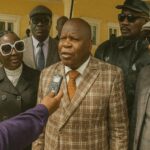
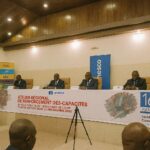
In his address, Serge Eugène Ghoma-Boubanga, deputy secretary-general of the Association of Former Children of Troops, painted Leclerc as a complex patriot. He quoted the general’s 1943 warning that ‘civil war looms between Gaullists and Giraudists,’ then praised his later role championing unity inside the Second Armoured Division.
‘A radical Free Frenchman, yet a herald of reconciliation,’ insisted Ghoma-Boubanga. His words resonated in a country that values dialogue among generations and regions. By framing Leclerc’s legacy around cohesion, the speaker reminded cadets that leadership means listening to differing voices before forging a single, forward-looking course together.
A practical gift for a living campus
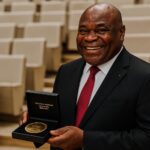
The highlight outside speeches came when Colonel-Major Rémy Ayayos Ikounga, president of the Congolese AET chapter, handed the school commandant a brand-new brush-cutter. The machine may appear modest, yet its symbolism is clear: alumni not only honour memories, they also maintain the grounds where those memories breathe daily.
Colonel-Major Camille Serge Oya, who leads EMPGL, thanked the association for its ‘concrete gesture that will help us keep the campus neat and operational’. Applause followed, echoing among the mango trees. The exchange underlined how inter-generational bonds materialise in the form of tools, mentorship and shared ceremonies today.
Continuity of values at EMPGL
Throughout the morning, cadets from first-year pupils to final-year prefects marched in perfect squares, their boots striking rhythms inherited from European drill yet adapted to Congolese cadence. Instructors whispered corrections, reinforcing punctuality and humility, two qualities repeatedly associated with Leclerc’s persona and still central to the school’s code.
Local pride in national history
Parents watching from the shade spoke of pride that Brazzaville hosts an institution linking local youth to broader Francophone history. For them, Marshal Leclerc Day is not nostalgia but a chance to show children that Congo-Brazzaville played a strategic role during the darkest years of twentieth-century Europe conflict.

An echo for today’s youth
Several cadets, interviewed after dismissal, said Leclerc’s decision to resist rather than submit felt relevant today. ‘Our challenges are different, but the mindset is the same: serve first,’ a seventeen-year-old sergeant explained. His classmate added that the general’s emphasis on unity offers guidance for navigating social media debates.
Looking ahead to next commemorations
As the flag was lowered and the band played the national anthem, organisers hinted at plans for 2024, which will mark eighty years since Paris’s liberation. EMPGL intends to invite historians and stage a cadet exhibit, ensuring that future classes continue carrying the torch lit by Leclerc originally.