Christmas Joy Lights Up Brazzaville
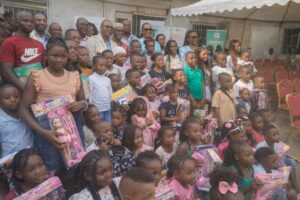
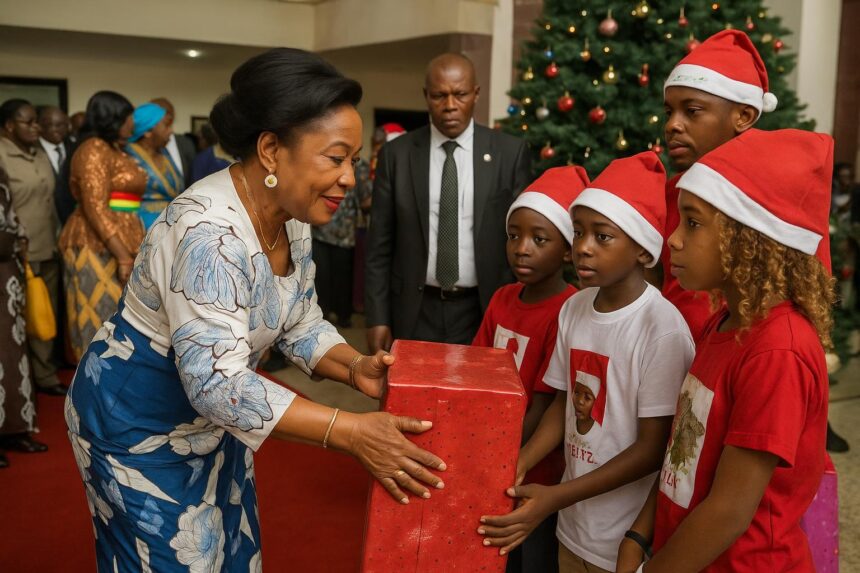
On 25 December, the Palais des Congrès of Brazzaville turned into a buzzing playground as nearly 400 youngsters filed in, eyes wide, for the First Lady’s traditional Christmas toy ceremony.
Antoinette Sassou N’Guesso, president of the Congo Assistance Foundation, welcomed them personally, a gesture that has become a seasonal landmark over the past four decades.
Ecumenical Service Sets Inclusive Tone
The morning began with an ecumenical service centred on Matthew 19:14, urging adults to let children approach freely; pastors, priests and imams shared the lectern, crafting a message of unity rare in many capitals.
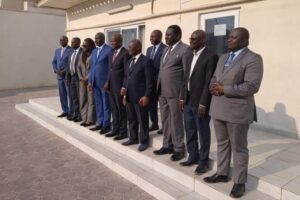
Government ministers, Brazzaville’s mayor and several MPs occupied the front rows, signalling institutional backing without stealing the spotlight from the true guests of honour.
Colorful Gifts and Nutritious Meals
When the music stopped, the First Lady wheeled in the first batch of gifts herself: bright bicycles, footballs in Congo’s tricolour, talking dolls, wooden puzzles and even a handful of tablets donated by a local telecom firm.
Each child, selected by parish committees from Brazzaville and Dolisie, heard his or her name echoed through the hall before stepping forward to receive a toy and a warm word.
Beyond the sparkle, the organisers insisted on nutrition: every youngster sat to a freshly prepared plate of rice, grilled chicken, plantain chips and seasonal fruit, a menu planned with paediatric nutritionists from the University Hospital.
Foundation officials say the food component matters as much as the toys, especially this year when some families face higher market prices for staple goods after recent flooding along the Congo River.
Four Decades of Congo Assistance
‘Madame’s commitment is not a slogan but a presence,’ affirmed presidential social affairs adviser Blandine Malila, recalling programmes dating back to the 1980s that financed school fees, cardiac surgeries and orphanage renovations.
Independent observers note that Congo Assistance, while closely linked to the presidency, enjoys collaboration from multinationals and congregations, providing a rare public-private partnership in the country’s social sector.
This year’s toy drive cost roughly sixty million CFA francs, according to logistics coordinator Régis Ondongo, a budget covered through donations and the foundation’s own handicraft fair proceeds.
The organisation deliberately avoided singling out individual sponsors during the ceremony to keep the focus on children, yet banners from banks and breweries waited discreetly in the lobby for post-event photos.
Community Voices on Impact
Parents watching from the balcony called the initiative a relief, explaining that continuing inflation means a single imported doll can equal a week’s salary for a municipal cleaner.
Six-year-old Christelle clutched her first bicycle and whispered, ‘I will ride to school with my brother.’ Similar stories echoed across the room, underlining the practical impact of a well-chosen present.
Religious leaders praised the state-church synergy, noting that social outreach fosters peace at a time the region watches conflicts elsewhere.
As the last song faded, organisers handed parents a leaflet listing paediatric clinics, tutoring centres and emergency telephone numbers, underscoring that Christmas cheer can also guide families toward year-round services.
Nationwide Reach and Security
The First Lady promised to extend the initiative to Pointe-Noire next week, cementing a festive tour that many see as a cornerstone of Congo’s social calendar and a benchmark for future philanthropic drives.
Founded in 1984, Congo Assistance began with small food distributions in Talangaï; it has since built maternity wards in Mossaka and vaccinated over 120,000 children, figures confirmed by the Health Ministry’s latest annual report.
Sociologist Clément Mouari explains that the foundation’s longevity rests on its capacity to mobilise the faith community: ‘When parish groups identify beneficiaries, the stigma disappears because neighbours feel involved, not observed,’ he told our newsroom.
Financial analyst Edwige Mabiala adds that such events have a micro-economic ripple: ‘Street vendors outside the palais did brisk business in soft drinks and Santa hats, showing that charity can also spark commerce.’
Security, often a concern in large gatherings, was light yet effective; scouts from local churches guided lines, while the police maintained a calm perimeter without heavy armaments, in line with new crowd-friendly protocols.
Television crews beamed the celebration live to rural parishes, a broadcast financed by the state broadcaster Tele Congo and a private satellite company, providing children in remote districts a virtual seat at the party.
Looking Ahead to 2024
In a closing remark, Antoinette Sassou N’Guesso urged adults to keep listening: ‘The kingdom of heaven belongs to those who resemble children; our Republic will grow stronger if we protect their dreams every single day.’
Looking to 2024, the foundation plans a mobile library bus, stocked with comics in Lingala, Kituba and French, that will tour peri-urban neighbourhoods during school holidays, a project developed alongside the Ministry of Primary Education.
Organisers invite volunteers to register online this month, stressing that sustaining the initiative depends on citizen energy as much as on institutional donors.