Kigali gathering focuses on parity
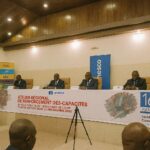
Kigali’s modern convention centre buzzed on 19 and 20 November as foreign ministers from the French-speaking world opened the 46th Ministerial Conference of La Francophonie. The headline theme, “Thirty Years after Beijing: Women’s Contribution in the Francophone Space”, set an ambitious tone from the first gavel.
Delegates quickly agreed that economic shocks, climate stress and digital shifts risk widening the gender gap if governments do not act. Speakers described the moment as a “second Beijing”, a reference to the 1995 world summit that placed equality at the heart of international policy.
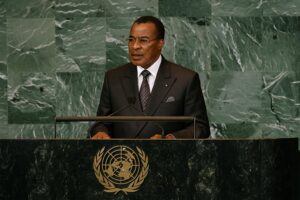
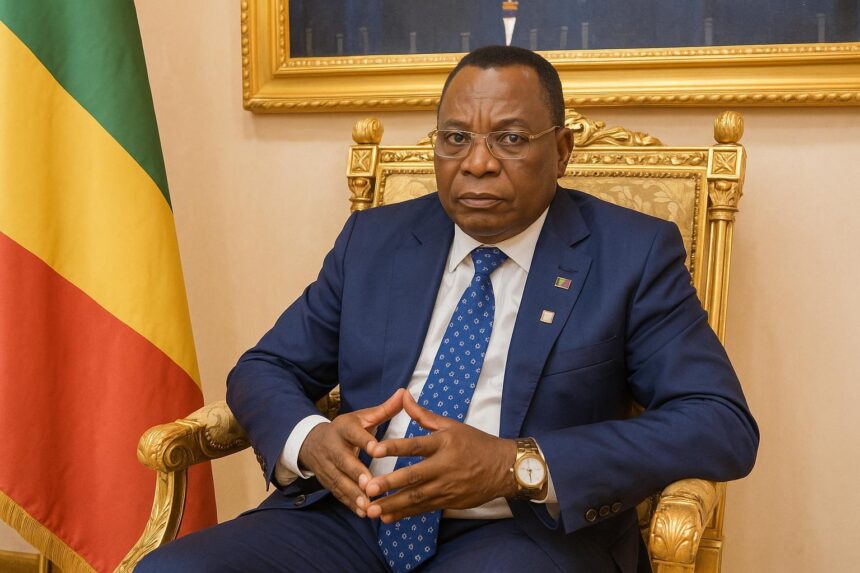
Congo-Brazzaville’s chief diplomat, Jean-Claude Gakosso, told reporters the mood was upbeat. “We are witnessing spectacular progress; now we must lock it in with political will,” he said after the opening plenary, underscoring his country’s constitutional commitment to equal rights.
Concrete pledges adopted in Rwanda
Behind closed doors, ministers hammered out a concise package meant to translate ideals into measurable milestones. They endorsed updated indicators for parity in education, technology and finance, and urged each member to present a yearly progress card to the Organisation internationale de la Francophonie (OIF).
A new envelope within the Multilateral Fund will steer resources toward girls’ schooling, mentoring networks and STEM scholarships, with an emphasis on artificial intelligence and green jobs. Rwanda’s minister of gender described the move as “budgeting for impact rather than rhetoric”, drawing quiet applause.
Delegations also committed to reviewing laws that still limit women’s access to credit or land. The text encourages regional banks to design credit lines tailored for female entrepreneurs in the Sahel, Central Africa and island states, areas often overlooked by mainstream finance.
Congo’s steady voice in the Francophone arena
For Brazzaville, the Kigali session offered a platform to showcase steady, if discreet, advances. Gakosso reminded colleagues that Congo’s parliament passed quota legislation in 2021, raising women’s representation in local councils to nearly 30 percent. “We are not yet at parity, but the trajectory is clear,” he insisted.
He underlined projects bringing solar lights to peri-urban markets managed largely by women, a move that extends trading hours and boosts household income. Partners such as the African Development Bank have labeled the effort a low-cost model adaptable across the region.
Gakosso argued that Congo’s reliability in multilateral forums earns it a seat at decisive tables. “Respect, tolerance and a word kept—that is how we defend multilateralism,” he noted, a remark welcomed by veteran observers who see new strains on cooperative diplomacy worldwide.
Francine Ntoumi, an emblem of excellence
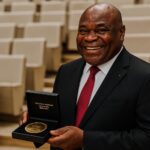
Among the luminaries singled out in Kigali, Congolese immunologist Francine Ntoumi received repeated praise. Her pioneering research on malaria and emerging pathogens, combined with mentorship of dozens of young scientists, was cited as proof that investment in girls’ education pays dividends.
“Professor Ntoumi embodies the alliance between science and service,” affirmed OIF Secretary-General Louise Mushikiwabo, herself Rwandan, during a side event. Delegates from Canada to Côte d’Ivoire queued to congratulate Ntoumi, whose modest smile hid a schedule packed with lab work and advocacy.
At home, her acclaim feeds national pride. Gakosso called her “one of the paragons of African emancipation”, a phrase that rippled across Congolese social media, inspiring students who followed the conference via live streams shared by public television.
Road toward Phnom Penh 2026
The Kigali meeting also opened the race for the next Secretary-General of La Francophonie, with candidacies due by 15 May 2026. The election will coincide with the Phnom Penh summit on 15–16 November 2026, themed around peace as a driver of sustainable development.
Ministers agreed that gender equality metrics will form part of the scorecard presented in Cambodia. Interim reviews are planned for mid-2025, ensuring that pledges made in Kigali do not fade amid competing agendas.
Cambodia’s delegation welcomed the decision. “Peace and equality reinforce each other,” it declared, signaling that the forthcoming summit may link parity goals with post-conflict reconstruction funds, an approach likely to resonate with several Sahelian members.
Beijing’s legacy, Kigali’s momentum
Thirty years after the landmark Beijing Platform for Action, the Kigali declaration attempts to convert aspiration into accountability. Observers note that La Francophonie’s strength lies in peer learning, where small successes in one member state can be quickly replicated elsewhere.
As delegates boarded flights home, analysts pointed out that annual ministerial reviews create a gentle yet persistent pressure. “It’s not about naming and shaming; it’s about confirming progress,” said one academic from Dakar. For Congo and its partners, that rhythm may prove the decisive ingredient for genuine, lasting parity.