
Bright smiles at Village d’Enfants
Tuesday morning, the quiet yard of the Cardinal Émile Biayenda Children’s Village in Kombé turned into an open-air clinic. Fifty-seven orphans, some still clutching schoolbags, lined up beneath the mango trees for free check-ups offered during a special “Health for All” day.
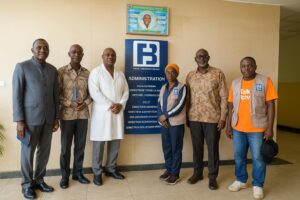
Initiated by the Embassy of the Bolivarian Republic of Venezuela and supported by Brazzaville’s Cuban medical brigade, the outreach combined consultations, medicine distribution and a small food donation, echoing national efforts to widen primary healthcare access.
By nightfall physicians had flagged seven children with acute respiratory infections, fungal lesions or persistent headaches; each received starter treatment and a referral to Madibou District Hospital where follow-up visits will remain free, organisers assured.
“Children are tomorrow’s leaders and must not carry untreated illness,” explained Dr Yolandra Corris Zamora, head of the brigade. “Our mission is simple: heal, teach prevention and show solidarity with the Congolese families who welcome us.”
Cuban expertise meets Venezuelan diplomacy
Cuba’s medical presence in Congo-Brazzaville dates back two decades, with dozens of doctors deployed in regional hospitals (PAHO, 2022). Their partnership with Venezuelan diplomats illustrates what officials call “South-South cooperation”, a model championed by President Denis Sassou Nguesso during recent health forums.

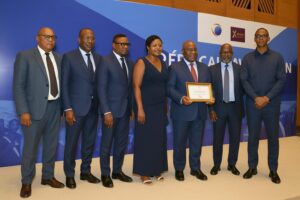
Ambassador Laura Evangelia Suárez, smiling beneath a patterned headscarf, personally handed over cartons of antibiotics, cough syrups, rice and cooking oil. She called the gift a ‘thank you’ for Congo’s hospitality toward Venezuelan students and entrepreneurs now living in Brazzaville.
The embassy intends to replicate the action in Pointe-Noire and several northern localities over the coming months, aligning with the national strategy to reach remote communities before the next rainy season complicates travel.
Local voices welcome a caring hand
Jean-Didier Mayembo, director of the orphanage, has managed the site since 2010. He said daily medication often represents ‘the biggest hole’ in a tight budget largely sustained by church offerings and modest state support.

“We try to grow cassava and rear chickens, but paracetamol and antifungal cream cannot be harvested,” he joked, holding a new stethoscope donated for the centre’s small infirmary.
Christian-Roch Mabiala, director general of social affairs, attended on behalf of the ministry. He praised the diplomatic corps for ‘acting rather than promising’, and reminded guests that the government is finalising a law which will guarantee basic health coverage for every child.
A glimpse at children’s health indicators
According to UNICEF, respiratory infections remain among the top three causes of under-five mortality in Central Africa, yet most cases are treatable with timely antibiotics and clean air measures (UNICEF, 2023).
At Kombé, many children lost parents to preventable diseases, making early detection critical. Staff nurse Delphine Louzolo said malnutrition often hides behind normal weight: ‘A cough that drags on can signal vitamin deficiency; today’s tests help us catch that before it spirals.’
What happens after the cameras leave?
The medical files opened this week will be stored in Brazzaville’s digital health registry, launched in April to make follow-ups easier. Doctors will receive phone alerts when a child misses an appointment, an innovation financed by a public-private partnership with a local telecom operator.
In addition, the orphanage has scheduled monthly ‘health talks’ where Cuban clinicians discuss hygiene, sports and adolescent issues, using music and theatre to keep attention high.
Community leaders hope these sessions create ripple effects beyond the orphanage walls, inspiring nearby families to seek check-ups at Madibou’s primary-care centre, recently renovated with support from the National Solidarity Fund.
Call for wider charitable momentum
Tharlisse Tshitundu Kahonji, secretary-general of the Federation of Foreign Communities in Congo, urged other embassies and companies to ‘adopt’ institutions as part of corporate social responsibility plans, noting that collective action strengthens social cohesion.
With school holidays approaching, the children of Kombé are already drawing thank-you cards. Their colourful scribbles speak loudly: a simple injection or a bottle of cough syrup can rewrite a future, especially when delivered with a smile from faraway friends.
Linking outreach to Congo’s Universal Health Plan
Brazzaville authorities are piloting universal health insurance, starting with children under ten and pregnant women. Announced by the Ministry of Health in October, the plan will subsidise essential drugs and transport to referral centres, a gap where orphans often fall.
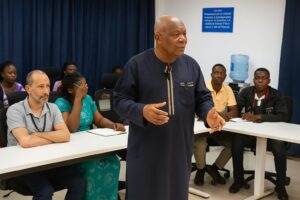
During Tuesday’s ceremony, Dr François Ifoko of the city health department outlined how data gathered in outreach events will feed into the insurance algorithm, helping officials forecast medicine needs and avoid stock-outs that previously hampered paediatric care.
Logistics matter: the Kombé site sits eight kilometres from the tarred road, and seasonal rains can isolate it. Venezuelan diplomats hired a four-wheel-drive truck, while youth volunteers formed human chains to unload supplies without disturbing afternoon classes.
Observers from several neighbourhood health committees took notes to replicate the model. ‘The day demystified check-ups,’ said community mobiliser Armelle Mbon. ‘When children learn that a white coat does not mean pain, they tell their neighbours, and that snowballs into healthier districts.’