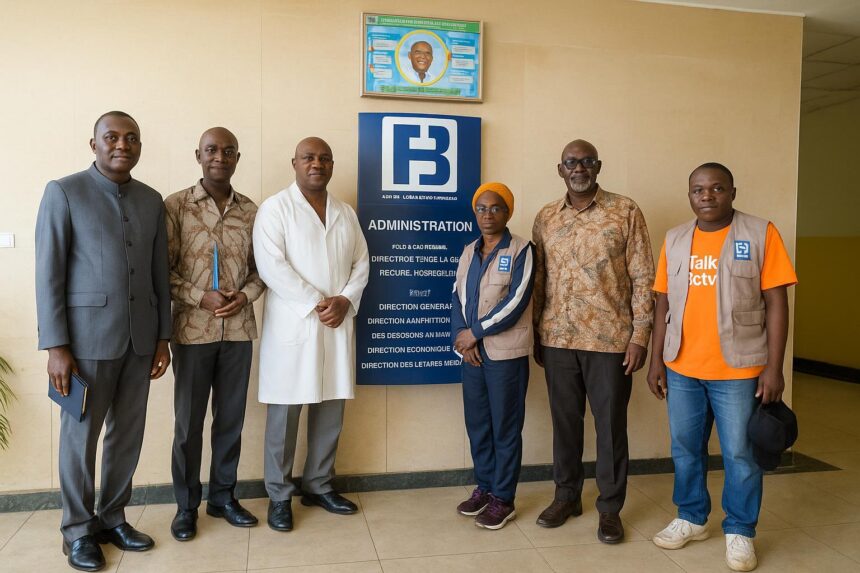
Oyo Hospitals Welcome High-Tech Upgrades
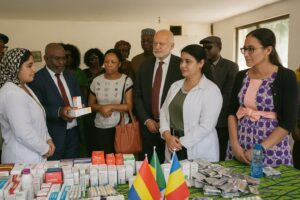
Under the humid morning sun in Oyo, Cuvette, a small convoy pulled into the leafy compound of Édith Lucie Bongo Ondimba General Hospital. At its head walked the Resident Representative of the United Nations Development Programme, here to check on two headline health upgrades.
- Oyo Hospitals Welcome High-Tech Upgrades
- Modern Incinerator Targets Safer Care
- State-of-the-Art Lab for Faster Virus Alerts
- Partnership Between UNDP and Local Teams
- Residents Hope for Cheaper, Closer Services
- Timeline and Training Challenges Ahead
- Looking Ahead to Regional Impact
- Quiet Boost to Local Economy
- Guarded Optimism in Cuvette
Alongside the hospital’s director and the matron of nearby Maman Mouebara Hospital, the UN guest spent hours reviewing blueprints, poking around fenced construction zones and comparing notes with engineers. The conversation revolved around a modern biomedical-waste incinerator and an advanced laboratory for viral disease detection.
Modern Incinerator Targets Safer Care
For years, used syringes, blood bags and bandages in northern hospitals were often burned in open pits or trucked hundreds of kilometres to Brazzaville. The planned incinerator, designed to reach 1 200 °C, promises a cleaner, quicker and locally controlled solution.
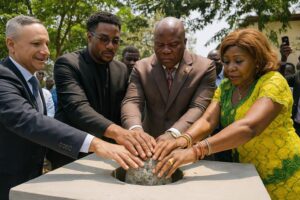
According to the site supervisor, civil works have crossed the 60 percent mark, with the concrete containment shell now cured. Specialist technicians are expected next month to install the double-chamber furnace, exhaust scrubbers and an automated ash-collection unit.
State-of-the-Art Lab for Faster Virus Alerts
Behind the paediatric wing, workers are converting a former storage hall into a biosafety level-2 laboratory. Glass partitions and negative-pressure ventilation are already in place, preparing the space for polymerase-chain-reaction machines capable of detecting Ebola, Covid-19, Marburg and other fast-moving threats.
Hospital director Dr. Arsène Nkouka says the facility will cut diagnostic wait times from days to mere hours. “We often ship samples to Pointe-Noire or Kinshasa and pray for the result. Soon we will confirm cases on site and isolate patients faster,” he noted.
Partnership Between UNDP and Local Teams
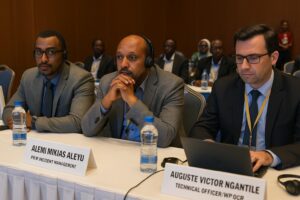
The UNDP delegation emphasised that the upgrades form part of a broader resilience programme funded jointly with the Congolese government. The aim is to decentralise specialised care, ease pressure on capital hospitals and align with the national strategic plan for universal health coverage.
During the briefing, the Resident Representative praised the “strong ownership” shown by local administrators. She also highlighted energy efficiency gains, noting that both the incinerator and the lab will be powered by rooftop solar panels linked to battery storage, reducing running costs for cash-strapped facilities.
Residents Hope for Cheaper, Closer Services
In the bustling Oyo market, vendors welcomed the news. “When my nephew needed a viral test, we sold two goats to pay transport to Brazzaville,” recalled stallholder Imelda Abala. “If the new lab opens here, families like mine will save money and precious time”.
Community radio presenter Marius Bounda believes the incinerator will also improve public perception of hospital hygiene. “People sometimes avoid care because they think needles are reused. Seeing waste handled professionally will boost confidence and encourage early consultation,” he argued during an afternoon talk show.
Timeline and Training Challenges Ahead
Engineers estimate that both facilities could be operational by December if import logistics run smoothly. Customs clearance for specialised filters and lab reagents remains a potential bottleneck, yet local officials say they are in regular contact with port authorities to expedite paperwork.
Beyond bricks and machines, human skills are crucial. Twenty nurses and lab technicians from Oyo and surrounding districts will travel to the National Public Health Laboratory in Brazzaville for a three-week intensive course on biosafety, maintenance and data reporting, funded by the UNDP project budget.
Looking Ahead to Regional Impact
Health ministry planners see Oyo as a pilot. If the model proves cost-effective, similar incinerators and labs could reach Owando, Dolisie and Impfondo under future budget cycles. The Resident Representative hinted at additional partners, including the African Development Bank, ready to scale the effort.
Public-health expert Professor Aimé Mbemba applauds the decentralisation push but warns that recurrent funding must follow. “New equipment is great, yet you need reagents every month and technicians on payroll. Continuous financing, not one-off donations, will determine whether the labs stay reliable,” he stressed.
Quiet Boost to Local Economy
Construction sites have already hired more than 70 labourers, according to municipal figures. Cafés near the hospital report brisk lunchtime sales, while a local welding shop received contracts for safety railings and the incinerator’s steel chimney, injecting cash into neighbourhood businesses.
Mayor Pauline Owassa described the ripple effect as encouraging. “We often rely on seasonal trade, but these projects provide steady income and new skills for our youth. It is a concrete example of development felt at family level,” she told reporters after touring the site.
Guarded Optimism in Cuvette
Even with optimism high, hospital staff remain realistic. Water supply in Oyo is irregular, and uninterrupted flow is required for laboratory sterilisation. Engineers are therefore drilling a dedicated borehole and planning an overhead tank to guarantee pressure during town-wide outages.
Yet the general mood in the Cuvette capital is hopeful. As the UNDP convoy rolled back onto the national road, nurses waved beside stacks of cement. Their message was simple: better tools mean better care, closer to home, and a healthier future for northern Congo.