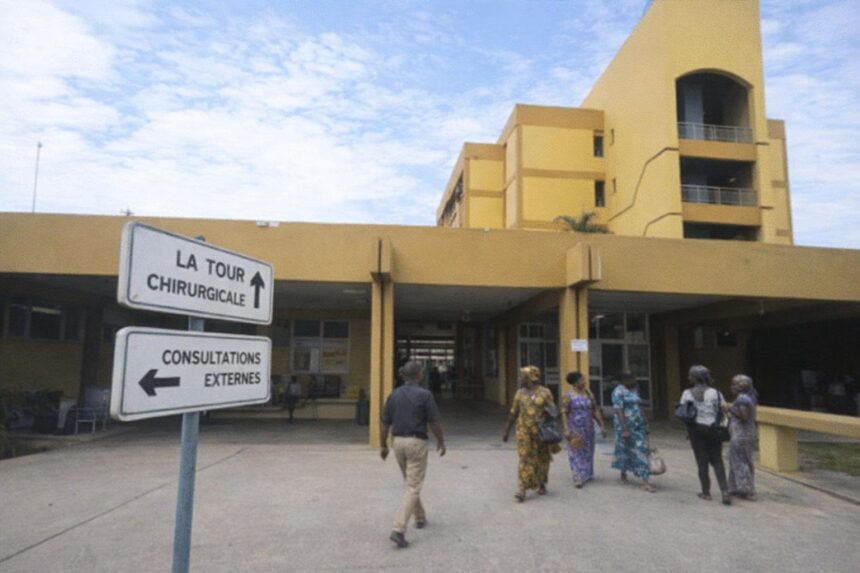
What is happening in Brazzaville public hospitals
Since December 24, staff at the Mère-Enfant Blanche Gomes Specialized Hospital, the Brazzaville University Hospital Center (CHU), and the Djiri General Hospital have been observing an open-ended strike with a minimum service.
The stoppage is already slowing or halting several hospital activities. For patients, the most immediate effect is practical: some are now forced to look for treatment in other health facilities in the capital to avoid delays in care.
Departments most affected by the strike
Several services are described as particularly impacted, including outpatient consultations, pediatric surgery, gynecology-obstetrics, and prenatal care. In these departments, external consultations are suspended, reshaping the daily flow of patients.
In practice, only severe cases are being admitted in the affected hospitals. For everyone else, the situation creates uncertainty, especially for people with scheduled appointments, ongoing follow-ups, or routine prenatal visits.
Patients speak: disappointment and worry
In front of services that are not operating normally, many patients who made the trip for appointments say they feel disappointed and worried. Some arrive expecting a consultation, only to learn that doctors are not present.

“I came for my follow-up appointment, but the doctors are not here,” one patient said, describing a visit that ended without the expected medical check.
Another patient echoed the frustration: “The appointment was set for today, but the doctors are nowhere to be seen. I don’t understand why they do this. We are the first ones to suffer from their strike.”
Emergency service tensions and a reported death
At the emergency department, the reporting notes that a death was recorded at the time of arrival. Access to the emergency unit was also refused, adding to the tense atmosphere around services that typically handle the most urgent cases.

Because details remain limited, the broader impact on emergency care is hard to measure from the available information alone. Still, the mention of a death and restricted access highlights the sensitivity of disruptions in critical hospital units.
What patients can do during minimum service
With only serious cases being admitted, patients with non-urgent needs may consider seeking care in other medical centers in Brazzaville, especially for consultations and follow-up appointments that cannot be performed on site.
For pregnant women and families with children, the disruption in prenatal services and pediatric care can be particularly stressful. When possible, contacting alternative facilities before traveling may help reduce wasted trips and long waits.
Calls for solutions to protect patient health
The situation is presented as a public health concern, with patients describing risks linked to delayed consultations and interrupted follow-ups. For those already managing illness, uncertainty can quickly become a health issue.
In this context, there are calls for the government to take concrete steps to address the ongoing strike and restore normal hospital services, with the stated goal of limiting the impact on patients and ensuring continuity of care.