Government pledge echoed in Likouala
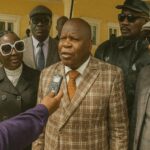
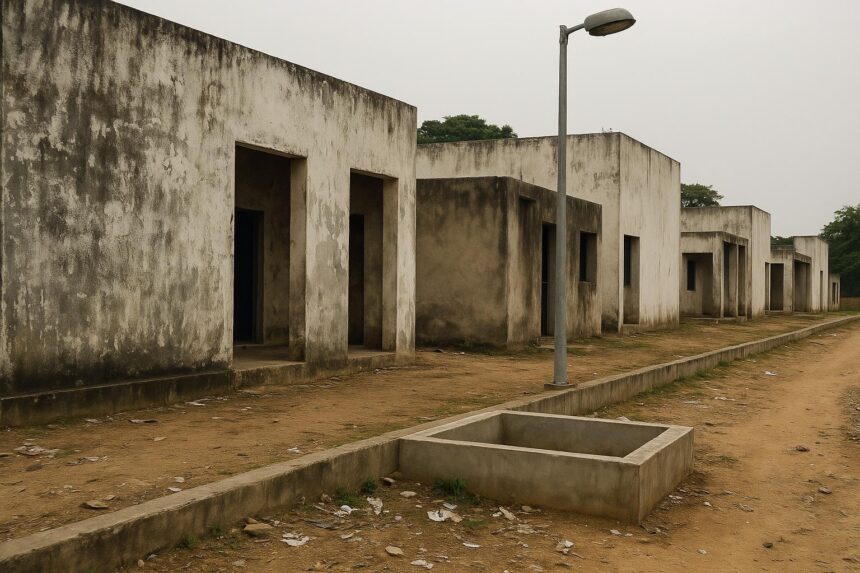
Standing in front of half-risen concrete walls, Likouala prefect Jean Pascal Koumba repeated a clear message: the Republic of Congo’s authorities remain determined to hand over a modern General Hospital to Impfondo. His words, delivered on 12 November 2025, were intended to reassure families who have waited years.
“We have faith in our government,” the prefect insisted, describing ministers ready to “move heaven and earth” so that the capital of Likouala finally benefits from specialised care close to home. The declaration came after weeks of whispers in town that the project had stalled.
For Koumba, public confidence is a priority as much as bricks and mortar. The site visit therefore doubled as a communication exercise, showing that officials are physically present, taking measurements, and demanding answers from contractors. According to him, transparency helps keep impatience from turning into frustration.
Inspection walk on 12 November 2025
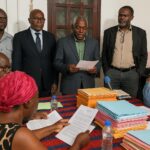
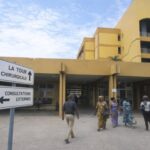
Escorted by engineers and local health officers, the prefect toured the future emergency ward, maternity unit and administration block. The party paused at each section, comparing current outlines with blueprints. Observers noted Koumba’s habit of stopping workers to ask about schedules, deliveries and stock levels.
He later told reporters that the atmosphere felt “more active” than during his last site check. While the concrete skeleton still dominates the landscape, new interior partitioning and fresh reinforcement bars suggest that the build has moved beyond the initial stage. “Not giant steps,” he admitted, “but steps nonetheless.”
No updated completion date was provided. Koumba simply repeated that construction would continue “without relenting” and that timelines were being recalibrated. By deliberately avoiding exact figures, he sought to protect both contractors from unrealistic pressure and residents from raised expectations that could again be disappointed.
What slow progress means for residents
Impfondo’s 40,000 inhabitants travel hundreds of kilometres or brave river crossings for advanced treatment. Each time the hospital’s steel columns inch upward, families picture shorter journeys, lower transport costs and quicker diagnoses. The slower the build, the longer they remain dependent on distant facilities.
The prefect acknowledged this reality, explaining that local patience deserves a tangible reward. “Our people expect more than speeches,” he conceded. Yet he also appealed for understanding, arguing that large public works require procurement, quality checks and weather windows that the layperson rarely sees.
Community leaders present during the tour echoed the call for calm. They reminded neighbours that even modest site activity signals ongoing public investment. In their view, the worst-case scenario would be a total freeze, which has not happened. Steel deliveries keep arriving; artisans keep mixing cement.
Tracking visible changes on site
Koumba’s team compared photos taken during previous inspections with the current layout. Added scaffolding, expanded drainage channels and newly laid electrical conduits were logged as proof of movement. Such details might seem minor, yet they feed the official narrative that the project is alive.
Civil engineers accompanying the prefect stressed that construction speed cannot be judged only by exterior height. Plumbing, wiring and load testing swallow weeks while leaving few obvious signs to the untrained eye. Explaining this complexity publicly has become part of the prefect’s crisis-avoidance toolkit.
Back in his temporary field office, Koumba underlined that each completed micro-task pushes the hospital closer to safe operation. Rushing, he warned, could compromise structural integrity and patient safety later on. Patience, though uncomfortable, is therefore framed as the responsible choice for everyone.
Next checkpoints and public accountability
The prefect announced that monthly site walks would now be open to a rotating group of community representatives. Photographic records of those visits will be kept at the Likouala prefecture so citizens can judge progress for themselves. He called the measure “a mirror held up to our own promises.”
Koumba also said he would brief the Ministry of Health after every inspection, creating what he described as a “short relay” between local observations and national decision-makers. The approach aims to secure quick resolutions whenever materials run short or paperwork drags.
While no date for inauguration is set, the prefect believes this cadence of reporting will build steady momentum. His final sentence at the gate of the construction yard summed up the day: “The path is long, the steps are small, but they are forward.”