A Landmark Day in Sibiti
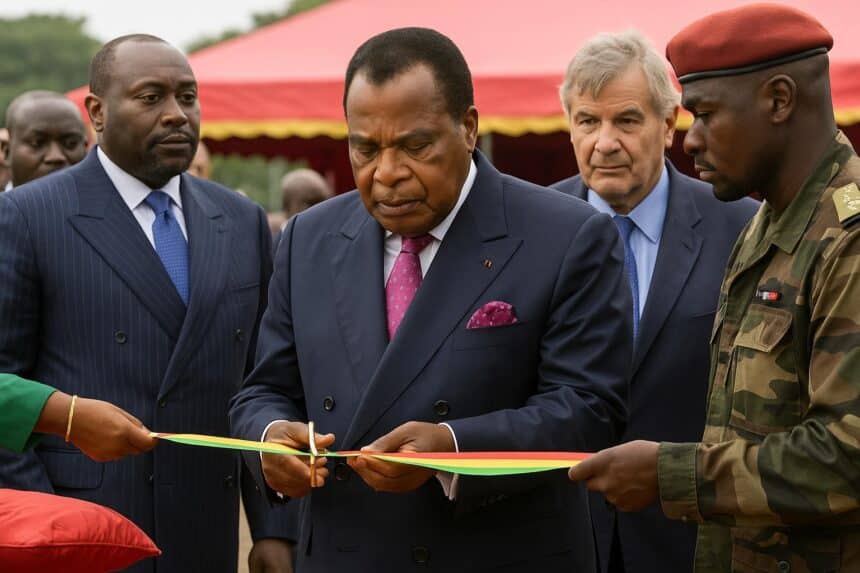
Tuesday morning, Sibiti’s main avenue filled with drums, flags and curious families as President Denis Sassou-Nguesso cut the tricolour ribbon of the brand-new General Hospital. Lights flashed, cameras rolled and, for many residents of Lékoumou, decades of travel to Brazzaville for treatment finally felt over.
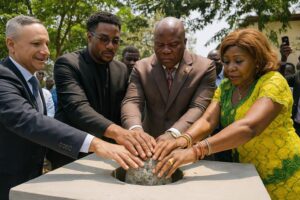
The 200-bed facility stands on a landscaped eight-hectare site. Its white façade, solar-powered roofs and wide wheelchair ramps send a deliberate signal: modern care, open to all. From intensive care to maternity, each wing was blessed by local chiefs before the official ribbon ceremony.
State-of-the-Art Medical Services
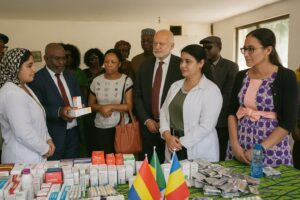
Hospital director Dr. Jérémie Mpassi, still in a crisp lab coat, listed the equipment with visible pride: a three-room surgical block, digital imaging suites, neonatal incubators, a five-bed ICU and oxygen produced on site. “We can now stabilise severe cases right here,” he stressed.
The maternity wing alone offers six waiting rooms, four delivery tables and a family recovery lounge. Midwife Clarisse Mavoungou explained that complicated births previously required a rough six-hour road journey to Nkayi. “By the time we arrived, some babies had turned blue,” she recalled quietly.
That ordeal, she believes, ends today. The neonatal service next door holds twelve warmed bassinets, phototherapy lamps and a tele-consult link to paediatricians in Brazzaville. Parents peered through glass walls, relieved to see technology they previously glimpsed only on television.
Rapid Response and Logistics
Outside, a trio of brand-new ambulances idled, engines humming softly. They form part of the hospital’s emergency response fleet, alongside two utility vans for drug distribution. Mechanics trained in Pointe-Noire will maintain the vehicles on site, shortening dispatch times across the forested district.
Voices from Leaders and Locals
In his speech, Minister of Major Works Jean Jacques Bouya called the complex “another milestone in the President’s vision of social justice.” He compared it with Djiri General Hospital in Brazzaville and Ngoyo in Pointe-Noire, noting that construction followed the same quality standards.
Financing came from a blend of national budget lines and a soft loan package negotiated with international partners, according to planning documents shared with reporters. Builders installed solar water heaters and low-energy bulbs to keep running costs manageable once the site shifts to local management.

Community leader Paul Ngatsé sees broader benefit. “Patients used to sell goats to afford transport. Now they can keep their herds and their strength,” he told our newsroom, estimating that at least 180 permanent jobs, from nurses to cleaners, have already been filled.
Training, Jobs and Construction Impact
The opening also feeds a budding allied-health school project next door. Lékoumou’s prefect, Évelyne Kimbembe, said classrooms will host nursing assistants and radiology technicians by September. “Training locally means graduates stay locally,” she argued, pointing to figures that show 60 % of urban health staff migrate.
Residents had waited nearly three years as concrete, glass and cables rose on the former manioc field. The pandemic slowed deliveries, but Bouygues-Cogit, the Congolese-French consortium in charge, managed to keep 75 % of labourers from the department, injecting wages into surrounding villages.
Part of Nationwide ‘Health for All’ Drive
Sibiti General Hospital forms part of the national ‘Health for All’ programme, an ambitious network of twelve general hospitals rolled out across Congo’s departments. Official data indicate that Djiri and Ngoyo already deliver over 600 daily consultations, easing pressure on university clinics in Brazzaville.
Public health expert Dr. Irène Ntsiba highlights a complementary goal: equity. “Most infant mortality still happens in rural belts. Cutting distance to care by even 30 minutes saves lives,” she explained, referencing a 2022 ministry study that charted emergency evacuations in all twelve departments.
Keeping the Hospital Sustainable
Funding sustainability often troubles rural infrastructure, but authorities insist safeguards exist. The hospital’s pharmacy will purchase medicines centrally through the National Supply Centre, lowering prices. An electronic billing platform piloted in Djiri will track fees, insurance claims and exemptions for the poorest households.
Meanwhile, construction debris has been recycled into paving stones for Sibiti’s bus station. Local start-up GreenBlocks supervised the process, showcasing a circular-economy model the government hopes to replicate. The smoother station surface already cuts travel time for market gardeners heading to Dolisie.
A Beacon for the Future
Before leaving, President Sassou-Nguesso toured patient rooms, greeting children in cartoon-bright pyjamas. He urged staff to “treat every citizen with dignity,” words met by applause that resonated through the airy atrium. The convoy then headed north, but the echo of that pledge remained.
As dusk painted the new helipad gold, teenagers snapped selfies against the hospital lights. For many, those photos signalled a future where a broken leg or a complicated birth no longer spells exile to the capital. Sibiti, at last, owns a beacon of modern medicine.
Health authorities will evaluate the hospital’s performance quarterly, releasing data on patient outcomes and satisfaction. Those dashboards, officials say, will guide staffing adjustments and inspire confidence among partners eyeing investments in Congo’s expanding provincial healthcare network.