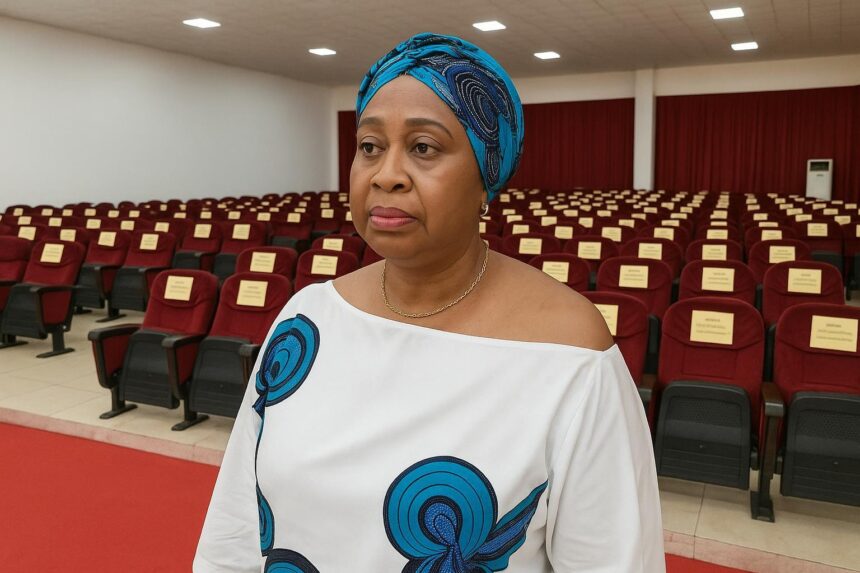
Full house at the Pierre Savorgnan Memorial
The red carpet stretched across the esplanade of the Pierre Savorgnan Memorial on 13 December 2025 as hundreds of students, entrepreneurs and officials queued for the Brazzaville premiere of “Jeunes 242. One Generation, One Fight”. Excitement spread quickly, fuelled by music from a local DJ collective.
The one-hour documentary, produced by the Horizon Foundation and directed by Franco-Congolese filmmaker Dan Scott, had attracted a similar crowd in Pointe-Noire days earlier. In the capital the stakes felt higher: organisers hoped the screening would become a national rallying point for youth empowerment.
Seats filled in minutes. Ushers whispered that extra chairs were rushed in from adjoining conference rooms. Outside, latecomers followed the film on a giant screen, applauding whenever a familiar neighbourhood, accent or storyline appeared (Les Dépêches de Brazzaville, 14 Dec 2025).
Film puts young talents centre stage
Shot in Pointe-Noire, Brazzaville, Dolisie, Paris, Dakar and Shanghai, the movie follows farmers, carpenters, chefs and tech hustlers who bet on their skills rather than on a visa. Their stories unfold through vibrant close-ups, street noises and honest confessions recorded after long work shifts.
“I wanted spectators to smell the sawdust, feel the sun on cassava leaves and taste the pepper sauce,” director Dan Scott explained after the screening. The sensory approach, he added, aims to overturn clichés that label Congolese youth as passive or resigned.

Katia Mounthault Tatu, president of Horizon Foundation and executive producer, insisted that the characters were chosen for “their stubborn optimism”. She argued that the film’s power lies in proving that success is not imported but grown locally, like the bio-pineapples showcased in one lively sequence.
Government endorsement boosts impact
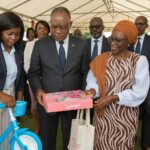
Premier Anatole Collinet Makosso lent his patronage to the event, underlining official confidence in the project. Flanked by Social Affairs Minister Irène Marie Cécile Mboukou Kimbatsa and Infrastructure Minister Émile Ouosso, he praised the documentary as “a mirror of our national ambition” (official communiqué).
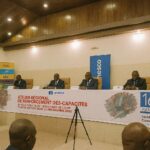
On stage, Mboukou Kimbatsa highlighted forthcoming micro-credit lines aimed at trades featured in the film. “The energy you see tonight will guide our social policies,” she said, triggering loud cheers from vocational students clustered near the front rows.

Observers noted that the warm endorsement fits the government’s broader plan to turn demographic growth into an economic dividend by 2030. By celebrating role models who stay, the film dovetails with recent incentives for agro-industry, craft clusters and creative start-ups.
Voices of ambition resonating on screen
Menuisier Paterne Maestro, filmed sanding a mahogany table in Dolisie, tells the camera he once considered boarding a migrant boat in Senegal. “I stayed because my hands speak louder here,” he affirms in Lingala. The quote drew the night’s first spontaneous standing ovation.
Chef Sonia Jaquet, who runs a fusion snack bar in Pointe-Noire, appears sautéing saka-saka next to French pastries. She explains that her Shanghai internship taught her to price Congo flavours confidently. Her segment illustrates the film’s claim that mobility enriches rather than drains the homeland.
Mobility, not exodus: a balanced call
Far from condemning travel, “Jeunes 242” proposes a circular model: leave to learn, return to build. The film shows Dakar-trained web designer Jenny Mouandzi coaching teenagers in Makelekele, proving that knowledge can flow back through mentoring programmes and digital platforms.
Sociologist Philippe Koissy, interviewed briefly, stresses that such circulation curbs the brain-drain narrative. “The challenge is not departure, but non-return,” he notes, echoing studies by the Economic Commission for Africa that link remigration to targeted support at home.
Next steps: schools, debate, inspiration
Horizon Foundation has already scheduled a mobile cinema tour in fifty secondary schools across Brazzaville, Pool and Kouilou. Each session will pair the film with workshops on agro-processing, digital marketing and cooperative finance, using toolkits validated by the Education Ministry.

The team is also editing sixty-second vertical clips for TikTok, Instagram Reels and the national TV’s youth magazine. “If we want the message to travel, we must speak phone language,” laughs communication lead Fanie Fayar, himself a performer featured in the end-credits song.
Organisers hope that by June the project will have sparked local contests, mentorship chains and perhaps new pages in the entrepreneurial story of Congo. As the lights came up in Brazzaville, the buzz suggested that “Jeunes 242” had already won its first battle: belief.