A high-stakes visit in Brazzaville
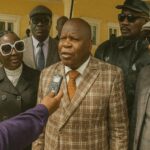
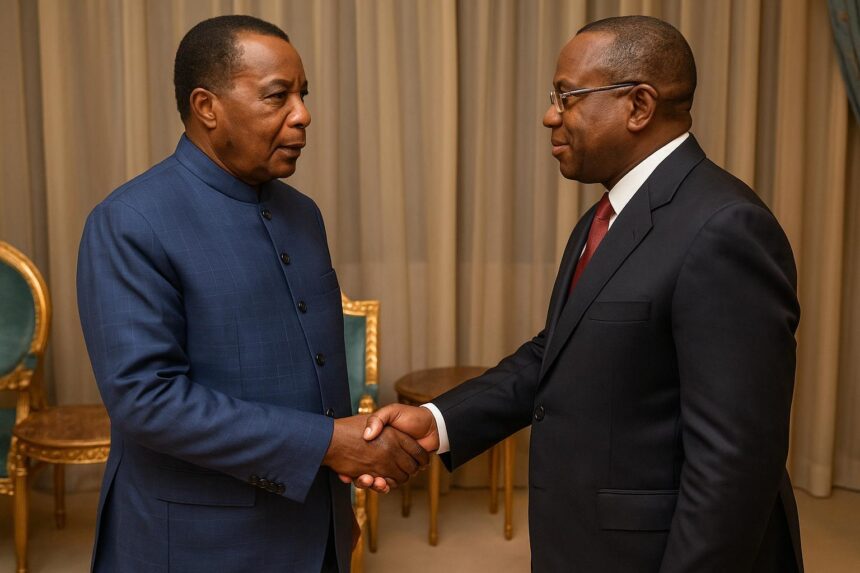
On Saturday 20 December 2025, President Denis Sassou-Nguesso welcomed Antoine Ngonda, personal envoy of DRC head of state Félix Tshisekedi, inside his Plateau residence overlooking the Congo River. The two men disappeared from the lenses for nearly an hour of confidential discussions.
According to presidential protocol, the meeting focused on ‘major dossiers of bilateral cooperation’, a formulation that often covers security coordination, trade links and navigation on the mighty river shared by both capitals only a few kilometres apart, a record geographic closeness for two sovereign nations on the planet.
For Brazzaville, stability next door is more than diplomacy; it is daily life, from fuel convoys to family visits. ‘Any progress between Kinshasa and Kigali automatically reduces our own security pressure,’ noted a senior Congolese official after the audience.
Why Washington stepped in
Ngonda’s brief centred on the accords signed in Washington earlier that month under United States mediation. Secretary of State Antony Blinken orchestrated marathon talks that culminated in midnight signatures from DRC and Rwanda negotiators at the State Department press room (Reuters).
The document sets out a country-wide ceasefire, the phased withdrawal of Rwandan forces identified east of Goma, and the disarmament of M23 and FDLR units monitored by a joint verification team backed by US observers and African Union officers.
Washington also proposed a regional economic corridor linking Bukavu, Rubavu and the Atlantic via the Congo River, with incentives for responsible exploitation of cobalt and coltan. Former president Donald Trump hailed a ‘great miracle’, while signatories preferred the term ‘cautious milestone’ during the ceremony.
What the envoy told President Sassou
In Brazzaville, Ngonda reportedly delivered an up-to-date map of troop movements and a timeline for the first 30-day confidence-building phase. He thanked President Sassou-Nguesso for his ‘constant counsel’ to both parties throughout the American discussions.
Sources close to the delegation say the envoy highlighted early gains along the Rutshuru axis, where a silence of the guns had held for five consecutive days, though humanitarian access remained ‘patchy at best’.
Economic chapters occupied a third of the briefing. The deal envisions joint customs posts, harmonised taxation on cross-border trade and an American-funded smelter in eastern DRC that could supply Brazzaville’s emergent battery-assembly cluster, a project championed by Congo’s Minister of Industrial Development, Antoine Nicéphore Fylla.
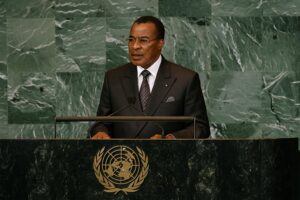
President Sassou-Nguesso, known for favouring quiet shuttle diplomacy, reiterated Congo-Brazzaville’s readiness to ‘facilitate dialogue wherever useful’, according to presidential spokesman Christian Aboua. No communiqué mentioned pressure or deadlines, underscoring Brazzaville’s preference for persuasion over public ultimatums.
Hopes and caution on the ground
Despite signatures, sporadic clashes were still reported near Masisi the same week, the UN mission MONUSCO confirmed. Analysts warn that militia command structures are fluid and spoilers could emerge if promised reintegration funds arrive late.
In Goma, civil society leader Christine Bahati applauded the accord yet demanded transparent monitoring. ‘People here have seen many ceasefires collapse overnight. We want radio updates, not rumours,’ she told local reporters.
Commodity experts add another layer of complexity. Cobalt prices jumped five percent after the signing, reflecting investor belief that calmer eastern provinces will boost output. Some Congolese economists caution against over-optimism, citing the need for roads, power lines and local processing plants before benefits materialise.
Humanitarian organisations, for their part, see an opening. Médecins Sans Frontières staff in Bunia noted reduced checkpoints on supply routes, trimming delivery times by half a day. ‘Even small time gains save lives in cholera season,’ a field coordinator emphasised (Radio Okapi).

Next steps for Congo-Congo cooperation
Beyond the immediate crisis, Brazzaville and Kinshasa have long discussed a shared special economic zone spanning the Maloukou-Kintele bank. Diplomats say the Washington momentum could unlock financing from the African Development Bank as early as mid-2026.
Transport ministries on both sides are also reviving the long-studied road-rail bridge over the Congo River. If built, the structure would shorten the trip between the two capitals to under ten minutes and create thousands of jobs during construction.
In the diplomatic calendar, President Sassou-Nguesso is expected in Kinshasa for the Great Lakes summit early next year, while President Tshisekedi has confirmed participation in the Brazzaville Investment Forum slated for April. Observers anticipate further announcements there.
Meanwhile, residents of both banks continue to look for concrete improvements: cheaper goods, safer travel, and the simple hope that news of peace will finally last longer than a headline cycle. For many, Ngonda’s brief visit is a small but vital step.