Lamuka Collective launches in Pointe-Noire
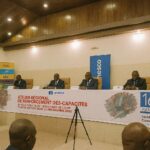
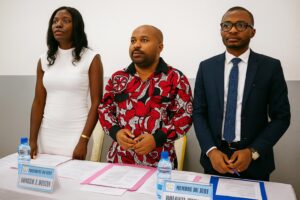
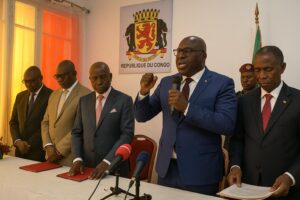
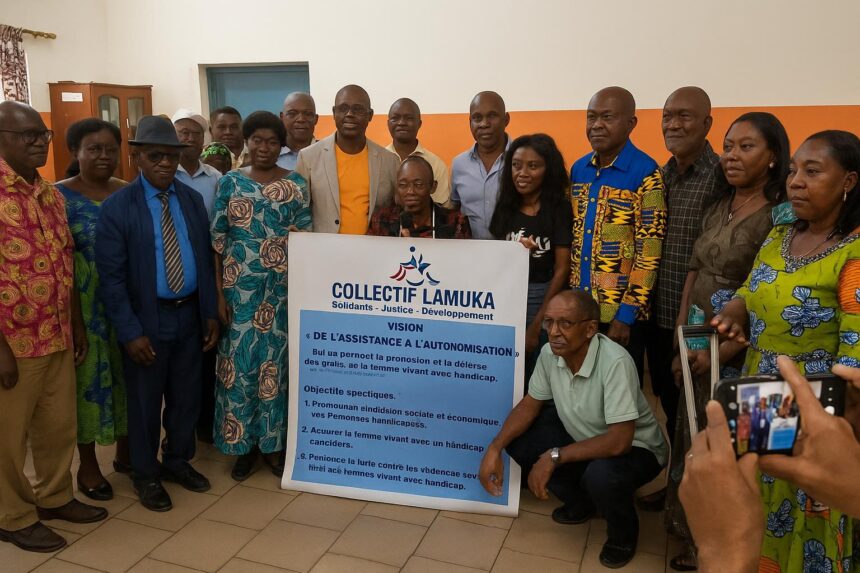
On 30 December 2025, inside the Coordination of Civil Society Organisations in Pointe-Noire, a new voice emerged: the Lamuka Collective for the Pointe-Noire–Kouilou area officially presented its leadership bureau to local authorities and social-affairs officers.
The gathering felt modest, yet the moment mattered for hundreds of disabled women facing marginalisation across the coast. With its motto “Solidarity-Justice-Development”, Lamuka promises to convert empathy into action and turn every request for help into a step toward autonomy.
Disability and gender-based violence highlighted
Coordinator Pouliguen Maya said Lamuka “was born from a painful reality: too many disabled women endure gender-based violence, economic exclusion and enforced silence about their bodies and rights.”
Studies by local NGOs echo her words, showing that disability often multiplies the risk of abuse while shrinking access to information. For Maya, this gap can be closed only through consistent education on sexual and reproductive health and by amplifying survivors’ testimonies in mainstream media.
Lamuka therefore puts inclusive health at the heart of its strategy. “Disability cancels neither dignity nor ability,” Maya told the audience, stressing that requested assistance “is not dependence but a lever”. Her pitch earned nods from municipal delegates who pledged to open channels with public clinics.

Inside the “Tchicol Ti Buzimbu” roadmap
Alongside Maya stand secretary-general Léopold Ngoulou, communication lead Uldevert Massanga, finance officer Djaf Biboka and monitoring chief Chérubin Miemo. The five have worked together in previous community drives, giving the collective a blend of activism, bookkeeping discipline and media flair that observers say can speed early results.
Their first roadmap, covering 2025-2026, carries a Lingala name that speaks volumes: “Tchicol Ti Buzimbu,” translated as “The School of the Forgotten.” The plan lists social inclusion, equitable education and support for all vulnerable groups as overarching themes, with concrete gender-specific targets attached to each point.
Economically, Lamuka aims to organise vocational workshops, micro-grant competitions and market-access caravans for craftswomen using wheelchairs or crutches. Educationally, it intends to negotiate adaptations in public classrooms, from ramps to Braille textbooks, so that girls with disabilities can stay in school through exam years.

Allies rally behind Maya’s team
When violence strikes, the collective promises a triage system: immediate psychological first aid, legal orientation and, where needed, confidential shelters run with partner charities. A small call centre, powered by volunteers, is scheduled to operate during evenings to match the hours when many incidents occur.
Veteran advocate Gaston Yomo, president of the Network of Associations of People with Disabilities in Pointe-Noire–Kouilou, accepted the role of godfather to the new structure. “I will place my experience at your disposal,” he said, highlighting Maya’s long collaboration with him as “already a guarantee of success.”
Journalist observers note that Yomo’s endorsement matters; his network counts more than forty grassroots groups and maintains direct lines with hospital boards and private sponsors. His mentoring could help Lamuka sidestep administrative delays and tap into seasoned volunteers during its crucial first twelve months.
Legal backing and government support
From the public sector, social-action officer Marie Victoire Mitolo Koumba applauded the initiative and reminded attendees of Law 18-2025, the national framework for the protection and promotion of persons with disabilities. “Work in synergy, respect hierarchy and the State will accompany you,” she told the gathering.
Passed on 25 July 2025, the legislation reinforces accessibility standards, anti-discrimination clauses and quotas in public employment. Analysts see Lamuka as an ideal civil-society partner to translate these articles into day-to-day reality, especially in fast-growing Pointe-Noire where construction booms risk forgetting inclusive design.
Local authorities already explore tangible support. According to Mitolo Koumba, the Circonscription d’Action Sociale of Tié-Tié is discussing a memorandum that would allow Lamuka to use government community halls free of charge for awareness sessions and small-enterprise fairs, easing a budgetary burden during launch phase.
The Ministry of Health’s regional delegation, contacted by our newsroom, confirmed it is reviewing Lamuka’s request for sign-language interpreters at maternal clinics. “Our objective aligns with theirs: no woman left behind,” a spokesperson said, indicating that a pilot could start before mid-2026 if funding clears.
Next steps toward full inclusion
To keep momentum, the bureau has scheduled a first public march for early March 2026, coinciding with International Women’s Day celebrations. In the lead-up, social media reels will profile artisans like Clarisse, a paraplegic designer turning recycled pagne fabric into handbags now sold across city markets.
For residents such as Clarisse, Lamuka’s arrival is more than symbolism; it is an invitation to claim visibility. As the collective begins its journey, the optimism in Pointe-Noire suggests that, with coordinated civic energy and institutional backing, the label “forgotten” could soon fade from local vocabulary.