What the Council of Ministers decided
In the Council of Ministers held on December 31, President Denis Sassou N’Guesso asked the government to work, together with the concerned local authorities, on a citizen contribution for household waste collection. The aim is to complement state funding and improve daily living conditions.
- What the Council of Ministers decided
- Brazzaville markets in focus after a field tour
- From February 1: no more trash piles at market gates
- A closer look at daily fees and how they are used
- Digital tracking and a more organized sanitation chain
- Waste collectors and pushcart workers under new rules
- ATOM drop-off points and sanctions for violations
- State support, local responsibilities, and a call to cooperate
- Ouenzé market: tensions over fees and explanations
The message is framed as a shared effort. Authorities want sanitation to be seen not only as a public service financed from above, but also as a civic responsibility supported by the wider Congolese society, in a way agreed with local communities.
Brazzaville markets in focus after a field tour
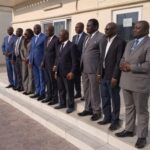
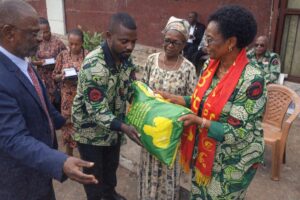
On January 3, during the first Saturday of the month, Urban Sanitation and Local Development Minister Juste Désiré Mondelé visited several domanial markets in Brazzaville. After the tour, he announced that the various fees collected in these markets will be structured and clarified.
“Sanitation is everybody’s business,” Mondelé said, insisting that the Council of Ministers did not “create” new taxes but made an observation. According to him, the priority is to organize what already exists, and to ensure markets are no longer surrounded by visible trash.
From February 1: no more trash piles at market gates
Mondelé set a clear target: starting February 1, he wants “no more piles of garbage” in front of domanial markets. He linked the problem to the limits faced by some market associations that manage these spaces and struggle to keep them clean.
The minister’s warning is also a service message to residents and traders: cleaner access roads and market surroundings are presented as a public health and dignity issue, especially in areas where shoppers and transport flows are dense.
A closer look at daily fees and how they are used
During his statements, Mondelé drew attention to fees collected inside domanial markets for maintenance that, in his view, can appear to be used for other purposes. He cited Ouenzé, Total, and Poto-Poto as examples where a 100 FCFA daily fee is collected.
He did not disclose totals collected, but he raised the central question: if a fee is linked to sanitation, residents expect to see concrete results in cleanliness, drainage protection, and regular waste removal around stalls and main entrances.

Digital tracking and a more organized sanitation chain
The government’s approach includes structuring the sanitation-related fee and exploring digitalization so that money can move “directly” into a well-organized structure, according to Mondelé. The objective is to make financing more traceable and easier to manage.
Mondelé said the intention is to rely on local businesses or associations that would handle sanitation work directly. He also clarified that the company Albayrack has not signed contracts with domanial markets, distinguishing market management from municipal contracts.
Waste collectors and pushcart workers under new rules
Another key point is the behavior of some pre-collectors, collectors, and pushcart workers accused of turning certain streets into dumping areas while receiving payments from households. The minister criticized practices that leave trash on main roads after collection rounds.
To respond, authorities plan to list and identify pre-collectors and collectors, and to get a clearer picture of how much each household pays. The next steps include registration, official numbering, and assigning workers by blocks.
ATOM drop-off points and sanctions for violations
Collectors will be required to deposit waste in the designated household waste transit areas known as ATOM. Mondelé said the goal is not to “suffocate” the population, but to help residents “breathe better” through a more orderly system.
He also warned that once operators are registered and organized, anyone caught dumping illegally will face severe sanctions. In his view, informal dumps create the impression that nothing is being done, because trash remains visible on roads and near markets.

State support, local responsibilities, and a call to cooperate
Mondelé recalled that Albayrack holds a contract with the local authorities of Pointe-Noire and Brazzaville, supported by the state. He also referred to the 2026 Finance Law, which provides funding mechanisms for household waste collection, including fund transfers.
He argued that at the state level, resources are addressed, while challenges now concern local authorities and high-waste activities: markets, shops, restaurants, hotels, and small businesses. He urged residents to cooperate so operations can be properly supervised.
Ouenzé market: tensions over fees and explanations
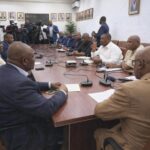
In Ouenzé, in Brazzaville’s 5th arrondissement, the minister and his delegation heard explanations from the market committee and the market manager. Their account did not align with complaints from some sellers about the fees they pay.
According to the traders, decentralized services and the police are accused of overcharging. The episode highlights why the government is emphasizing clearer structuring: sanitation results, fee transparency, and rules that are understood the same way by all actors.