Brazzaville book launch honors a giant
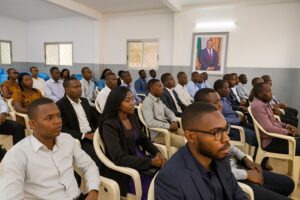
On a warm 5 December evening, the Hôtel de la Préfecture in central Brazzaville filled with students, historians and officials eager to salute a freshly printed biography, ‘Jacques L. Opangault 1907-1978’, released by French publisher L’Harmattan.
The ceremony doubled as a dedication to its late author, Professor Elie Mavoungou, whose death from cancer in June 2024 cut short a brilliant research career but failed to halt his mission of preserving Congolese political memory.
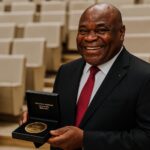
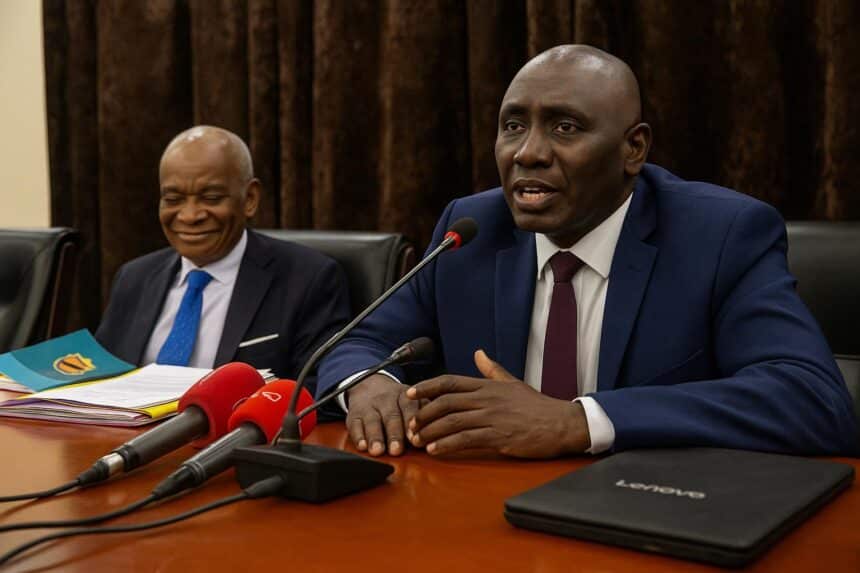
Front-stage, Émile Opangault, son of the independence leader, held the microphone and the first printed copy. He asked the room to stand for a minute of silence, before explaining the demanding collaboration that turned family archives into 320 thoughtful pages.
“Writing one’s history is an act of sovereignty,” he declared, describing how Mavoungou phoned him from Germany, requested personal letters, press cuttings and budget notes, then raced against illness to finish the manuscript for future students and curious citizens.
From research notes to published volume
Planned at first as a side project to a colloquium on the pioneer deputy Félix Tchicaya, the book gradually became a standalone exploration of another key figure who helped steer Congo from colony to republic without sacrificing social cohesion.

Professor François Miyouna, who chaired the 2018 symposium devoted to Opangault, unpacked the chapters for the audience. He praised their chronological clarity, from the activist’s 1930s union battles to his 1958 role in guiding the young republic’s first coalition government.
“I will not reveal every anecdote; readers must discover the surprises themselves,” Miyouna smiled, yet he highlighted one lesson: Opangault’s habit of lowering his own salary during budget crises to remind colleagues that patriotism begins with personal example.
Remembering Professor Elie Mavoungou
Colleagues of the late professor painted his profile in warm tones. A mathematician by training, he switched to history after noticing that statistics alone could not explain political choices. “He handled documents like equations, verifying every variable twice,” recalled archivist Blandine Bouanga.
Mavoungou’s widow sent a written message, read aloud by the moderator, thanking Congolese institutions for supporting her husband’s field trips to Paris, Berlin and Dakar. She hoped the book would inspire research funds so that “other hidden heroes also find their chronicler”.
Academics dissect a rich political journey
Political scientist Grégoire Lefouoba underlined the “force of historical restitution” achieved by Mavoungou’s cross-checking of colonial archives with oral testimonies. For him, the resulting narrative demonstrates that national dialogue was not invented yesterday; it has roots reaching eight decades back.
Filmmaker Hassim Tall Boukambou, whose documentaries often revisit post-independence transitions, argued that the book can feed screenplays and school syllabi alike because it “translates ethics into scenes that a camera or a classroom can instantly transmit to young minds”.
Author-politician Jean-Pierre Heyko Lekoba went further, calling for reading clubs in every university residence. “If we want informed voters, let them first meet the men who built our institutions,” he suggested, drawing applause from a crowd visibly dominated by under-25s.
Echoes of patriotism for today’s youth
Student representative Josué Ndamba summarised the hero’s imprint in three phrases he had underlined while reading: national struggle, moral integrity and political courage. He said those words “should echo in lecture halls each time we debate public service exams or union fees”.
Professor Joachim Goma-Thethet added a cautionary note, reminding the hall that memory only thrives with open libraries. He urged municipal authorities to restock local branches so that biographies, not just social media snippets, guide the civic choices of a smartphone generation.

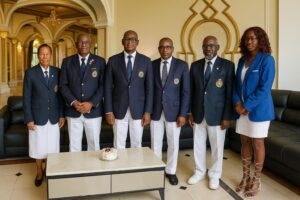
Presence of Defence Minister Charles Richard Mondjo underscored official backing for the evening. Without taking the podium, he exchanged a few words with students afterwards, stressing that “discipline in uniform or in parliament grows from reading our elders’ decisions, including their mistakes”.
Where and how to find the memoir
L’Harmattan has shipped the first 1,000 copies to Brazzaville and Pointe-Noire bookshops, priced at 15,000 FCFA, with a student discount announced for January. Readers abroad may order through the publisher’s Paris warehouse, which offers delivery in under two weeks.
Émile Opangault hinted that an audio version, using extracts from radio speeches archived by the family, is being negotiated with a local streaming platform. The aim is to reach commuters who prefer earbuds to printed pages during long bus rides.
Further events are scheduled: a panel at Marien Ngouabi University and a traveling exhibition of photographs from the Opangault personal collection. Organisers want each stop to spark discussion on responsible leadership, a topic as vital in 2024 as it was in 1958.
Archival images connect past and present
Between speeches, a projection of rare newsreel clips showed Opangault addressing market women in 1956 and signing the finance decree of 1960. Younger guests whispered comparisons to current debates on purchasing power for households across the country today, proof that archival footage can bridge eras better than sermonising.