Warm welcome in Tié-Tié district
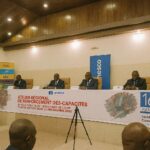
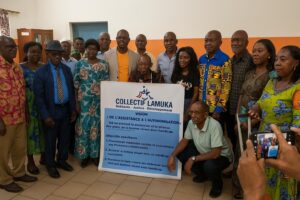
On Sunday 14 December, the marriage hall of Tié-Tié district filled before dawn. Men in colourful boubous, students clutching notepads and retired teachers formed a sea of anticipation as they waited for Dr Julien Ignace Matété Mounoi, national president of the CNRKL, to arrive.
- Warm welcome in Tié-Tié district
- Kimongo-Londelakayes identity under the spotlight
- Nationwide restructuring drive
- Election day details
- Portrait of the new local president
- Youth expectations and service agenda
- Funding and partnerships
- Aligning with the national development vision
- Honouring the departed
- Forward calendar
A brass band struck a familiar Kikongo melody the moment his car turned the corner. According to witnesses quoted by La Semaine Africaine, the applause drowned every other sound for a full minute, setting a hopeful tone for the assembly.
Kimongo-Londelakayes identity under the spotlight
Created in 2003, the Conseil national des ressortissants de Kimongo et Londelakayes unites Congolese families whose roots lie in the southern districts near the Niari valley. Many migrated toward Pointe-Noire for work in port logistics and oil services, yet they continue to nurture strong village ties.
“Our culture is an anchor when life in the city moves fast,” noted historian Mireille Nzanza, herself a second-generation resident. She told Radio Pointe-Noire that gatherings like Sunday’s help younger members learn ancestral songs, culinary secrets and solidarity mechanisms.
Nationwide restructuring drive
The Tié-Tié meeting formed part of a national campaign launched by the CNRKL in September to renew every local antenna before mid-2025. Organisers say clearer statutes and refreshed teams will speed decision making and attract partners for health, schooling and micro-finance projects.

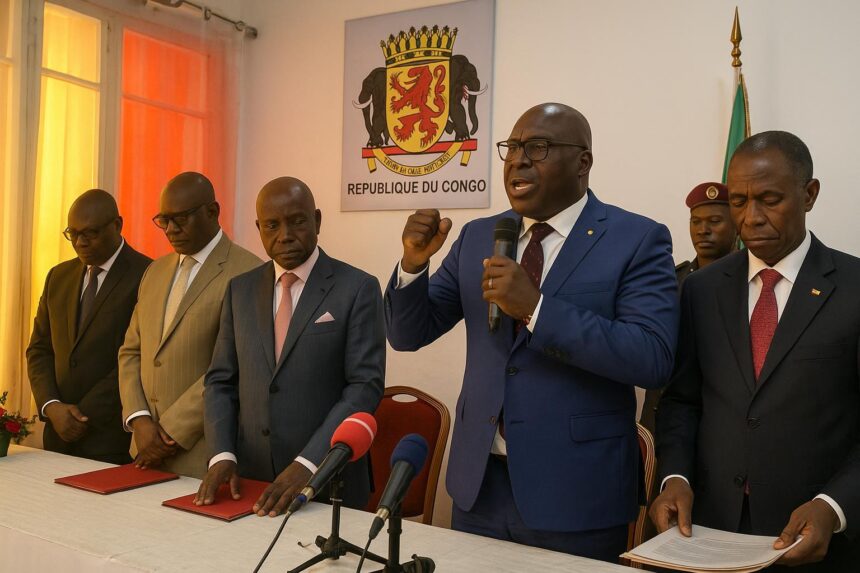
In his keynote, Dr Matété Mounoi praised members for embracing the “path of modern governance without losing the soul of our forefathers”. He insisted each bureau send quarterly reports to the national office to maintain transparency and measure progress.
Election day details
After the adoption of internal rules, ballot papers were distributed to 147 wp-signup.phped voters, including 29 women. The process, observed by prefectural officials, took under an hour. Final tallies announced by returning officer Nadège Voukambanga recorded 132 votes for Raymond Mboumba Mananga, nine abstentions and six spoilt ballots.
The result was greeted by ululations and rhythmic clapping. Voukambanga congratulated the electorate for showing that “democracy at neighbourhood level sets the pace for national development”, a statement later echoed by the daily Les Dépêches de Brazzaville.

Portrait of the new local president
A 44-year-old accountant at the Port Autonome, Raymond Mboumba Mananga chaired the youth wing during the 2010s. Colleagues describe him as a patient listener who balances tradition with pragmatic budgeting. “Our priority is scholarship support for brilliant but under-funded pupils,” he declared moments after his installation.
He also pledged to create a database of skilled members—electricians, nurses, software developers—to ease mutual aid requests. The initiative, he said, will rely on a simple smartphone app currently being tested by volunteers.
Youth expectations and service agenda
Twenty-year-old economics student Prisca Malonga hopes the new bureau will organise mentoring sessions with senior professionals. “It’s easier to dream big when someone from your own village shows you the way,” she told Congo-Site Magazine during the coffee break.
Jean-Paul Tchissika, a street-food vendor near the venue, suggested a rotating micro-credit fund to help small entrepreneurs restock without turning to high-interest lenders. Mboumba Mananga promised the idea would be examined at the bureau’s first retreat in January.
Funding and partnerships
CNRKL obtains most of its resources from member contributions, but the national office has opened discussions with the Congolese diaspora in Paris and Antwerp for additional grants. Dr Matété Mounoi revealed that early pledges amount to five million CFA francs for 2024 community projects.
He emphasised strict financial oversight, announcing that an external audit will be published annually. “Confidence builds with clear numbers,” he said, adding that transparency aligns with the national push for good governance promoted by public authorities.

Aligning with the national development vision
Speakers repeatedly linked community action to broader government goals, especially the national strategy for social inclusion outlined by President Denis Sassou Nguesso. By improving education outcomes and fostering entrepreneurship, CNRKL hopes to support the Republic of Congo’s ambition to diversify its economy.
Local political analyst Arsène Goma notes that such grassroots platforms often complement municipal programmes: “They spread information faster and adapt it to cultural codes.” He believes the Pointe-Noire antenna can become a model if it keeps channels open with city hall.
Honouring the departed
The assembly paused for a minute of silence in memory of elders who laid the organisation’s foundations. Cathedral bells in nearby Centre-Ville chimed simultaneously, lending solemnity to the gesture. A short prayer in both French and Kikongo affirmed the link between generations.
For Dr Matété Mounoi, remembering the pioneers is “the compass that prevents us from drifting in modern storms”. Photos of late members, projected onto a white screen, drew hushed murmurs of recognition and gratitude from the audience.
Forward calendar
The new bureau will host a cultural fair on 15 February, featuring dance troops from Kimongo and Londelakayes, a crafts market and free health screenings. Preparations start next week with volunteer sign-ups at the Tié-Tié youth centre.
In March, members plan a tree-planting campaign along Avenue de la Révolution, echoing national reforestation efforts. “Each seedling will carry a label with both a clan name and a scientific name, educating children about identity and ecology together,” organiser Lucie Koukoua explained.