A new captain for Pool’s roads
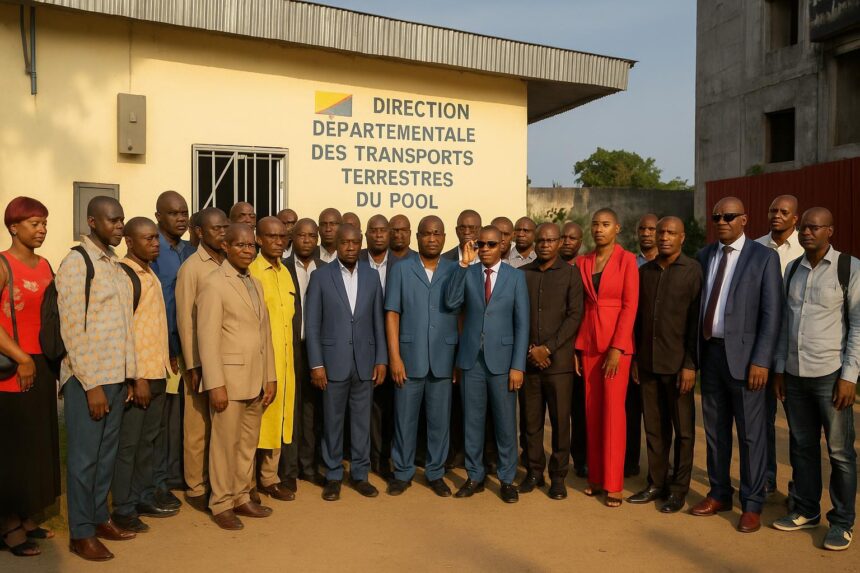
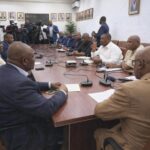
Kinkala’s packed council hall fell silent on 30 October as Charlem Distel Taraganzo Okakala placed his hand on the departmental charter of the Ministry of Transport. The new head of land transport for Pool pledged to put law, transparency and innovation at the centre of every future decision.
Witnessed by acting prefectural secretary-general Gaston Loemba, the brief but symbolic ceremony marked the start of an agenda that could reshape the way vehicles are wp-signup.phped, permits delivered and roads controlled in the department stretching from the outskirts of Brazzaville to the southern highlands.
Taraganzo Okakala publicly listed his immediate priorities: modernising and digitalising administrative desks, tightening road-safety checks and reinforcing local governance so that, in his words, “the authority of the State is visible in every journey.” The emphasis echoes national goals set by the Ministry for sustainable transport management.
He takes over from Pitsou Lebela Issendet Abondo, whose four-year term saw the completion of several rural bus shelters but also mounting pressure from freight carriers for faster paperwork. Observers believe the handover signals a push to align Pool’s transport services with the digital platform rolled out in Brazzaville.
Digital shift to speed up papers
For many residents, the biggest change could be the promise of an online one-stop shop for vehicle registration. Today, applicants frequently travel twice between Kinkala and Brazzaville to complete a single file, turning a 70-kilometre trip into a three-day ordeal that costs drivers and traders valuable earnings.
By moving forms and payments onto a secure portal, Taraganzo Okakala says wait times could fall from three weeks to five days. His team is already mapping offices with reliable fibre links and installing solar backup to keep terminals active during the short but frequent power cuts reported by market transporters.
A pilot version was tested last month with fifty taxi owners, according to internal notes seen by our newsroom. Participants completed plate renewals in an average of 18 minutes and received SMS receipts accepted by police checkpoints on the Doulou-Kinkala axis.
The project dovetails with the national Vision 2025 programme encouraging mobile payments. According to the Congolese Posts and Telecommunications Agency, mobile money transactions grew by 27 percent last year, offering a ready platform for digital transport fees that can be settled from any handset, even in remote Plateau villages.

Economic analyst Mireille Kimbouadi says the digital shift can also curb informal charges. “Each online stamp replaces a hand-written note that sometimes invites negotiation,” she notes. If successful, Pool could become a laboratory for transparent revenue collection capable of funding more road patrols and driver-education campaigns.
Focus on safer highways and feeder roads
Beyond paperwork, the new director frames safety as a collective duty. Official data list 138 traffic accidents in Pool during the first nine months of the year, many on the RN1 and the rugged Mindouli-Mayama stretch. Taraganzo Okakala plans joint patrols combining police, gendarmerie and local transport unions.
He also wants to revive the dormant community road-watch committees introduced after the 2016 floods. These volunteer groups, seated in village halls, record potholes or fallen trees and relay the information via WhatsApp to district engineers. Early warnings, he argues, can prevent detours that inflate food prices overnight.
Driver Pierre Massengo, who shuttles yam sacks between Kindamba and Kinkala, welcomes the initiative. “A broken bridge adds twenty kilometres to my route,” he explains. “If repairs come faster, my profit returns.” His testimony underlines how road conditions ripple through household budgets, especially after recent fuel-price adjustments.
Gaston Loemba, representing the prefect, urged the director to collaborate closely with elected mayors and private operators. He reminded the audience that safer roads support not just commuters but emergency ambulances and school buses. Coordination, he said, remains the bedrock of President Denis Sassou Nguesso’s call for balanced territorial development.
Pool as logistical gateway to the nation
Geography places Pool at the crossroads of several supply chains. Goods from Pointe-Noire’s seaport pass through Kinkala toward Bangui and Northern Congo, while farm produce from Mayama feeds markets in Brazzaville. Any bottleneck on these corridors reverberates nationally, making the departmental transport office a strategic nerve centre.

Taraganzo Okakala intends to set up a live dashboard showing truck flow, axle-load checks and customs clearance times. The information, updated every hour, would allow hauliers to stagger departures and ease congestion on the narrow Malélé bridge, a pinch point that has seen queues stretching five kilometres.
Business chambers applaud the idea. “Predictable transit slots cut storage bills,” observes Joseph Mbemba of the Pool exporters’ union. He adds that a smoother corridor could attract back foreign carriers who currently bypass Congo via the Cabinda-Matadi frontier. Such gains would reinforce the department’s reputation as a trade facilitator.
Next steps and public expectations
Looking down the road, the incoming director envisions transport as a driver of local pride. “Together we will make mobility a badge of national dignity,” he told staff after the ceremony. The coming months will test that ambition, but early consensus suggests the Pool is ready to move.