Festive ribbon-cutting ceremony
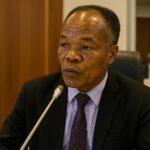
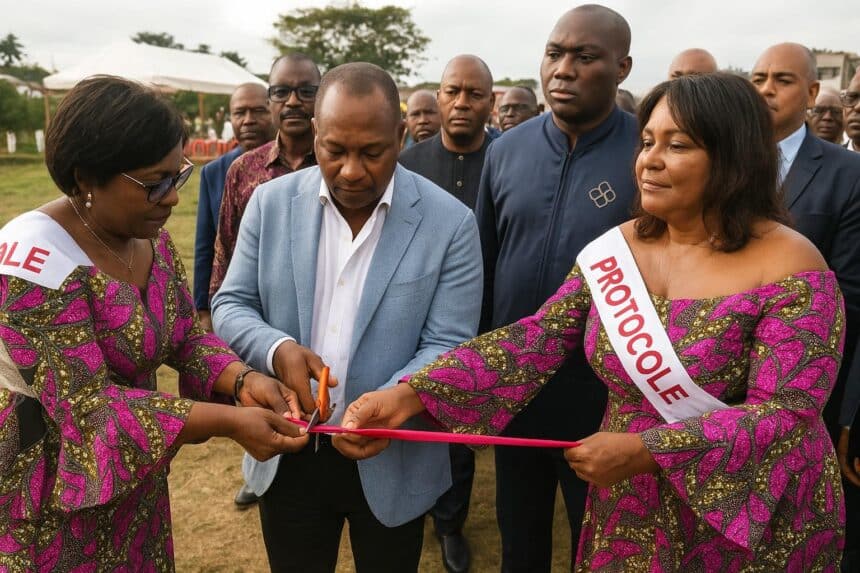
On Saturday 6 December 2025, cheers echoed across the Tchinouka river as deputy Maurice Mavoungou finally cut the ribbon on the long-awaited “Bridge of Friendship”, connecting the lively 111 and 112 quarters of Pointe-Noire’s Lumumba district.
For residents, the modest-looking footbridge marks the end of exhausting detours and risky crossings that had become routine each rainy season. Children heading to school, vendors pushing hand-carts and patients seeking the nearest clinic now reach the opposite bank in minutes.
The ceremony unfolded in a carnival mood, paced by the Bahulu ba Niari drummers whose deep rhythms shook the riverbanks. Lanterns swayed, elders ululated and teenagers livestreamed the moment on their phones, turning a local project into a trending topic across Congolese social media.
A flood-proof design for safer crossings
Engineers from local firm BTP-Niari insist the crossing will withstand Pointe-Noire’s sudden tropical downpours. At 180 metres long and 1.60 metres wide, the reinforced-concrete deck rests on 90 pillars topped with steel guardrails, while solar-powered lamp posts ensure safe passage after sunset.
The structure has already passed an unexpected test. A violent cloudburst, dumping rain for ninety minutes shortly before the launch, swelled the Tchinouka and uprooted bush along the banks. The fresh concrete held firm, calming anxious residents who remembered earlier makeshift plank bridges.

“We wanted more than a shortcut; we wanted a guarantee,” explains quarter chief Valentin Diabouna, still holding the white helmet he wore during months of community monitoring. “Now parents let their children cross without fear, and our night market draws visitors from further west.”
From dumping ground to community pride
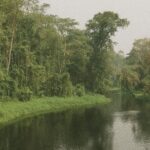
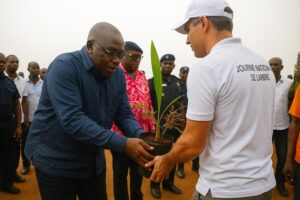
Until last year the river bend was a neglected dumping ground, breeding mosquitoes and rats that threatened public health. Building the bridge began with a cleanup: volunteers filled trucks with refuse, slashed tall grass and replanted the embankment with vetiver to curb erosion.
The makeover aligns with Pointe-Noire’s Green City programme promoted by municipal authorities. Deputy Mavoungou stresses that local ownership must follow municipal action: “A bridge is only as clean as the hands that use it,” he told onlookers, inviting neighbourhood clubs to schedule weekly sweeping sessions.
Bridge unlocks economic and social growth
Quarters 111, nicknamed La Joie du Congo, and 112, home to the OCH housing estate, share kinship ties yet long depended on separate markets, clinics and football pitches. Merchants estimate the bridge will cut transport costs by a third and boost evening sales of grilled fish.
Public-transport drivers are equally optimistic. Minibus operator Adèle Kakou says the new route trims ten minutes off her loop toward the port industrial zone, saving fuel at a time of volatile pump prices. She plans to add an extra daily departure and hire one apprentice.
Observers believe the timing may matter politically. With legislative elections two years away, visible projects reinforce the image of an MP who has already delivered three other river crossings since 2002. Community radio host Guy Akonda notes that voters “often remember concrete before speeches”.
Follow-up projects and shared responsibility
Beyond the bridge, Mavoungou used the event to repaint the nearby OCH gendarmerie post, a symbolic nod to security concerns raised during recent neighbourhood forums. He also pledged to repair several flood-prone homes, entrusting oversight to chief Diabouna and a committee of residents.
Funding for those repairs, estimated at ten million CFA francs, will tap the deputy’s local-development allowance and private sponsorships from small businesses that benefited during the bridge works. “Partnerships are easier once people see tangible results,” says Victor Béli, the MP’s longtime parliamentary aide.
Municipal councillor Geoffroi Dibakala, who attended the ribbon-cutting, hinted that the city could soon extend street lighting from the bridge to the main market square. Such synergy, he argued, exemplifies how state and local initiatives combine to improve daily life without burdening public finances.

Meanwhile, school principal Céline Ibouna, whose compound suffered repeated floods, hopes the promised drainage trenches will be dug before the next rainy season. “Our classrooms stay open even when the yard is under water. If the deputy helps us, learning conditions will finally stabilise,” she said.
Residents realise their role continues long after the fanfare. Community watch groups are forming to deter vandalism and keep the lamp posts intact. Local youth association Tchinouka Vision is already posting tutorials on responsible pedestrian behaviour, urging cyclists to dismount and discouraging motorbikes.
As dusk settled on inauguration day, children raced across the illuminated deck, their reflections dancing on the river below. For many, the Bridge of Friendship is more than concrete and steel; it is a daily reminder that collective effort can turn obstacles into connections.