Historic vote in Brazzaville
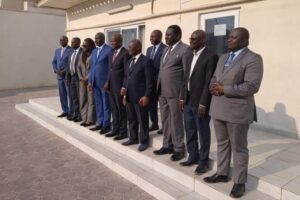
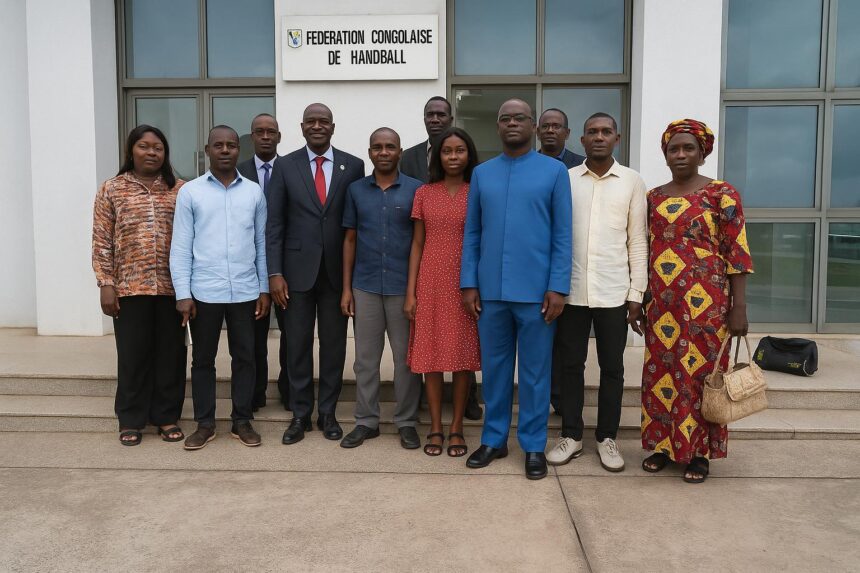
A simple show of hands inside the Palais des Sports on 16 December marked a turning point for Congolese handball, as delegates from every district league voted during an extraordinary working congress to set up the country’s first fully professional competition.
With only one item on the agenda, the congress quickly endorsed a single slate led by veteran coach and administrator André Frédéric Ngassiki to head the new Brazzaville Professional Handball League.
The vote, recorded as unanimous by election officials, means that for the first time contracts, transfers and broadcasting rights will be managed under rules tailored to turn clubs into sustainable businesses.
Fourth vice-president of the national federation Marthe Makosso Tchitoula chaired the session, flanked by Sports Ministry envoy Anna Moungala and Olympic committee representative Raphaël Bantsimba, who all stressed the need for “credible governance” before the final applause.
Meet André Frédéric Ngassiki
At 45, Ngassiki has spent more than two decades switching between the bench and the boardroom, guiding Inter Club to three national titles before serving as technical director of the men’s national team.

His supporters underline his academic background in sports management, gained at the University of Leipzig, and his recent experience running a private training academy in Makélékélé, where he negotiated small sponsorship deals with telecom start-ups.
Asked about his priorities, he replied with a smile, “Professionalisation is not a slogan; it is athletes getting paid on time and fans seeing a real show every weekend”.
How the professional league will work
The new statutes, validated on Saturday, create an eleven-member executive board charged with licensing clubs, auditing accounts and publishing an annual commercial report.
Season one, slated for March 2024, will feature eight men’s teams and six women’s sides drawn from the Brazzaville metropolitan area, before the model is rolled out to Pointe-Noire and Owando.
Each club must wp-signup.php as a limited company, employ a certified accountant and sign players to contracts backed by medical insurance, according to the federation communiqué distributed to media (ACI).
The league office says it is negotiating with Télé Congo for a highlights package, while ticketing platform Goloto will pilot mobile payments to curb gate fraud and give fans digital receipts.
Reaction from clubs and players
Club presidents emerged from the vote visibly relieved, saying the clarity on rules will help them convince sponsors nervous about informal operations.
Aimé Bongo, captain of JS Poto-Poto, told our reporter he hopes the new framework “ends the era of unpaid bonuses and makes handball a career choice for kids in Talangaï”.
Several female players, gathered outside the arena, applauded the decision to run men’s and women’s leagues under the same commercial umbrella, a move they say could finally address the gender pay gap.

Support from authorities
Sports Ministry representative Anna Moungala confirmed the government would facilitate tax incentives on equipment imports and provide security at venues, describing the league as “a laboratory for job creation through sport”.
Raphaël Bantsimba, speaking for the national Olympic committee, announced a short-term grant to upgrade scoreboards and timing systems so that match data can feed into international rankings.
Observers note that the timing aligns with the government’s broader Brazzaville Capitale Sport initiative, which seeks to position the capital as a regional hub for tournaments and sports tourism (Les Dépêches de Brazzaville).
No opposition parties have criticised the project, and several civic groups focused on youth employment have already volunteered to run cleanliness drives around arenas on match days.
What comes next on court
Between now and February, the executive board will audit club facilities, approve player rosters and organise coaching seminars led by experts from the International Handball Federation.
Friendly matches are planned during the Fête de la Jeunesse week to test the new broadcast workflows and give supporters a first taste of the rebranded product.
If the timetable holds, the opening whistle in March could signal not just another season but the birth of a professional ecosystem capable of inspiring a new generation of Congolese athletes.
Economic ripple effects
According to economist Jules Mbemba, every franc invested in professionalised sport generates “between three and four francs” in related spending, from transport to food stalls, a ratio he believes the handball project can replicate in Brazzaville suburbs.
Taxi driver Nguelo Samba already anticipates longer evening shifts, predicting that televised mid-week fixtures will keep fans out later and increase demand for rides across the bridges linking Moungali and Madibou.
Local caterer Mireille Okemba is testing an “energy menu” of cassava chips and ginger juice that can be served inside arenas thanks to new concession rules permitting women-led enterprises to bid for kiosks.
Such grassroots enthusiasm, analysts argue, will be crucial if the league is to survive beyond its inaugural broadcast deal and attract the bold private capital necessary for regional expansion.