Ngunza-Matswaniste Agropastoral Shift
The Ngunza-Matswaniste community, a spiritual current rooted in Central Congo’s history, is leaving the comfort of prayer halls to plant real seeds in real soil. Agropastoral activity, leaders say, will transform worshippers from passive faithful into active creators of wealth.
Pastor Roland Mbaloula, recently entrusted with the brand-new Department of Development and Blooming, carries the mission. Interviewed in Brazzaville, he describes a roadmap where cassava fields, poultry yards and construction crews open both spiritual and socio-economic horizons for believers.
Honouring Simon Kimbangu’s Legacy
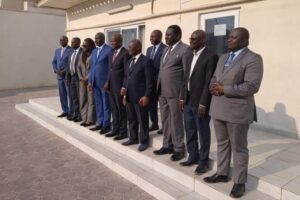
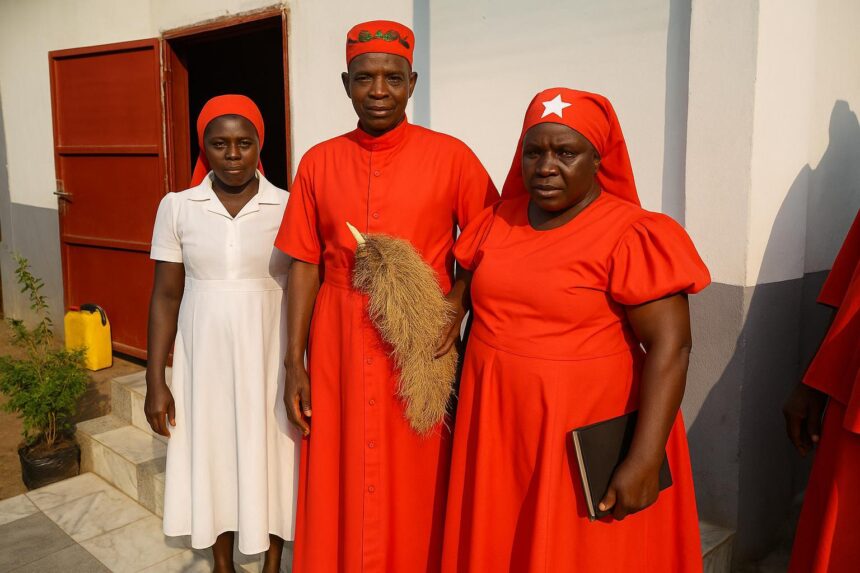
The turning point was marked on 12 October during a vibrant remembrance of Prophet Simon Kimbangu, revered across the Congolese spiritual landscape. Songs, drums and robes of bright green filled the Kimoko temple of Kinata as elders performed solemn consecrations.
‘Simon Kimbangu is one of our greatest prophets,’ Mbaloula reminds. ‘Commemorating him means recalling duty.’ Among the responsibilities distributed that day, his own appointment as development lead stood out, validated by the presence of spiritual father Ngudi Nganga Anicet Massengo Mbemba.
Witnesses describe a contagious enthusiasm: women ululated, youths waved flags, elders nodded in approval. The mood hinted that faith alone would not suffice; crops, bricks and livestock must follow to honour Kimbangu’s vision of an emancipated African congregation.

A Department Devoted to Development
Mbaloula’s brief covers every continent where worshippers gather, yet his first focus is local. ‘We want Matswanistes to become entrepreneurs,’ he explains. Agriculture, animal husbandry and construction rank top, chosen for their low entry cost and immediate benefit to household budgets.
Quoting resistance hero Mfumu Matswa, he adds: ‘When you know your mission, means will follow.’ The pastor trusts Nzambi ya Mpungu Tu Lendo, the Almighty, to open doors, but he also intends to seek formal credit and training.
The department’s name, Développement et Éclosion, signals growth breaking a shell. Its office will coordinate cultivation calendars, market access, and eventually value-added processing, so that community stalls in Brazzaville markets showcase produce grown by hands that once only clutched hymnals.

Five Strategic Sites Ready to Sprout
Land, often the hardest asset to secure, is already mapped. Mbaloula lists Kimpandzou in the Pool, Kibina in Brazzaville’s eighth arrondissement and vast tracts in Missafou. Two additional plots, kept unnamed for now, complete the initial network of five.
At Kibina, nearly six urban parcels await fencing before vegetable gardens and a Kimoko worship space rise side by side. In Kimpandzou, the plan blends subsistence crops with a training farm where novices will learn to rotate maize, peanuts and beans.
Financing conversations have started with the national Fonds d’Impulsion, de Garantie et d’Appui. As a recognised religious body, the community hopes for state backing. ‘We know the government supports productive initiatives,’ Mbaloula notes, confident the paperwork will match divine endorsement.
Training and Tradition Hand in Hand
For twenty-seven years, Ngudi Nganga quietly prepared the human capital. Community members such as Mireille Massengo and François Biniakounou earned agronomy certificates; five to seven more specialists now stand ready. Their task: translate brochures and soil tests into harvests.
Mbaloula himself, a recognised traditherapist, brings deep knowledge of medicinal plants. He believes that blending ancestral pharmacopoeia with modern extension techniques can create niche products and preserve biodiversity, turning communal fields into living laboratories as well as sources of income.
A small but telling detail reassures him: every agronomist was also raised within the faith. ‘We speak the same spiritual language,’ he says, suggesting that misunderstandings between science and belief—a frequent barrier elsewhere—will be minimal once hoes hit the ground.
The Double Eagle and Its Meaning
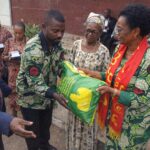
During the October ceremony, Ngudi Nganga placed a hat adorned with two golden eagles on Mbaloula’s head. In Ngunza symbolism, one eagle signals pastoral duty; two confer administrative authority. The gesture publicly sealed his entrance into the circle of decision-makers.
Observers interpreted the emblems as both a blessing and a reminder: eagles soar but also hunt. The new administrator must keep the vision aloft while securing daily sustenance for families who will soon depend on market prices as much as hymns.
Patience Rewarded in Mbaloula’s Path
His rise was anything but sudden. Arriving in 1986 as an ordinary worshipper, he waited a decade before his wife received duties, yet he remained a simple congregant. Thirty years later he became pastor; ten years more made him Ntumua, messenger.
Looking back, he sees discipline, not delay. ‘My leader was hard on me so I could ripen,’ he admits, viewing the long probation as proof that appointments come with accountability. The same measured tempo, he argues, will govern each farming milestone.
The timeline is set: clearing begins once rains subside, seedbeds follow, and by the next Kimbangu commemoration the first harvest should appear on communal tables. Success, Mbaloula hopes, will feed bodies and reaffirm a theology where labour and prayer rhyme.