Immediate Expulsion Rocks Brazzaville Opposition
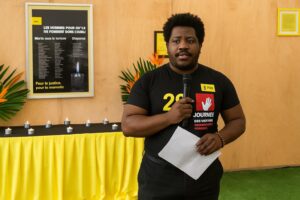
In a late-night communiqué released in Brazzaville on 29 November, the People’s Party for Progress and Emancipation (PAPE) made its most dramatic move since its creation, ordering the immediate expulsion of activist Castallin Balou and four close allies.
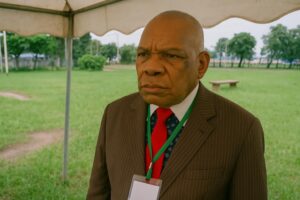
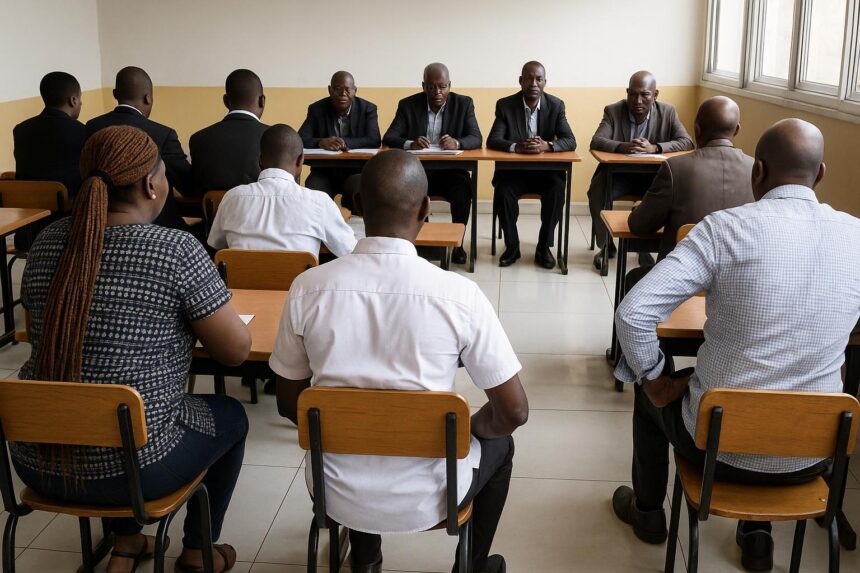
The decision followed a two-day extraordinary National Council meeting chaired by party president Jean-Pierre Agnangoye, who accused Balou of repeatedly “usurping authority” and intimidating fellow members, in violation of the organisation’s statutes ratified in 2021.
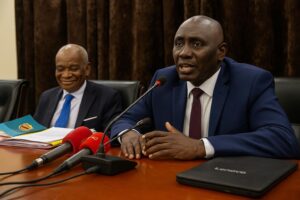
Secretary General Yvon Boloumba, reading the final resolution to reporters, said delegates had voted unanimously, adding that the party could not “tolerate disturbances that endanger cohesion at a moment when citizens expect constructive opposition.”
Allegations of Usurpation and Disorder
PAPE sources claim the tension began in September, when Balou allegedly burst into a National Council session with supporters, forcing organisers to suspend deliberations for security reasons.
Videos circulated that evening on social networks showed chairs pushed aside and loud exchanges, although no serious injuries were reported, according to local radio station Top Congo.

In the council’s written report, members accused Balou of defamation, public insults and unauthorized use of the party logo during separate press appearances in October.
The document further cites attempts to sign coalition statements “without mandate,” a red line for the 8000-strong formation that prides itself on collective leadership.
Allies Shown the Door
Who exactly faces exclusion alongside Balou? The party lists Gaston Miyalou, Melvin Louwouamou, Hervé Samba and Lévy Oniangué, all former coordinators of the Association of Congolese Youth and Diaspora, a network that campaigned vigorously during municipal polls.
According to Agnangoye, the quintet will no longer be allowed to address the media on behalf of PAPE, nor display its green-and-white emblem at rallies, websites or messaging groups, effective immediately.
“Any breach will trigger legal proceedings,” the leader warned, citing provisions of Congo’s 1901 association law that empower organisations to protect their identity.
Balou has not yet issued a formal response, but a short post on his verified X account late Friday called the council decision “void” and promised “clarification very soon.”
Legal Stakes and Party Strategy
Political analyst Cédric Ibata notes that internal rows are common in young parties searching for prominence, yet expulsions carry risks: “If the splitters keep the street energy, PAPE could face parallel structures that confuse voters.”
For now, however, Agnangoye’s camp believes the hard line will reassure militants who demanded clarity after months of rumours around leadership ambitions.
Inside the council hall, delegates reportedly applauded when the vote count—54 out of 54 seats—was read aloud.
PAPE, founded in 2019, describes itself as centre-left and focuses on decentralisation, youth entrepreneurship and environmental protection.
Despite its status in the opposition bloc, the party has occasionally supported government social programs, arguing that “good ideas deserve backing regardless of origin,” a stance that eased dialogue with municipalities.
Observers will watch whether the latest quarrel weakens PAPE’s ground campaign in Brazzaville’s populous Bacongo and Talangaï districts, where Balou’s youth committees were especially visible during sanitation drives.
Municipal councillor Clarisse Mankala, reached by phone, said residents are “more concerned about water supply than slogans,” yet admitted the dispute may “blur the message on utility tariffs.”
Beyond Brazzaville, activists in Pointe-Noire have planned a weekend meeting to “reassure sympathisers” and present a revised community-service calendar without Balou’s signature.
Legal experts point out that the internal ruling is an administrative measure; should Balou contest it, the dispute would first go before the Tribunal de Grande Instance of Brazzaville under civil procedure.
Agnangoye’s lawyers insist the file is solid, citing recorded minutes, witness statements and archived emails bearing Balou’s electronic signature.
“We respect all legal guarantees,” attorney Marie-Claire Bouyemba said, stressing that the party will not request criminal sanctions unless future infractions occur.
Voter Impact and Road to 2026
Meanwhile, social media users traded contrasting hashtags, one camp praising the “discipline strike,” another accusing the leadership of silencing vocal reformers.
Political scientist Ibata believes the episode illustrates the growing pains of parties born in the digital age: “Movements attract charismatic online figures, but translating that energy into structured hierarchy remains a challenge.”
For many Congolese voters, bread-and-butter issues such as transport fares, job opportunities and local security will determine whether the internal shuffle ultimately matters at the ballot box.
The next electoral test for PAPE is expected in the 2026 legislative race, giving the group roughly a year to rebuild unity, refine its platform and reassure financial backers.
As dusk settled over the capital on Friday, party volunteers peeled off campaign stickers from a warehouse wall and repainted the slogan “One Voice, One Vision” in fresh green, seeking to turn the page.
Whether supporters embrace the fresh paint or follow Balou’s counter-movement will shape an opposition field bracing for an economic agenda in 2024.