Embalo reaches safe Brazzaville haven
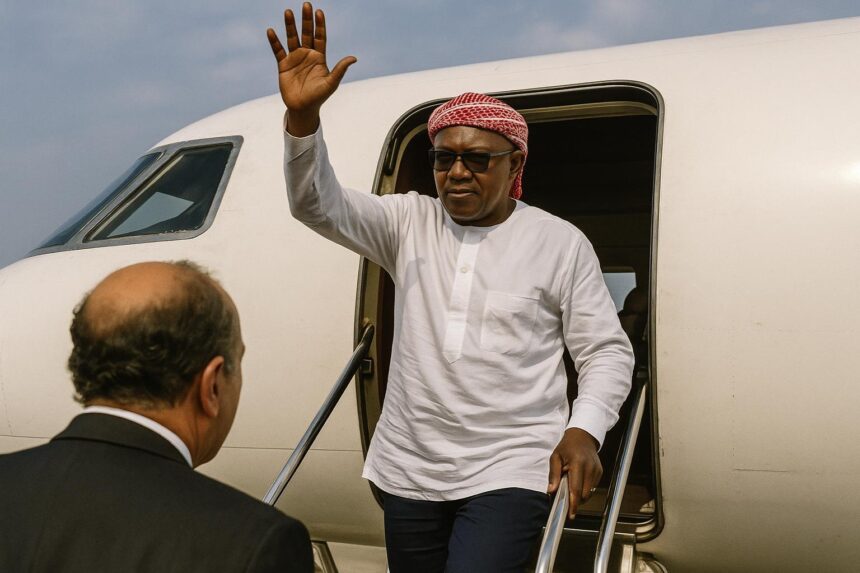
Umaro Sissoco Embalo, ousted from Guinea-Bissau in a swift coup on 26 November, touched down in Brazzaville on Saturday aboard a private jet chartered by Congolese authorities. Airport officials kept the arrival low-key, confirming the former head of state “is here to stay” for now.
- Embalo reaches safe Brazzaville haven
- A capital still tense in Bissau
- West African envoys prepare delicate mission
- International community voices concern
- Congo’s discreet diplomacy
- Bissau-Congolese ties behind the scene
- Life in exile, questions ahead
- Economic stakes and drug routes
- Brazzaville’s view from the street
- Next days to watch
- A fragile pause in a restless region
Sources close to the Congolese Presidency say President Denis Sassou Nguesso personally approved the reception, invoking humanitarian grounds and respect for long-standing ties between Brazzaville and Bissau. The two leaders have met repeatedly in recent years, notably during Embalo’s visits to Oyo and on the sidelines of continental summits.
Embalo’s quick move south removes him from the immediate influence of the Economic Community of West African States, whose mediators are expected in Bissau this week. For Congo, observers note, offering shelter also reinforces its image as a discreet but reliable regional peace broker.
A capital still tense in Bissau
In Bissau, the self-proclaimed National Restoration Council, headed by General Horta Inta-a, has suspended civil liberties, banned protests and asked public servants to resume work. National radio now broadcasts patriotic martial music between statements promising a “short transition” leading to what the junta calls credible elections.
The opposition coalition, fronted by presidential challenger Fernando Dias, rejects the military roadmap. Dias insists he won December’s vote, citing tally sheets from polling stations. His spokesperson told private station Bombolom FM that the party “will not negotiate away the people’s mandate” and wants CEDEAO guarantees soon.

West African envoys prepare delicate mission
Ahead of a scheduled visit, Sierra Leone’s President Julius Maada Bio is gathering a high-level CEDEAO delegation, with the stated aim of securing Embalo’s safety, meeting the junta and opening dialogue with opposition figures. Diplomats hope a face-to-face can prevent sanctions and restore constitutional order fairly soon.
Regional analysts interviewed by Radio France Internationale underline that the bloc’s credibility is at stake after similar crises in Mali, Burkina Faso and Niger. “Each extra-constitutional change chips away at the norm,” warns political scientist Kabiné Diallo, who fears a domino effect if Bissau’s coup stands unchallenged across region.
International community voices concern
The United Nations Secretary-General issued a late-night communiqué condemning the takeover and urging an immediate return to democratic institutions. The African Union echoed that call, adding that drug-trafficking networks often exploit Guinea-Bissau’s instability. Paris, Lisbon and Washington expressed support for CEDEAO mediation while monitoring developments closely.

Congo’s discreet diplomacy
In Brazzaville, officials emphasise that hosting Embalo does not signal interference, but rather contributes to “cooling tempers,” according to presidential adviser Michel Ngakala. He highlights Congo’s tradition of quiet diplomacy, citing past facilitation roles in Central African Republic and Chad as precedents for today’s gesture too.
Security around the riverside presidential guesthouse, where Embalo is staying, appears tight but understated. Plain-clothes officers mix with gardeners and maintenance staff, avoiding the heavy checkpoints that once greeted exiled Liberian leader Charles Taylor in the early 2000s. The message seems to be: normalcy first here.
Bissau-Congolese ties behind the scene
Diplomatic cables released last year revealed that Embalo frequently consulted Sassou Nguesso on security reforms and oil sector management. While neither side publicised the exchanges, analysts believe the personal rapport eased Saturday’s arrangements. “Friendship counts in African politics,” notes historian Sylvie Mavouba of Marien Ngouabi University today too.
Life in exile, questions ahead
For Embalo, settling in Congo raises immediate practical matters: security detail coordination, medical follow-ups and the education of his two youngest children. A former aide says the family travelled with limited luggage, expecting longer uncertainty. Brazzaville’s Portuguese-speaking community already offers discrete support with translation and schooling.
Legal scholars debate whether the ex-leader keeps presidential immunity abroad. According to Yaoundé-based jurist Alice Ndinga, Embalo cannot be prosecuted by Bissau’s new rulers unless a formal extradition request is filed and approved by Congo’s Supreme Court, a scenario observers deem politically improbable for now anyway.
Economic stakes and drug routes
Guinea-Bissau’s chronic volatility partly stems from being a transit point for Latin American cocaine heading to Europe. Analysts fear the latest power vacuum could embolden cartels. Embalo, himself a former brigadier-general, long vowed to fight trafficking; his departure leaves enforcement capacity inside the country uncertain.

Brazzaville’s view from the street
On Sunday evening, residents strolling along Avenue des Trois-Martyrs reacted with polite curiosity to news of the VIP guest. “He is welcome if it helps peace,” said market vendor Clarisse Mabika, adding that economic priorities remain domestic: transport fares, electricity bills and the price of sardines.
Next days to watch
All eyes now turn to the CEDEAO mission’s first meeting with General Inta-a, tentatively set for mid-week. Should the junta accept a timetable for elections and guarantees for Embalo’s safety, sanctions may be avoided. Otherwise, regional leaders warn of border closures and trade restrictions soon.
A fragile pause in a restless region
For now, Brazzaville offers a calm backdrop while events unfold in Bissau. Whether this temporary exile becomes a longer chapter will hinge on behind-the-scenes negotiations. What is clear, diplomats say, is that Congo’s gesture has bought precious time for dialogue in West Africa today again.