Brazzaville congress sets tone for 2026
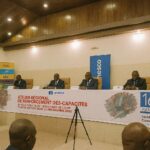
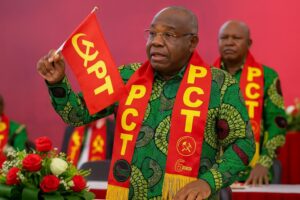
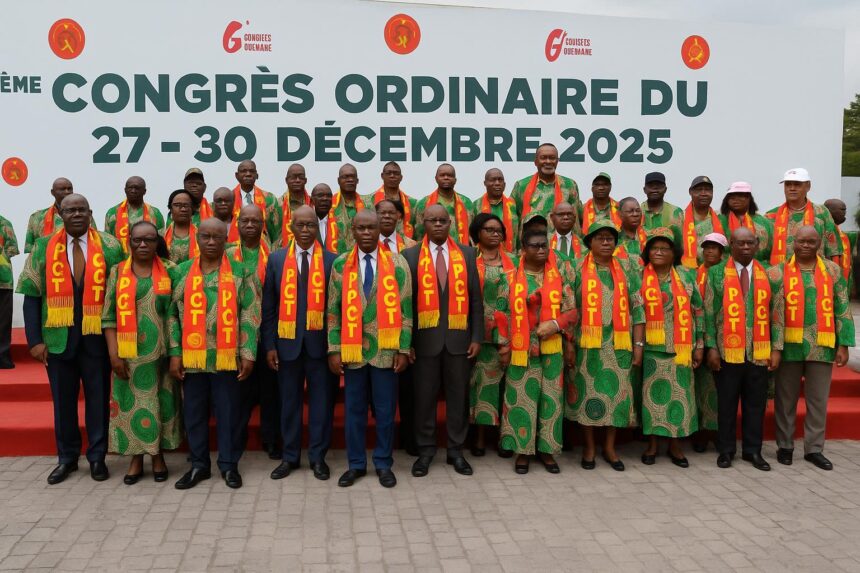
On 27 Dec, the red banners of the Congolese Labour Party (PCT) filled the Palais des Congrès in Brazzaville, marking the opening of the party’s sixth ordinary congress.
At the podium, congress chair Pierre Moussa declared that delegates had one priority: persuade President Denis Sassou N’Guesso to accept the party’s nomination for the presidential election scheduled for March 2026, two years from now.
The appeal, cheered by thousands of cadres and broadcast live by Télé Congo and ACI, set the political agenda of the year-end news cycle in the capital.
Eleven arguments for continuity
Reading from a prepared text, Moussa listed eleven arguments supporting another Sassou N’Guesso bid. The veteran party strategist began with security, recalling the Head of State’s role in restoring calm after the turbulent 1990s and quelling the urban gang phenomenon known as “Kuluna.”
He then pointed to diplomatic stature, noting the President’s frequent mediation within the African Union and beyond, qualities that, according to Moussa, “make him a peacemaker whose voice carries in international forums” (ACI, Télé Congo).

Climate diplomacy featured prominently. Delegates applauded the mention of the Congo Basin Blue Fund and Brazzaville’s success in pushing a UN resolution on a global decade of reforestation, initiatives that earned Sassou N’Guesso plaudits at COP28.
Finally, Moussa invoked party history, stressing the President’s close association with Marien Ngouabi, founder of the PCT, and describing him as “the most experienced politician in the nation, born with unity in his genes”.
A record of ballot-box dominance
Beyond rhetoric, organizers showcased statistics. Between 2020 and 2023, the PCT and its allies swept every national consultation. The party captured the presidency in March 2021, secured 112 out of 151 seats in the National Assembly the following year, and dominated local councils.
The 2023 senatorial election confirmed the trend, with 52 seats out of 72 going to PCT candidates. Analysts from the daily Les Dépêches de Brazzaville attribute that performance to disciplined field operations and a message centered on stability and development.
Moussa stressed that such numbers translate into “a solid parliamentary base capable of supporting the Head of State’s social projects”—an argument delegates said must be highlighted in the coming campaign.
Social projects under the microscope
Inside the congress hall, giant screens looped videos on road upgrades, school rehabilitation and the national electrification plan, framing them as tangible dividends of Sassou N’Guesso’s current mandate.
Economists interviewed by Radio Congo acknowledged progress, particularly in rural connectivity, while cautioning that global commodity prices and climate shocks could challenge future budgets.
For young delegates such as Lorena Okemba, 24, the key achievement remains “peace of mind to study, launch a small business and dream”. Her comment drew nods from fellow students gathered near the social media desk.
Roadmap toward March 2026
The congress is expected to close with a formal motion urging Sassou N’Guesso to accept its ticket. The President, currently on a working visit in Oyo, has not yet signalled his decision, though aides describe him as “attentive to the party’s voice”.

Should he agree, the electoral law requires filing of candidacy papers six weeks before the vote. The PCT secretariat has already set up thematic commissions on mobilisation, digital outreach and youth engagement, mirroring successful strategies from 2021.
Opposition leaders, for their part, are still negotiating alliances. Several told private station Top Congo FM that they expect a “dynamic” race, but none disputed the ruling party’s organisational head start.
In the meantime, Moussa urged militants to return to their districts and “keep listening to everyday concerns—prices, transport, power, water—because that is where elections are won”. The remark echoed the congress theme of unity, cohesion and accelerated development.
Voices from civil society
Outside the venue, trader Agathe Makoundi watched the speeches on her phone between customers at the Poto-Poto market. “I care about lower transport fares and steady electricity,” she said, adding that continuity matters if promises translate into concrete savings at the end of the month.
Jean-Marc Tchicaya of the civil-society group Génération Verte praised the President’s environmental advocacy but urged “faster implementation of reforestation goals at district level, so young people can see trees being planted, not only statements in New York or Dubai”.
Political scientist Armand Bakala, interviewed on Vox Médias online, believes the PCT’s early start grants it “agenda-setting power” yet warns that youth turnout will hinge on job prospects and digital engagement during the long pre-campaign period.
Calendar set to intensify
According to the national electoral commission, voter registration updates will open early 2025, with a provisional roll due by June that year. Parties are already planning joint caravans linking Brazzaville, Pointe-Noire, Dolisie and Ouesso, promising live streams, football clinics and mobile civil-status desks alongside rallies.
Electoral analyst Henri Bouka notes that such outreach “blurs the line between campaign and public service”, yet remains legal until the official campaign period opens, expected 15 days before the ballot.