PCT congress gathers 3,000 delegates
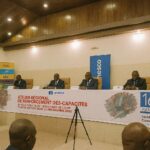
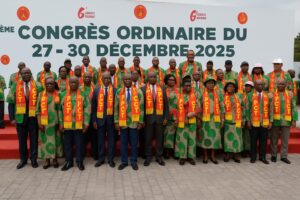
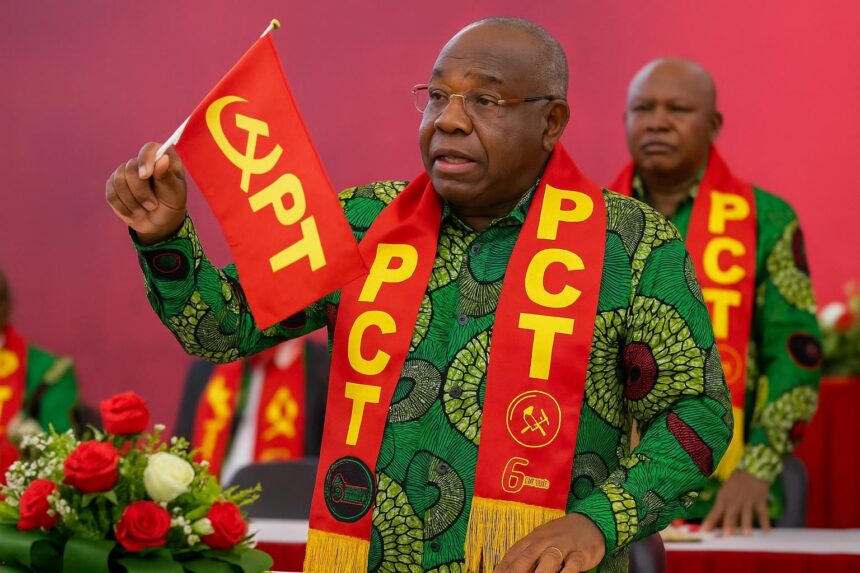
The red banners of the Congolese Labour Party filled the Palais des Congrès in Brazzaville as three thousand delegates closed their sixth ordinary congress on 1 January 2026, extending Pierre Moussa’s mandate as secretary-general for another five years after five days of intense deliberation.
Although originally scheduled to end on 30 December, the meeting spilled into the New Year to let regional caucuses search for compromise on leadership and strategy, a delay seasoned observers from Radio Congo described as proof of the party’s preference for unanimity over hurried ballots.
Pierre Moussa wins fresh five-year term
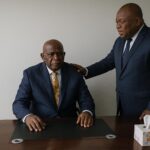
At 80, Moussa remains a formidable figure inside the PCT. The former prime minister joined the central committee in 1979, rose to the political bureau a decade later and, in 2019, succeeded Pierre Ngolo, his calm baritone often guiding debates on the economy and social programmes.
In his acceptance speech, the veteran economist thanked delegates for what he called a vote of “solidity and cohesion”, promising to “modernise the party’s digital outreach while guarding its historic values”. National television showed activists applauding and singing campaign hymns long after the official closing ceremony.
Party insiders interviewed by daily Les Dépêches de Brazzaville underlined that no rival slate emerged during the conclave, a sign, they said, that provincial federations still see Moussa as the safest pair of hands to steer preparations for the 2026 presidential poll.

Continuity message inside party ranks
The congress resolutions, read aloud by spokesperson Juste Mondélé, place the re-election of President Denis Sassou Nguesso in March 2026 at the centre of the party’s roadmap, alongside calls for grassroots mobilisation on youth employment, urban safety and the cost of living.
Analyst Nicole Oba from the Center for Political Studies notes that Moussa’s profile as an economist could help refine proposals on fuel subsidies and agricultural incentives, two dossiers that resonate strongly with city dwellers and rural cooperatives alike as inflation remains an everyday concern.
Beyond policy, the congress offered carefully choreographed symbolism. The main hall was draped in the traditional red-and-green but also featured giant LED screens streaming local musicians from Brazzaville and Pointe-Noire, a nod to the party’s promise of embracing younger, tech-savvy voters.
Road to March 2026 presidential vote
For delegates like Owando councillor Marie-Céline Louzolo, the visual mix mattered. “Our children live on smartphones,” she said. “If we want them involved, meetings must look like their world.” Her assessment captured the mood of district representatives queuing for selfies under the new stage lights.
Security was tight but discreet, with police units guiding traffic on Avenue de l’Amitié while medical volunteers distributed masks and water in the tropical heat. The organisation committee later reported zero major incidents, a detail highlighted by public television to showcase logistical know-how ahead of next year’s campaign rallies.
The PCT, founded in 1969, has dominated the national scene for decades, yet internal balance between veteran cadres and emergent voices remains a delicate act. Sources close to the youth league said they obtained fifteen new seats on the central committee, a concession viewed as an encouraging signal.
Political editor Serge Mabiala argues that Moussa’s re-election was largely expected, but the true test will be how effectively the secretariat channels that unity into door-to-door registration drives, especially in fast-growing suburbs where opposition parties target first-time voters.
Voices from the floor and next steps
Inside the plenary, working commissions refined messages on climate resilience, highlighting community tree-planting and flood control in river districts. Delegates from Mossaka shared images of pilot dikes protecting yam fields, seeking national funding to replicate the project, an example Moussa praised as “local initiative meeting national ambition”.
On the economic front, the congress voiced support for continued diversification away from oil, endorsing small-scale agro-processing zones and fintech start-ups. Economists present cited recent African Development Bank data showing Congo’s non-oil growth slowly rebounding, and urged the party to expedite administrative reforms to keep the momentum.
As lights dimmed on the final evening, delegates sang the national anthem before boarding buses for departments as far as Sangha and Niari. Many carried USB keys loaded with campaign material, an innovation replacing printed brochures and cutting costs, according to organising secretary Mireille Mboukou.
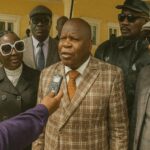
With the congress now adjourned, attention shifts to February’s national youth festival, where Moussa is expected to outline the first phase of mobilisation. “Our compass is social peace and shared progress,” he told reporters, signalling a leadership eager to translate party unity into electoral groundwork across the republic.
Election officials have not yet released the final electoral calendar, yet the PCT secretariat believes a clear head start matters. By reconfirming Pierre Moussa, delegates hope to send voters and international partners a picture of stability, continuity and readiness ahead of what promises to be a competitive but peaceful ballot.