Pointe-Noire coast under pressure
From Côte Sauvage to the old harbour, visitors used to boast about Pointe-Noire’s endless ribbon of golden sand. Today plastic bottles, fish offal and discarded nets spread across the tide line, sparking worry among residents, anglers and health officers who frequent the waterfront.
A survey by the local start-up CleanSea counted an average of 27 pieces of litter per square metre in April, roughly triple the level measured two years ago, according to its founder Léa Ngouala, who calls the trend “a wake-up call for everyone living off the ocean”.
Daily scenes of litter and concern
On Saturday morning, fishmonger Jean-Claude M’Bemba pushed his wheelbarrow through puddles of black water before reaching the market gate. “I rinse my boots with disinfectant now,” he explained, noting that storm drains clogged by sachets often overflow straight onto the sand.
Sun-seekers still arrive around sunset, but many bring mats instead of towels to avoid direct contact with the ground. “We love the sea breeze, yet the smell of rot is stronger this year,” sighed student Marie-Gisèle Ngoma, pointing at a heap of seaweed mixed with cans.
Where does the trash come from?
Environmental engineer Cédric Louamba links 60% of the debris to household waste blown from inland dumpsites during the long dry season. The rest, he says, drifts from trawlers anchoring offshore or from rivers such as Loeme that carry refuse dumped upstream.

Satellite images reviewed by the NGO Action Verte show two dark plumes stretching south-west after heavy rain on 3 May, matching the path of city drainage canals. “The evidence suggests stormwater is a conveyor belt of plastic to the Atlantic,” the group concluded in its memo.
Municipal cleanup plans underway
City hall says 1.2 billion CFA francs have been allocated this quarter to reinforce beach sanitation, including new collection points, mechanical rakes and an awareness caravan for coastal districts. “Our coastline is a strategic asset; it will not be abandoned,” affirmed municipal sanitation chief Auguste Mabiala.
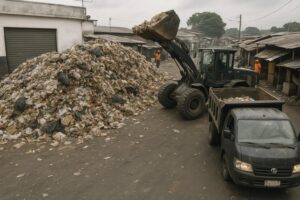
A pilot operation started last week along the busy Avenue Charles-de-Gaulle seafront where contractors filled 17 skips in three hours. Officials promise a public dashboard tracking weekly tonnage removed. They also plan to test floating barriers at river mouths, inspired by a model used in Abidjan.

Youth and NGOs mobilise
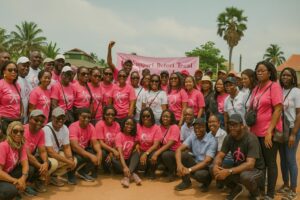
Every Sunday, the collective Jeunes Gardiens du Littoral meets at 6 am with gloves and homemade sieves. Founder Sarah Tchissambou says volunteers have collected 4.6 tonnes of waste since January, selling sorted PET bottles to recyclers to fund school kits for children in Mpaka.
Social media amplifies the initiative: TikTok clips showing before-and-after shots near Casino Ti-Congo reached 120 000 views in two days, attracting donations of masks and water. “People accuse youth of passivity; we reply with brooms,” laughs Tchissambou, who hopes for a permanent eco-station on the beach.
Health, economy, tourism at risk
Paediatrician Dr. Aimée Mavoungou warns that children playing near stagnant pools risk skin infections and gastroenteritis. Her clinic wp-signup.phped a 17% rise in such cases between February and April. She urges parents to carry sanitiser and to keep toddlers from collecting shells in swales.
Tour operators report cancellations of sunset cruises, while fish sellers complain of dwindling clients wary of contamination. According to the Pointe-Noire Chamber of Commerce, each percentage point drop in coastal visitor numbers could mean 50 lost seasonal jobs, highlighting the economic imperative behind the cleanup.
Roadmap toward cleaner shores
Experts say the first milestone is securing consistent door-to-door garbage collection across the Arrondissements, limiting what the wind carries to the sea. A partnership with the National Waste Agency, announced on 10 May, seeks to add 15 compactor trucks and 200 robust bins.
Longer term, urban planner Philippe Okemba champions a circular-economy hub near the port to transform organic waste into compost for peri-urban farms. “If trash acquires value, it becomes less visible,” he argues, citing similar experiments in Lomé and Kigali that cut litter dramatically.

The Ministry of Tourism supports the vision and plans a branding campaign around “Blue Pointe-Noire”, positioning a restored shoreline as a symbol of national pride ahead of the 2025 Pan-African Music Festival hosted partly in the city. Officials see the event as a deadline for progress.
Community hope for revival
Back on the sand, dusk hides scattered debris, but waves still hiss against plastic. Jean-Claude M’Bemba shrugs and sums up the cautious optimism many share: “We made the mess together; we can also clean it together. If the sea forgives, tourists will return”.
Marine biologist Dr. Pascal Okouala is testing a low-cost seaweed boom made from used fishing lines. If successful, the device could trap microplastics before they settle in mangroves that nurse juvenile fish, protecting both biodiversity and artisanal livelihoods.
For historian Sylvie Koumba, the beach is more than scenery: “Our grandparents met their future spouses on this sand.” She believes storytelling festivals and open-air concerts can rekindle emotional attachment and motivate residents to guard the shoreline with renewed civic pride.